

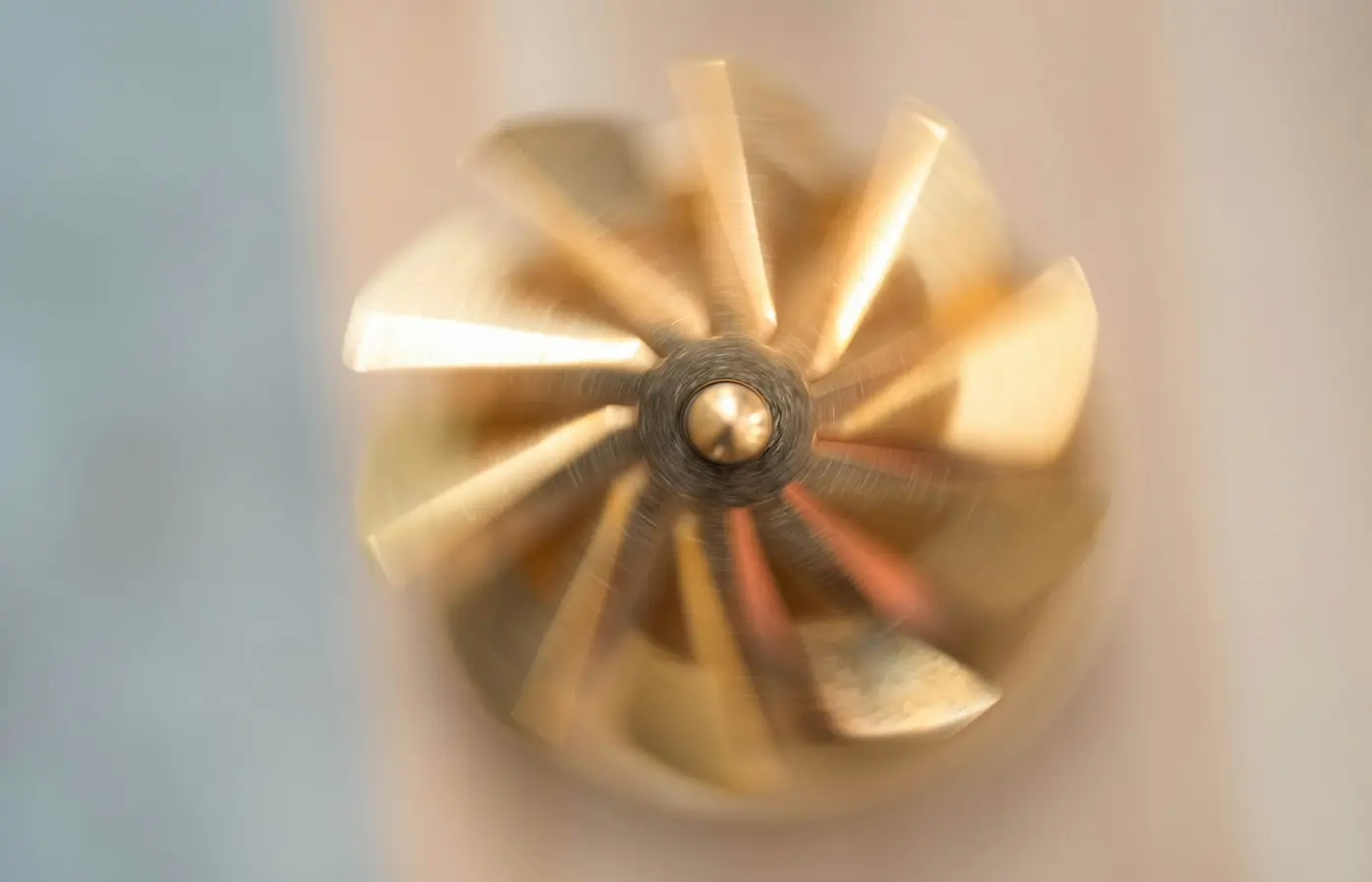
Pump impeller material selection starts with the actual liquid and operating envelope, not with a generic preference for stainless steel, duplex alloy, or a hard coating. The proposed impeller must resist the relevant corrosion and wear mechanisms while remaining compatible with the casing, wear parts, shaft, seals, gaskets, and elastomers in the exact pump configuration.
Define the liquid and duty before comparing materials
An impeller material cannot be selected reliably from a liquid name alone. “Wastewater,” “brine,” “acid,” “slurry,” or “process water” can each describe fluids with substantially different chemistry, solids content, temperature, aeration, and operating risk.
Start with a controlled process datasheet that identifies normal, minimum, maximum, startup, shutdown, cleaning, and upset conditions. At minimum, collect:
- Complete liquid composition, including significant contaminants and trace constituents where known
- Chemical concentration range, not only the normal concentration
- pH, where relevant to the process chemistry
- Minimum and maximum liquid temperature
- Operating pressure and vapour-pressure information needed for suction assessment
- Dissolved oxygen, entrained air, gases, or oxidizing additives where these may affect corrosion or cavitation
- Solids concentration, particle-size distribution, particle hardness, shape, and density
- Required flow, total head, speed, operating schedule, and expected operating range
- Suction pressure, available NPSH, and the conditions that can reduce suction margin
- Cleaning chemicals, flush fluids, sterilization cycles, or intermittent chemical exposure
- Evidence from prior pumps, including photographs and locations of wear or attack
This information is interdependent. A pump material-selection paper from Neonickel similarly emphasizes that material decisions require sufficient process information and that the variables should not be treated in isolation.
The impeller is only one wetted part. A corrosion-resistant impeller does not make a pump suitable if the casing, wear rings, mechanical seal faces, elastomers, fasteners exposed to the liquid, or coating system have a lower service limit. Ask the pump manufacturer for a configuration-specific wetted-parts list rather than accepting an impeller-only material statement.
Match chemistry and temperature to the corrosion mechanism
Chemical compatibility charts are useful screening tools, but they are not final design approvals. Corrosion behaviour can change with concentration, temperature, contaminants, liquid velocity, oxygen content, pH, and whether the system is oxidizing or reducing.
A manufacturer chart may rate a material as acceptable for a named chemical under a limited set of conditions. That does not establish suitability for a different concentration, a hotter process, a mixed liquid, or a service with deposits and stagnant zones. For example, the Ampco Pumps material compatibility guide explicitly describes its chart as a general guide and notes that concentration, temperature, and other factors affect metal, polymer, and elastomer resistance.
Identify the likely form of corrosion
General corrosion is relatively uniform material loss over a surface. It may be manageable where the expected rate is known and sufficient corrosion allowance is available, but it can still reduce hydraulic performance and mechanical integrity over time.
Localized corrosion is often more difficult to predict from generic charts. Relevant mechanisms can include:
- Pitting corrosion: local attack that can occur where a passive metal surface breaks down in an aggressive environment.
- Crevice corrosion: attack in shielded gaps, deposits, joints, or interfaces where local chemistry differs from the bulk liquid.
- Galvanic corrosion: accelerated attack on one material when dissimilar conductive materials are electrically connected through an electrolyte.
- Stress-corrosion cracking: cracking caused by a specific combination of material condition, tensile stress, environment, and temperature.
- Corrosion-erosion: accelerated loss where a corrosive liquid and particle or fluid impact remove protective films or exposed material.
Stainless steel is therefore not automatically the best impeller material. The exact alloy grade, casting specification, heat treatment, surface condition, liquid chemistry, and temperature all matter. Duplex stainless steels and higher-alloy materials may offer advantages in some services, but their suitability still depends on the actual corrosion mechanism and on whether the manufacturer offers that material for the pump model.
Wastewater is a useful example of why broad fluid labels are insufficient. A Xylem wastewater materials paper identifies chloride content, pH, temperature, oxygen content, and abrasives as variables affecting material and protection choices. Those variables should be measured or conservatively bounded for the specific site rather than inferred from the word “wastewater.”
Evaluate suspended solids, particle hardness, and velocity for erosion
Where suspended solids are present, impeller material selection must address erosion as well as corrosion. Abrasive particles can remove material from vane leading edges, shrouds, passage turns, eye regions, and other high-velocity or high-turbulence areas. The resulting change in geometry may reduce head or efficiency before the component reaches a structural limit.
The wear risk depends on more than solids concentration. Review:
- Particle hardness relative to the impeller material
- Particle size distribution and whether oversize solids are present
- Particle shape, including angular or sharp fragments
- Concentration by mass or volume under normal and upset conditions
- Fluid velocity and local impact zones within the specific impeller geometry
- Pump speed, impeller diameter, and operating point
- Whether solids settle during shutdown or accumulate in low-flow regions
- Corrosive constituents that may remove or weaken a protective surface film
Harder metallic materials, elastomer-lined parts, coatings, and nonmetallic components can each be appropriate in particular applications. None is a universal answer. A hard material may improve resistance to abrasive wear but have different corrosion behaviour, castability, impact tolerance, repair options, or availability. A coating can protect a substrate only if its chemistry, adhesion, thickness, temperature limit, and damage tolerance are suitable for the service. It must also be approved for the pump’s hydraulic geometry and operating temperature.
For slurry, wastewater, or solids-handling duties, ask for documentation for the exact impeller geometry and material option. A manufacturer may offer different materials for closed, semi-open, vortex, recessed, or channel impellers, and an option suitable for one pump series should not be assumed suitable for another.
Check cavitation, corrosion-erosion, and off-design operation
Material selection cannot correct an unsuitable hydraulic duty. Cavitation, inlet recirculation, discharge recirculation, entrained gas, and persistent operation outside the manufacturer’s permitted operating range can damage an impeller even when the alloy has good nominal chemical resistance.
Cavitation occurs when local pressure falls sufficiently for vapour bubbles to form and then collapse as pressure recovers. Repeated collapse near a wetted surface can produce pitting-like damage. The appearance of the damage alone does not prove a single cause: cavitation, abrasive wear, corrosion-erosion, and a combination of these mechanisms can produce superficially similar surface loss.
Before treating impeller damage as a metallurgy problem, review the exact pump documentation and installation data:
- Compare available NPSH under minimum suction-pressure and maximum-temperature conditions with the pump’s published NPSH requirement.
- Confirm the duty point and expected operating range against the manufacturer’s performance curve and allowable operating region.
- Review whether control-valve throttling, variable-speed operation, blocked strainers, tank level changes, or suction-line losses can shift the duty.
- Check for entrained gas, flashing liquids, vortexing at the suction source, or intermittent dry-running exposure.
- Inspect damage locations and compare them with hydraulic features, solids flow paths, and chemical exposure history.
The WaterWorld discussion of wetted pump material selection also identifies liquid condition, duty cycle, suction conditions, and service conditions as relevant to reliability. The practical implication is that the pump curve, NPSH data, and field operating history are part of material selection evidence, not separate documentation.
Compare material families as complete wetted-system choices
Material families should be compared against the dominant failure mechanism and the manufacturer’s approved configurations. The table below is a selection framework, not a compatibility chart or a substitute for a materials review.
| Material family | Potential advantages | Limits to verify before selection |
|---|---|---|
| Cast iron or ductile iron | Commonly available; may be suitable for some non-aggressive water duties; good castability | Corrosion behaviour in aerated, chloride-bearing, acidic, or chemically variable liquids; erosion rate; coating requirements; compatibility with adjacent components |
| Stainless steels | Often selected where improved corrosion resistance and hygienic or clean-liquid service are needed | Exact grade and casting designation; chloride and temperature exposure; localized corrosion risk; crevice conditions; chemical concentration |
| Duplex stainless steels | May provide useful strength and corrosion resistance in certain demanding aqueous services | Exact grade; fabrication and casting quality; chemical environment; temperature limits; manufacturer availability for the specific pump |
| High-alloy metallic materials | May be considered for specific corrosive duties where standard alloys are unsuitable | Documented chemical compatibility, temperature and pressure limits, procurement lead time, repair method, and all adjacent wetted materials |
| Nonmetallic, coated, or lined options | Can be useful where a compatible polymer, elastomer, lining, or coating is available | Temperature and pressure limits, permeation, mechanical damage, solids abrasion, adhesion, thermal cycling, and repairability |
Cost should be evaluated as part of the complete duty rather than as purchase price alone. A more resistant material can be unjustified if the hydraulic duty is wrong or if another wetted component will govern service life. Conversely, a lower-cost impeller can create repeated outages if its documented limits do not cover the process envelope.
Use the pump supplier’s bill of materials, cross-sectional drawing, and technical quotation to confirm the proposed construction. The ANSI/HI 9.1-9.5:2021 publication is a relevant industry reference for general pump materials guidance, but its use should be tied to the applicable edition and the actual pump service rather than treated as proof that a particular supplier configuration is suitable.
Verify manufacturer data before ordering
A procurement specification should convert the material decision into documents and acceptance criteria. Request written confirmation against the stated process datasheet, including all operating and upset conditions that can materially affect compatibility.
Request the following before issuing an order:
- Exact impeller material grade, material standard or casting designation, and part number
- Complete wetted-parts list covering casing, impeller, wear components, shaft sleeves, seal faces, gaskets, O-rings, coatings, and linings
- Written compatibility basis for the stated liquid, concentration range, temperature range, pressure, and contaminants
- Maximum pressure and temperature for the quoted pump configuration, not only for the pump series
- Certified or manufacturer-issued performance curve for the selected impeller diameter and speed
- NPSH required curve and stated operating-range guidance for the exact configuration
- Solids-handling limitations, passage dimensions, or particle restrictions where applicable
- Coating or lining specification, including substrate preparation and repair requirements if relevant
- Material certificates, inspection documentation, or test records required by the purchase specification
- Written exceptions, assumptions, and exclusions in the supplier quotation
Do not treat a general compatibility letter as approval unless it clearly identifies the liquid conditions and the exact materials supplied. If the supplier cannot confirm an important condition, record it as an exception and resolve it before order placement.
When to involve a corrosion or materials specialist
Specialist review is justified when the liquid is mixed, poorly characterized, highly corrosive, abrasive, hot, oxygenated, subject to concentration changes, or associated with a high consequence of leakage or unplanned shutdown. It is also appropriate where previous pumps have failed without a documented root-cause analysis.
Escalate the decision when there is a conflict between corrosion resistance and abrasion resistance, when a coating or nonstandard alloy is proposed, when temperature excursions are credible, or when the service includes cleaning chemicals that differ from the normal process fluid. The review should assess the complete wetted system and hydraulic duty, not only nominate a more expensive impeller alloy.
A defensible selection rule is simple: choose only a manufacturer-offered impeller and wetted-material configuration that is documented for the defined liquid and duty envelope. If the chemistry, solids exposure, suction conditions, or operating range remain uncertain, treat the selection as unresolved and obtain application-specific manufacturer and materials input before ordering.