

Choose a ball bearing when speed, low friction, compact standard availability, and moderate combined loading are the priorities. Choose a roller bearing when radial load, stiffness, shock capacity, or fatigue life within a limited envelope matters more than maximum speed. This is a family-level direction only: internal geometry, contact angle, roller shape, clearance, preload, lubrication, and mounting determine the real capability.
Core differences
| Decision factor | Ball bearing | Roller bearing |
|---|---|---|
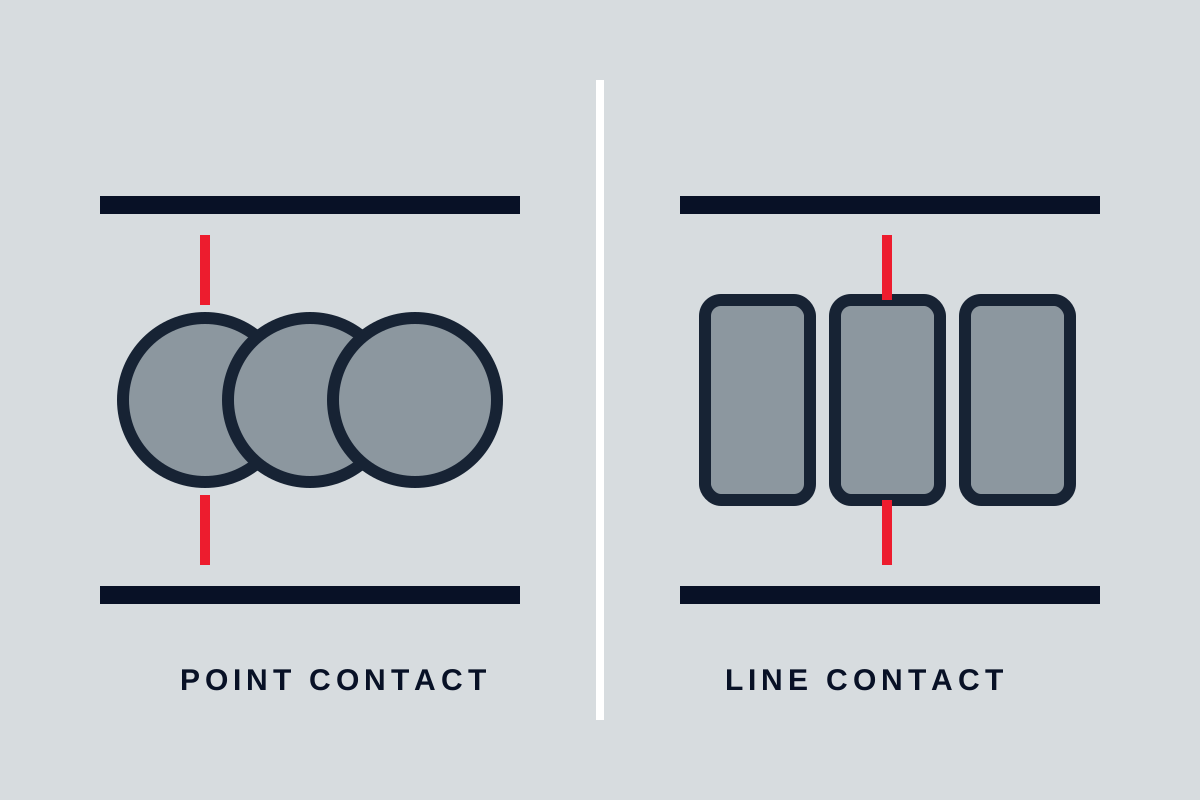
| Rolling contact | Small elliptical contact area | Longer line-like contact area |
| Load capacity for similar envelope | Generally lower | Generally higher, especially radial load |
| Speed potential | Often higher | Often lower because of greater contact and sliding |
| Stiffness | Moderate | Typically higher |
| Friction and heat | Usually lower at comparable light load | Can be higher; depends strongly on type and lubrication |
| Misalignment | Standard deep-groove types tolerate little; self-aligning types are available | Cylindrical and tapered types require alignment; spherical types accommodate misalignment |
| Axial load | Depends on groove and contact angle | Depends on roller type; tapered and thrust designs can carry substantial axial load |
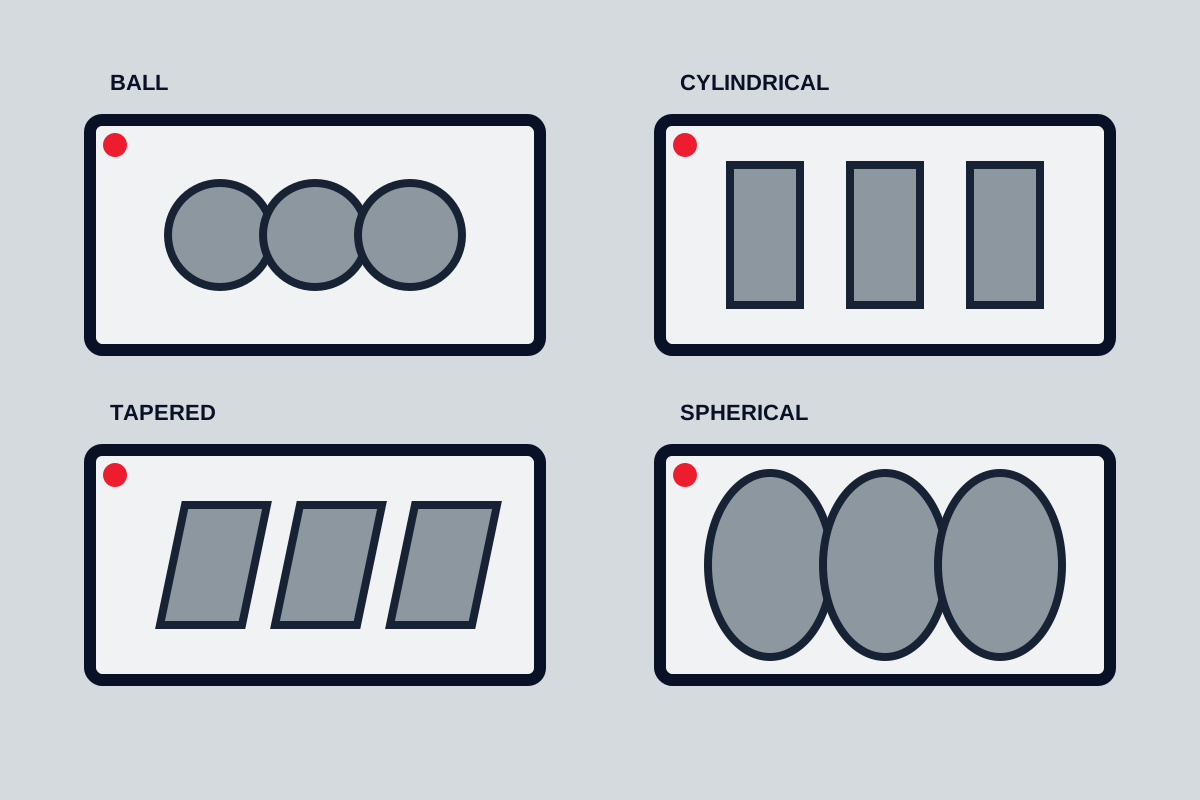
Do not select from the words ball or roller alone. A deep-groove ball bearing, angular-contact pair, cylindrical roller bearing, tapered roller bearing, and spherical roller bearing solve different load and alignment problems.
Contact geometry and load distribution
A ball touches each raceway over a small area that grows as load deforms the surfaces elastically. That compact contact supports low rolling friction and high speed, but contact stress rises quickly when load or shock is excessive. Groove curvature and contact angle determine how radial and axial forces pass through the bearing.
A roller distributes load along a longer contact region. This allows higher load and stiffness in a similar radial space, but rollers also create more opportunities for sliding at ends, flanges, and skewed contact. Crowned profiles help control edge stress when small deflections occur; they do not correct a badly misaligned machine.
Load should be considered as a spectrum. Start-up, belt pull, gear forces, process upsets, thermal expansion, and shaft bending may be more important than the steady nominal value.
Radial and axial loading
Deep-groove ball bearings commonly support radial load and moderate axial load in both directions. Angular-contact ball bearings use a defined contact angle and are often arranged in pairs to control axial position and moment load. Thrust ball bearings focus on axial load and normally provide little radial support.
Cylindrical roller bearings offer high radial capacity and stiffness; some arrangements allow axial displacement between shaft and housing, which can accommodate thermal growth. Tapered rollers support combined radial and axial load but require correct setting. Spherical roller bearings carry heavy radial load and axial load while accommodating some misalignment. Needle rollers provide capacity in a thin radial section but require accurate raceways and alignment.
Map forces through the machine before selecting. A bearing catalogue load direction is not a substitute for understanding which bearing locates the shaft, which floats, and how external axial force is reacted.
Speed, friction, and temperature
Ball bearings often reach higher speeds because their rolling elements have small contact zones and lower mass. Roller bearings can still operate at substantial speed, but type, cage, lubrication, preload, and heat removal become decisive.
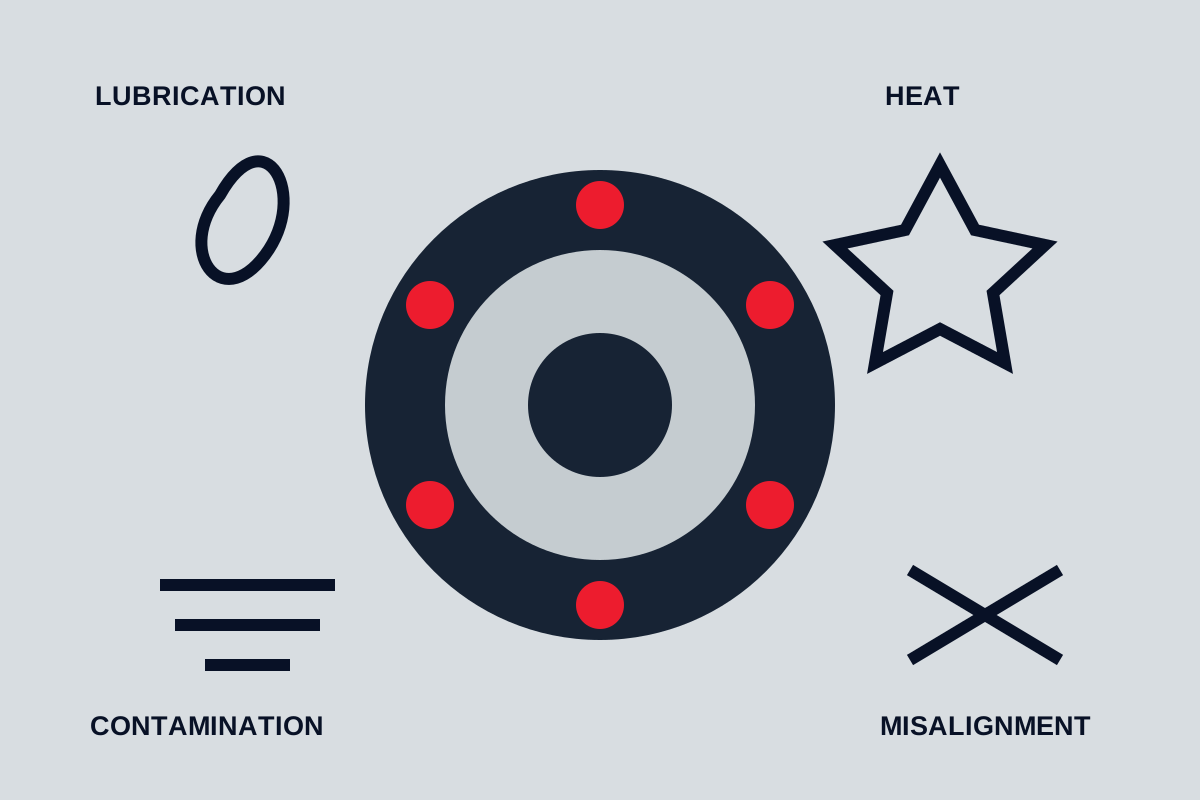
Published speed values are conditional. Oil or grease, lubricant viscosity, fill quantity, seals, orientation, load, fit, cooling, and allowable temperature all change the result. A sealed bearing with heavy grease fill does not have the same limit as an open bearing in a controlled oil system.
At very light load, rollers may skid instead of rolling reliably. At excessive preload, either family can generate heat and lose clearance. Temperature trending after installation is useful, but acceptance should consider stabilisation, ambient temperature, speed, and measurement location.
Stiffness, clearance, and preload
Roller bearings are often selected where shaft position under load must be tightly controlled. Machine-tool spindles may instead use preloaded angular-contact ball bearings because they combine speed with axial and moment stiffness. The correct solution is a bearing arrangement, not simply the rolling-element shape.
Internal clearance changes after mounting because interference fits expand the inner ring or compress the outer ring. Temperature differences between shaft, rings, and housing change it again in service. Too little operating clearance creates heat and premature damage; too much reduces stiffness, load distribution, and running accuracy.
Preload removes clearance and increases stiffness, but also increases friction and sensitivity to temperature. Apply it only through a defined arrangement and setting method.
Misalignment and shaft deflection
Standard deep-groove ball, cylindrical roller, and tapered roller bearings require accurate alignment. Housing bore error, shaft deflection, shoulder runout, and assembly distortion can concentrate load on one edge. Flexible couplings cannot correct bearing-seat misalignment inside a machine.
Self-aligning ball bearings and spherical roller bearings can accommodate angular misalignment through spherical raceway geometry. That capability has limits and does not excuse poor fits, unstable foundations, or excessive shaft deflection. Axial displacement and seal alignment must still be reviewed.
Lubrication and contamination
Lubricant must form a film at the actual contact speed, load, and temperature while also protecting against corrosion and removing heat where necessary. High viscosity can improve film thickness but increase churning. Low viscosity can reduce heat but leave inadequate separation. Grease thickener compatibility, oil additive suitability, relubrication path, and drain arrangement matter.
Roller bearings may be more sensitive to debris passing through long contact zones, while ball bearings can also develop dents that repeat stress at every revolution. Seal selection and assembly cleanliness often influence life more than a small change in catalogue rating.
Mounting and maintenance
Apply mounting force only through the ring being fitted. Pressing through rolling elements can damage raceways before the machine starts. Use correct fits, square shoulders, clean tools, controlled heating where approved, and a documented setting method.
Tapered bearing arrangements may require endplay or preload adjustment. Cylindrical roller designs can separate into rings and roller assemblies, which helps installation but creates orientation and cleanliness risks. Sealed ball bearings simplify lubrication but limit inspection and lubricant replacement.
Track vibration, temperature, lubricant condition, and noise relative to a known baseline. When damage occurs, preserve the bearing and record its orientation; bearing failure analysis depends on that evidence.
When to choose each family
Choose a ball bearing when:
- load is moderate and high speed or low friction is important;
- combined radial and axial loading fits a deep-groove or angular-contact arrangement;
- standard sealed units simplify a clean, predictable duty;
- compact availability and economical replacement matter.
Choose a roller bearing when:
- heavy radial load or high stiffness drives the selection;
- shock and shaft deflection require suitable roller geometry;
- combined load justifies tapered rollers;
- misalignment requires a spherical roller arrangement;
- radial space is limited but a needle design can use accurate raceways.
Final decision checklist
Before selecting, document:
- radial, axial, moment, shock, and minimum loads across the duty cycle;
- speed range, acceleration, operating hours, and acceptable friction or temperature;
- shaft and housing fits, shoulder accuracy, deflection, and alignment;
- locating and floating functions and expected thermal movement;
- required clearance or preload and the installation setting method;
- lubricant, delivery method, relubrication, seals, contamination, and washdown;
- mounting sequence, tools, inspection access, monitoring, and spare strategy.
Use the broader industrial bearing types guide to shortlist actual geometries. Ball versus roller is useful as a first distinction, but reliable selection ends with the complete bearing arrangement and its operating environment.
Load and stiffness
Rollers distribute load over a longer contact zone and generally support higher radial load for a given envelope. Ball bearings often produce less friction and perform well at high speed. Internal geometry determines whether a specific bearing can also carry axial load.
Speed and alignment
Heat generation, cage design and lubricant limit speed. Misalignment can concentrate stress unless the bearing is specifically self-aligning. Housing accuracy and shaft deflection should be included in the selection rather than treated as installation details.
Use catalogue ratings carefully
Dynamic load rating supports fatigue-life calculations, while static rating addresses permanent deformation risk. Actual life also depends on lubrication, contamination, fit, preload, temperature and load spectrum.