

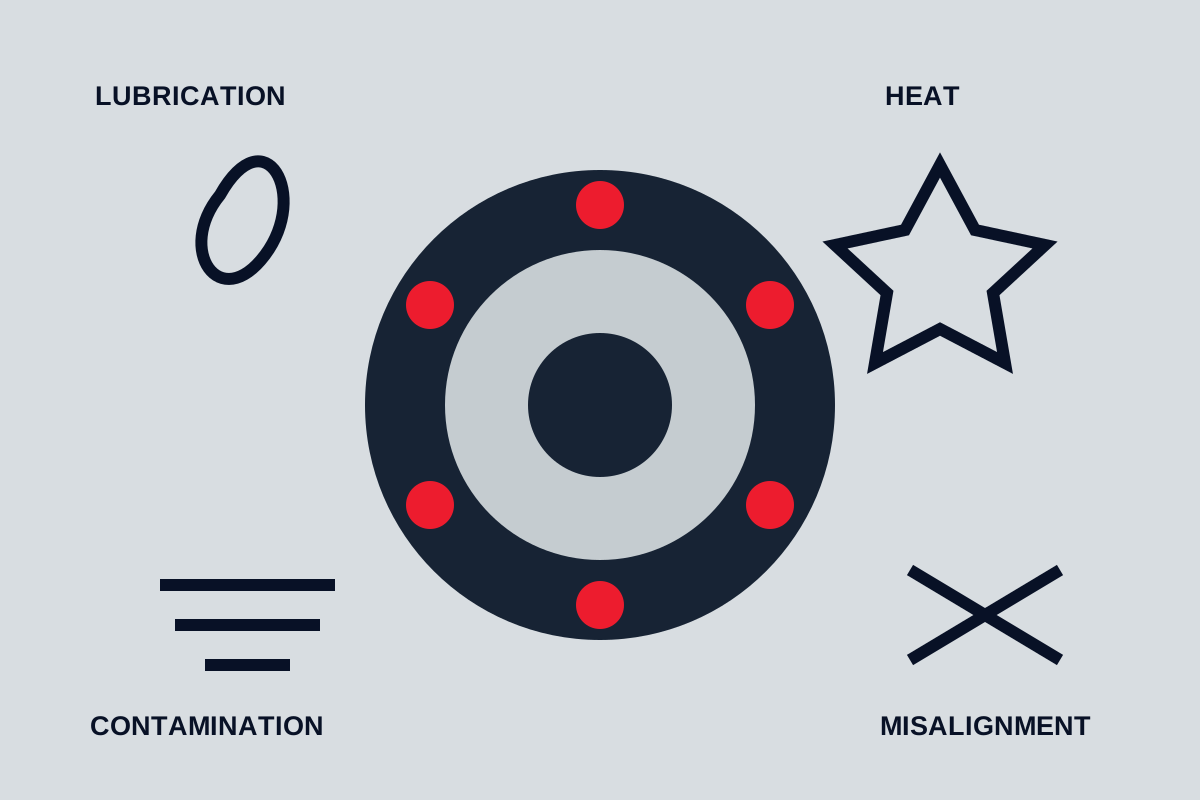
A failed bearing is evidence, not merely a replaceable part. Raceways, rolling elements, cages, seals, lubricant, fits, and load zones can show whether damage developed from lubrication, contamination, mounting, alignment, overload, temperature, electrical current, or another machine problem. Replacing the bearing before preserving that evidence often guarantees a repeat failure.
Start with symptoms, not conclusions
Noise, heat, vibration, leakage, and rising motor current indicate that something changed, but no single symptom proves a root cause. A dry or contaminated bearing can sound rough; looseness, gear damage, cavitation, rub, and misalignment can produce similar signals. High temperature may come from excess grease, insufficient lubricant, preload, seal friction, ambient heat, or process transfer.
Record the symptom in operating context:
- when it began and whether it followed maintenance, washdown, overload, or process change;
- speed, load, temperature, product, lubrication state, and ambient condition;
- whether it changes during start-up, steady operation, coast-down, or direction reversal;
- vibration trend, frequency characteristics if available, and measurement locations;
- noises, odour, visible leakage, colour, debris, and housing movement.
Do not run damaged equipment merely to collect more data if there is a risk of shaft, housing, rotor, or safety-critical failure.
Symptom-led inspection table
| Symptom | Possible mechanism | Check | Corrective direction |
|---|---|---|---|
| Rapid temperature rise after greasing | Overfill, wrong grease, blocked relief path | Quantity, purge, grease compatibility, no-load trend | Restore correct fill and relubrication method |
| Rough broadband vibration | Contamination, surface distress, poor lubrication | Lubricant sample, seals, raceway condition | Remove contamination source and restore lubrication |
| Repeating vibration tied to rotation | Raceway or rolling-element damage, looseness | Spectrum/trend, load zone, fits, shaft and housing | Correct fit or machine defect before replacement |
| Damage concentrated on one raceway edge | Misalignment, shaft deflection, housing distortion | Contact pattern, alignment, shoulders, pipe or belt loads | Correct geometry and external load |
| Fluted or washboard raceway marks | Electrical discharge may be present | Grounding, insulation, drive arrangement, mark pattern | Provide an engineered current-control path |
| Smearing or scuffing | Sliding, low load, acceleration, inadequate film | Speed/load cycle, lubricant, cage and roller marks | Correct load, lubricant, or operating sequence |
| Corrosion or false brinelling during standby | Moisture or vibration while stationary | Storage, seals, condensation, transport vibration | Improve preservation and isolate vibration |
The table gives investigation paths, not diagnoses. Confirm the physical evidence before assigning cause.
Lubrication failures
Lubricant separates surfaces, limits wear, protects against corrosion, and may carry heat or contamination away. Failure can result from too little, too much, wrong viscosity, incompatible grease, oxidised oil, depleted additives, blocked passages, poor distribution, or an interval that does not match the duty.
Insufficient film can create polishing, smearing, surface distress, and rising temperature. Too much grease increases churning and heat, especially at speed. Mixing incompatible thickeners can change consistency and release oil unpredictably. A relubrication route that fills only the housing cavity may never deliver clean grease through the bearing.
Inspect colour, odour, consistency, water, particles, and purge pattern. Sample before cleaning when possible. Record product name, batch, quantity, method, interval, and storage condition. Do not infer lubricant suitability from brand or base-oil viscosity alone; bearing size, speed, load, temperature, seal friction, and environment matter.
Corrective action should address delivery as well as lubricant choice. Verify ports, grooves, drains, oil level, filters, breathers, and the ability to purge old material without forcing contamination through the bearing.
Contamination and sealing
Hard particles indent raceways. Each rolling element passes over the dent and creates repeated stress around it. Fine abrasive contamination accelerates surface wear and changes internal geometry. Water promotes corrosion and can damage lubricant structure and film formation.
Identify how contamination entered: damaged contact seal, open labyrinth, washdown direction, dirty grease fitting, unsealed breathers, assembly handling, worn shaft surface, pressure cycling, or contaminated new lubricant. The particle type may connect damage to a process material, machining residue, wear debris, or environmental dust.
Seal replacement alone may not solve the path. Review shaft movement, runout, surface condition, housing pressure, drain arrangement, purge flow, and installation tools. A stronger contact seal can also increase heat; sealing must balance exclusion with speed and friction.
Misalignment and structural distortion
Misalignment shifts load toward one side of a raceway and can create edge stress, cage load, heat, and shortened life. Causes include non-coaxial housing bores, shoulder runout, bent shafts, soft foot, foundation movement, pipe strain, belt pull, coupling error, or thermal movement.
The damage pattern should be compared with the bearing orientation in the machine. Mark inner and outer rings before removal. A load zone that is skewed or located where the calculated load should not act can reveal geometry or looseness.
Self-aligning bearings accommodate limited angular misalignment; they do not correct unstable supports, excessive shaft deflection, or axial displacement outside the arrangement. Check alignment under operating temperature when thermal growth is material.
Incorrect fits, clearance, and preload
A ring exposed to rotating load can creep if its fit is too loose. Fretting debris, polished seats, and movement marks may appear. Excessive interference can reduce internal clearance or crack a ring. Housing distortion can make clearance uneven even when nominal dimensions look correct.
Measure shaft and housing size, roundness, taper, shoulder condition, and surface finish at multiple positions. Inspect spacers, locknuts, sleeves, and retaining features. Compare actual operating clearance or setting with the bearing arrangement requirement.
Too much preload generates heat and high contact stress. Too much clearance reduces stiffness and load sharing and can increase vibration. Thermal differences may turn a correct cold setting into an incorrect hot condition.
Load, speed, and operating duty
Overload can come from process forces, shock, belt tension, gear mesh, unbalance, hydraulic forces, rotor contact, or a changed operating point. Minimum load can also matter: rollers may skid when centrifugal and lubricant forces prevent reliable rolling contact.
Review the full duty cycle, not average load. Starts, stops, reversals, rapid acceleration, resonance, product jams, and emergency events can dominate damage. Check whether speed or temperature changed after drive programming, pulley replacement, impeller trimming, or production increase.
Catalogue life calculations assume inputs that real contamination, lubrication, and mounting may not achieve. Use them to compare arrangements, then validate the surrounding system described in industrial bearing types.
Electrical damage
Current passing through bearing contacts can melt microscopic surface areas and produce pitting, frosting, or regular fluting as damage develops. Variable-speed drives, poor grounding, static charge, and machine electrical paths can contribute, but the visible pattern should be confirmed before concluding electrical cause.
Measure shaft voltage and current with suitable methods and competent electrical support. Review grounding, cable routing, motor construction, insulation, and driven-equipment path. Insulated bearings or grounding devices are application choices, not universal fixes; current may find another damaging path if the system is not understood.
Mounting and handling damage
Force transmitted through rolling elements during mounting can dent raceways before service. Hammer blows, dirty heating methods, excessive temperature, dropped bearings, damaged packaging, and incorrect tools leave characteristic evidence. Press only through the ring being fitted and use controlled heating when approved.
False brinelling can develop when a stationary bearing vibrates through a small angle and lubricant is displaced from the contact. Transport, nearby running machines, and standby equipment can create the condition. Preservation must address both moisture and vibration.
Investigation sequence
- Make the equipment safe and record the operating symptom before disturbance.
- Photograph the machine, lubricant leakage, seals, coupling, base, and pipe or belt loads.
- Mark ring orientation, load direction, and component positions.
- Sample lubricant and debris before cleaning.
- Remove the bearing with a method that does not create misleading damage.
- Inspect seals, fits, shoulders, shaft, housing, spacer, locking, and lubricant paths.
- Examine damage distribution on both rings, rolling elements, cage, and raceway edges.
- Compare physical evidence with operating history and machine geometry.
- Define corrective action and a measurable check after restart.
Escalate to the bearing manufacturer or a qualified failure-analysis specialist when damage is severe, safety or production consequence is high, evidence conflicts, or material examination is required.
Prevention after replacement
Do not close the investigation with new bearing installed. Record corrected fits, alignment, lubricant, quantity, seal condition, mounting method, and baseline vibration and temperature. Verify the machine at no load and operating load as appropriate, then trend early service.
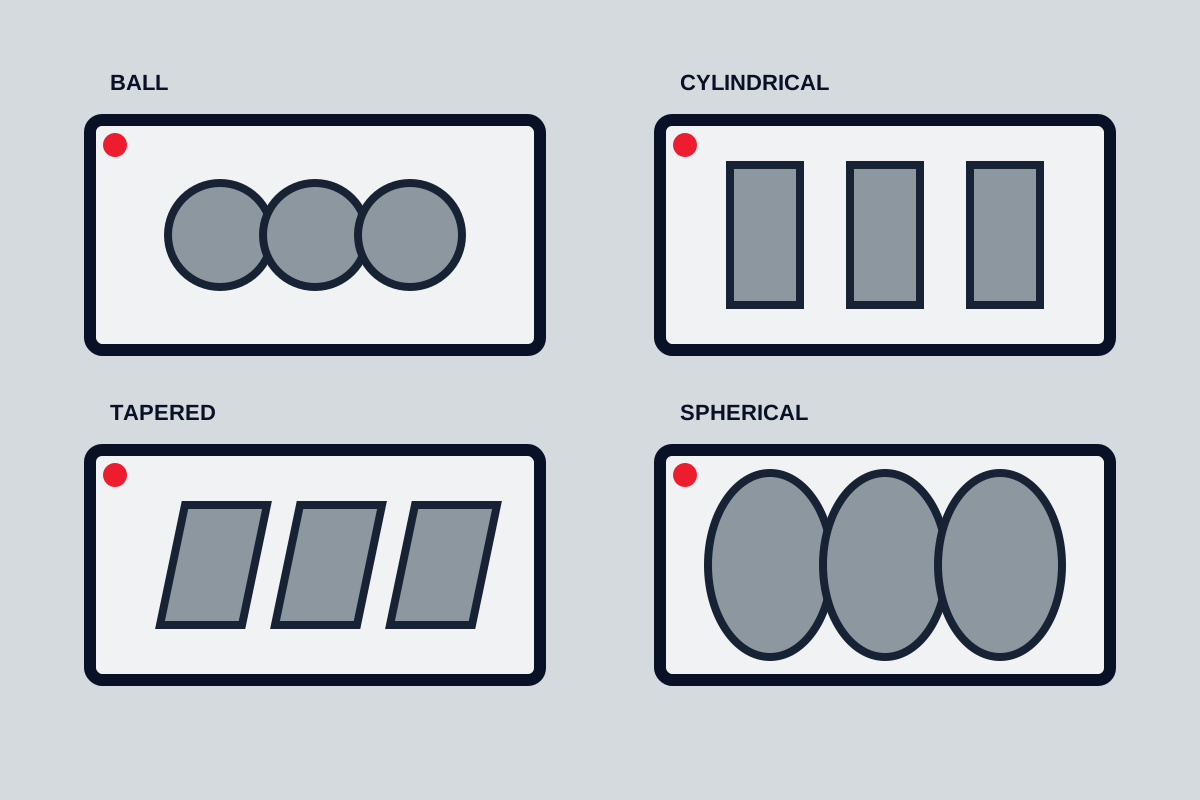
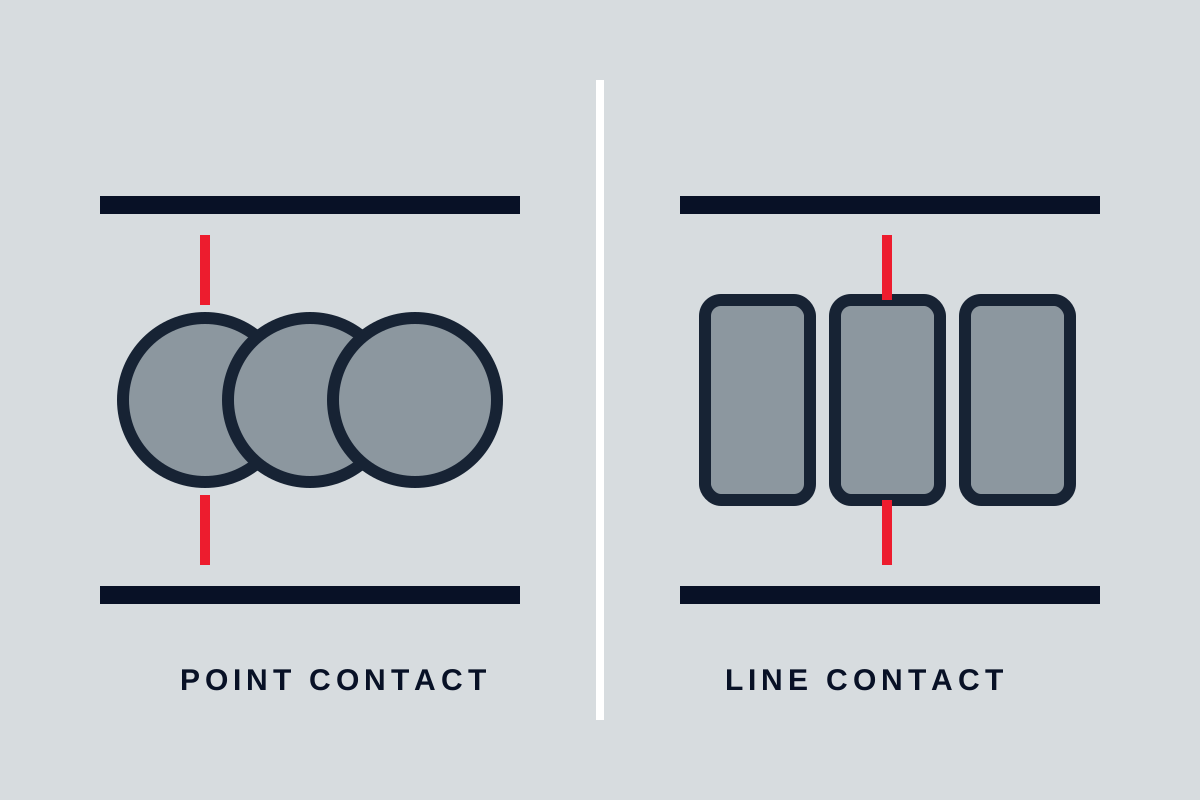
The choice between ball and roller bearings can affect load and stiffness, but repeated failures usually require attention to the complete arrangement. Prevention comes from removing the mechanism that damaged the bearing, not from selecting a more expensive replacement without evidence.
Lubrication and contamination
Too little lubricant allows damaging contact; too much can raise temperature through churning. Wrong viscosity, incompatible grease or degraded oil also shortens life. Fine hard particles indent raceways and create repeating stress as rolling elements pass over them.
Fit and alignment
Loose fits can creep and fret, while excessive interference reduces internal clearance. Shaft and housing shoulders must support the rings squarely. Misalignment, bent shafts and soft foundations create uneven load zones that a new bearing will not correct.
Preserve the evidence
Record operating conditions before disassembly. Photograph the bearing, seals and lubricant, mark ring positions and inspect mating surfaces. Trend vibration and temperature so the corrective action can be checked after restart.