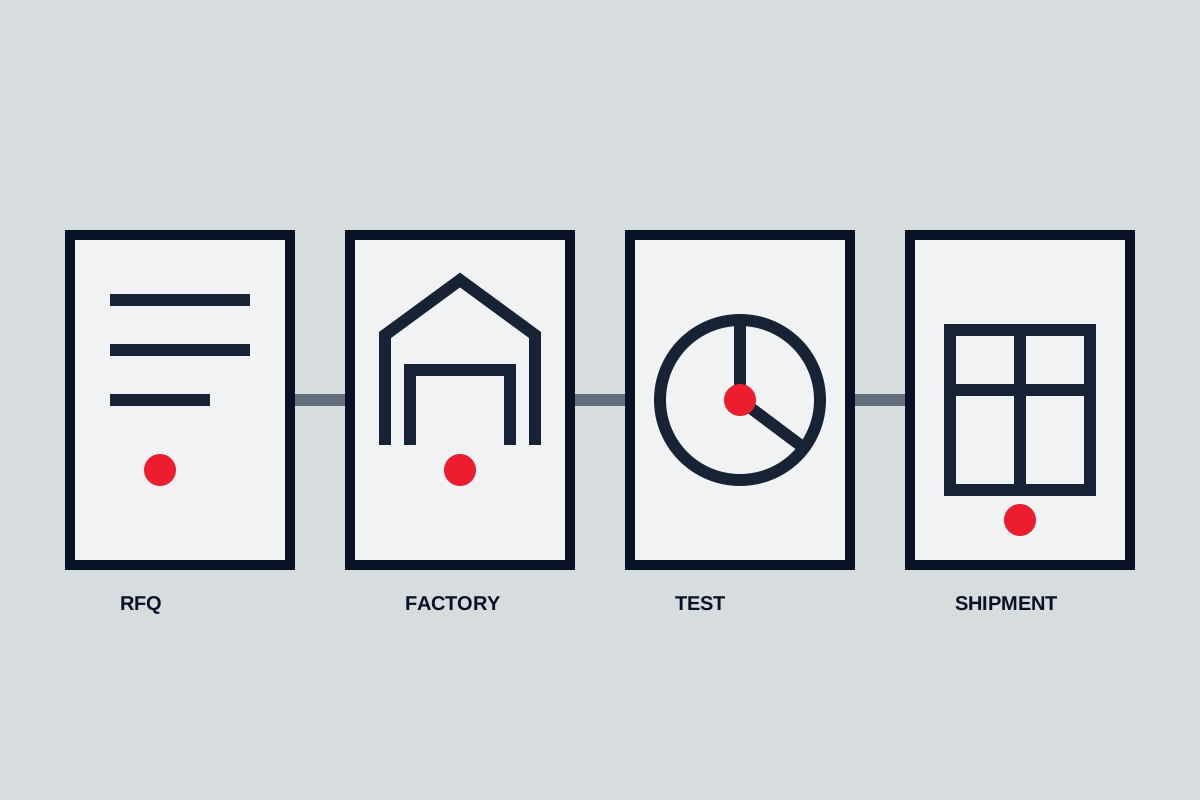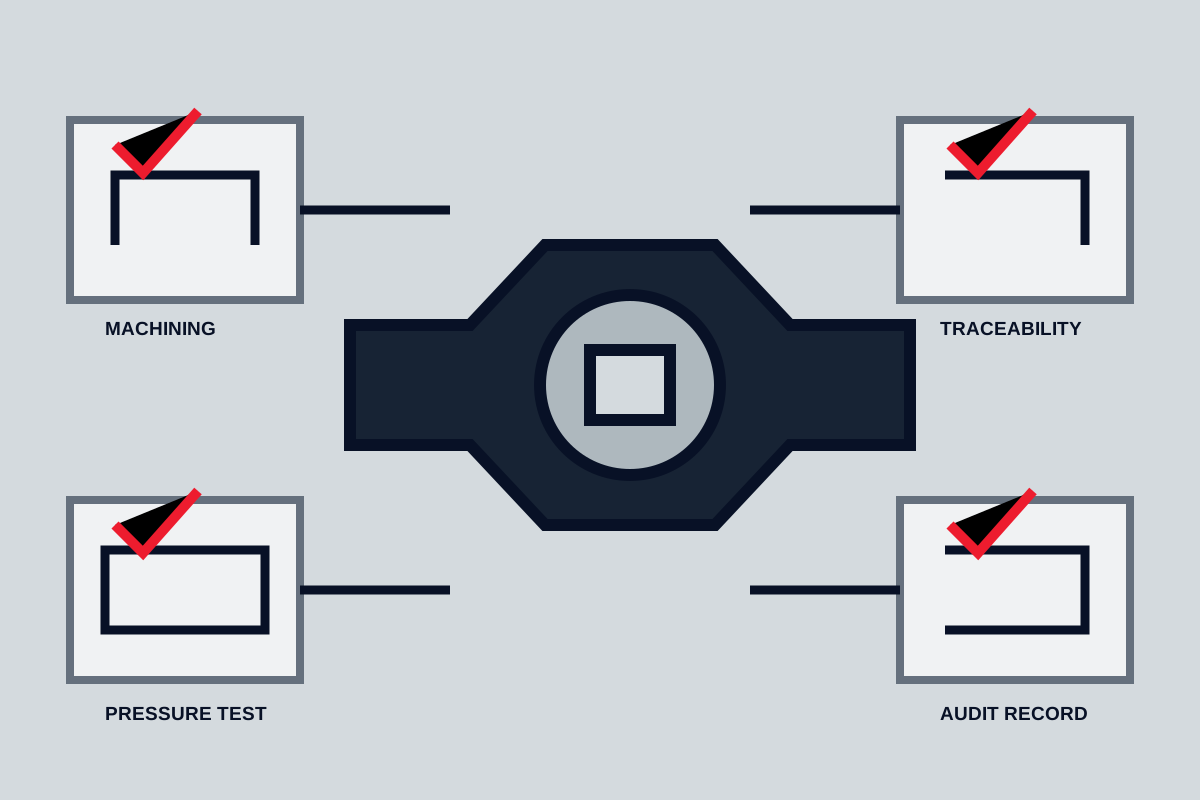


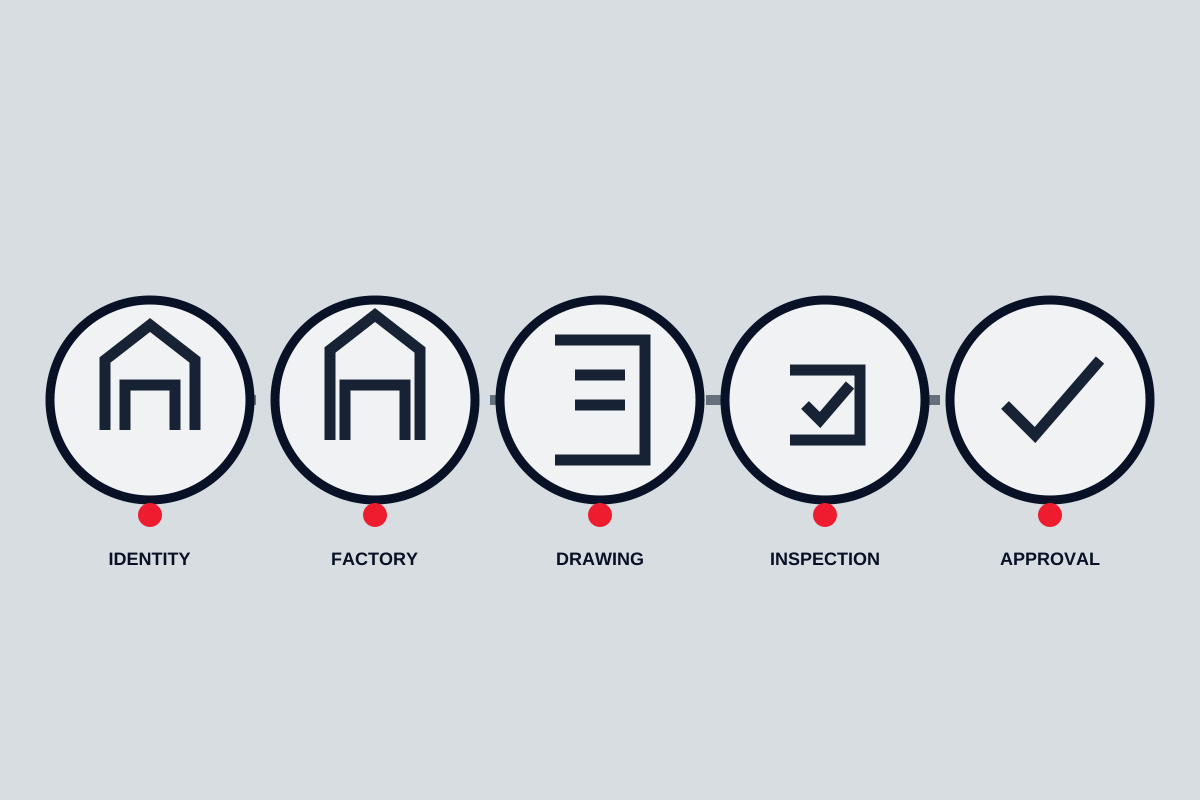
Supplier verification connects a legal business to the people, plant, process, and controls that will fulfil an order. A website, marketplace profile, video, or certificate may start the investigation, but none proves that the quoted entity controls the proposed product. Verification should produce an evidence trail from specification and contract through manufacturing, inspection, payment, and shipment.
Define what must be verified
Risk determines depth. A standard replaceable component, an engineered pressure item, a safety-critical assembly, and a custom production line should not use the same checklist. Consider technical complexity, consequence of failure, order value, replacement lead time, access after installation, regulatory obligations, and supplier experience.
Write verification questions against the order:
- Is the contracting company legally identifiable and authorised to sell?
- Which physical facility and sub-suppliers will produce the item?
- Can they manufacture the required size, material, tolerance, and quantity?
- How are drawings, revisions, materials, processes, inspection, and nonconformance controlled?
- What evidence will prove conformity before payment and shipment?
- Who is responsible if work is outsourced or the product fails acceptance?
Without this scope, an audit can collect impressive but irrelevant evidence.
Confirm legal and commercial identity
Match the registered company name and address with the quotation, contract, invoice, export documents, and bank beneficiary. Identify directors or authorised representatives where legitimate records permit. Confirm the business scope and status through current official registries or qualified local support rather than screenshots supplied by the seller alone.
Different names may be legitimate. A factory may use a related export company, or a trading company may contract with the buyer while placing work at another factory. Require a written explanation of relationships, responsibilities, warranty, and payment. Do not send funds to an unrelated individual or changed bank account without independent verification through a known contact channel.
Check domain, email, telephone, and physical address consistency. Sudden contact or banking changes, pressure to avoid the contracting entity, and refusal to provide registration details are serious red flags.
Determine the supplier’s role
A manufacturer controls relevant production. An assembler integrates purchased parts. A trading company manages suppliers and export. A distributor resells established products. Capability should be judged against the role promised in the quotation.
Ask directly:
- Which operations occur at this address?
- Which operations and components are outsourced, and to whom?
- Who owns the design and approves changes?
- Who performs incoming, in-process, final, and acceptance inspection?
- Who holds warranty responsibility and technical records?
Trading is not automatically a problem, and owning every process is not automatically an advantage. Hidden supply chains and unclear accountability are the problem.
Verify production capability
Request a process flow for the actual product. Compare required operations with equipment, workforce, fixtures, measurement capability, capacity, and recent records. A machine list should identify usable range and condition, not merely equipment names.
During a live video, visit, or third-party audit, trace one representative job from incoming material through release. Observe whether drawings at workstations are current, materials are identified, inspection status is visible, nonconforming items are segregated, and completed records match physical parts.
Capacity includes planning and bottlenecks. Ask about current loading, shift pattern, critical outsourced processes, maintenance, tooling, and contingency. Avoid accepting a delivery promise based only on theoretical machine output.
Review engineering and drawing control
For custom or configured products, determine who reviews requirements and converts them into drawings, bills of material, work instructions, and inspection plans. Request a controlled sample showing revision, approval, and change history.
Clarify whether supplier drawings require buyer approval and what that approval means. The supplier should retain responsibility for meeting the purchase specification unless the contract explicitly allocates design responsibility otherwise.
Every change to material, component source, dimensions, process, software, finish, test, or packaging should follow written control. Unauthorised substitution is a common sourcing risk because it may not be visible in final appearance.
Assess quality controls through records
Quality claims become useful when connected to records. Select a recent representative order and check:
| Control | Evidence to examine |
|---|---|
| Contract review | Requirements, deviations, feasibility, and responsibilities |
| Incoming control | Supplier identity, material or component record, inspection status |
| Process control | Current drawing, instruction, operator record, machine or fixture |
| Measurement | Characteristic, method, instrument identity, calibration status, result |
| Traceability | Link from batch or component to finished serial or lot |
| Nonconformance | Description, segregation, disposition, approval, corrective action |
| Final release | Completed checks, documents, authorised release, packing list |
A certificate for a management system can support the review, but it does not prove that one product conforms. Verify certificate scope and status independently when it is contractually important.
Check material and component traceability
Define which items need traceability. Critical material may require linkage from purchase record and supplier batch through incoming identification, processing, assembly, and finished product. Purchased motors, bearings, seals, electronics, and instruments may need manufacturer part numbers and serial or batch records.
Compare certificates with physical markings and purchase requirements. Check whether identity survives cutting, machining, heat treatment, painting, and assembly. If testing is required, define method, sampling, laboratory qualification, acceptance, and action after failure.
Do not request every available certificate. Request evidence that controls a real product risk.
Use samples and first-article approval
A sample can confirm appearance, interface, dimensions, workmanship, and basic function. It does not prove stable mass production, capacity, or service life. Identify the sample uniquely and document materials, process, and deviations.
For custom work, use first-article inspection to compare an initial production item with approved drawings and specifications before the batch proceeds. Define whether approval releases only dimensions or also material, function, documentation, and packaging.
Retain the approved sample or data where practical. Require change notification so later production cannot silently differ.
Plan inspection before the order
Inspection is strongest when built into the contract. Define review, witness, and hold points at stages where evidence would otherwise disappear: material identification, special processes, internal assembly, functional testing, and packing.
Provide inspectors with the purchase order, approved drawings, specifications, sample plan, test procedure, and acceptance criteria. A generic checklist cannot decide whether an engineered product is correct.
Inspection reports should identify supplier, location, date, product, quantity, serial or batch, drawing revision, instruments, results, nonconformances, photographs, and release status. Resolve failures through documented disposition and retest; do not accept edited photos or replacement certificates without traceability.
Define test and acceptance criteria
State what will be tested, under which conditions, using which method, and what constitutes acceptance. Avoid adding exact tolerances or standards from memory. The governing drawing, specification, manufacturer method, or verified project standard should supply them.
Separate tests that demonstrate performance from checks that demonstrate workmanship or pressure integrity. Confirm test equipment capacity, calibration, data capture, and product configuration. Witnessing a test is not useful if the tested item cannot be linked to the shipment.
For complex equipment, agree raw data and report format before the test. Preserve failed results and corrective action.
Contract and payment controls
The contract should identify the legal parties, product specification, approved documents, quantity, price, currency, delivery, inspection rights, change control, documentation, packing, warranty, intellectual property, confidentiality where needed, nonconformance remedy, and dispute framework. Obtain appropriate legal and trade advice for significant orders.
Link payment to meaningful milestones rather than unsupported promises. Examples include approved drawings, completion of critical manufacturing stage, passed acceptance test, and shipment release. Balance payment protection with reasonable supplier cash-flow needs.
Verify bank changes independently using a known channel. Fraud controls belong alongside quality controls.
Packing and shipment verification
Specify preservation, corrosion protection, moisture control, closure of openings, sensitive-component protection, crate construction, lifting, centre-of-gravity marking, labels, documents, and storage condition. Export packing should match handling and destination, not only the factory-to-port journey.
Inspect packing before closure and use a detailed packing list. Photograph serial numbers, loose parts, spares, accessories, and internal restraint. Confirm shipping documents match the contract entity and goods.
Red flags
- inconsistent legal, factory, invoice, contract, or bank identities;
- catalogue and claimed capability far broader than observable operations;
- refusal to disclose outsourced factories or critical component sources;
- uncontrolled drawings, missing revisions, or unexplained substitutions;
- certificates that cannot be linked to physical materials or delivered units;
- precompleted inspection or test reports;
- unwillingness to record deviations and nonconformances;
- pressure to pay or ship before agreed inspection;
- repeated changes in company, contact, or beneficiary without verification;
- quotations that omit technical scope but promise full compliance.
Final verification decision
Document evidence, gaps, risks, and controls. A supplier can be approved for one product family, size range, material, process, or order without being approved universally. Set conditions such as pilot order, additional inspection, restricted sub-suppliers, document approval, or increased testing where evidence is incomplete but manageable.
For product-specific qualification, use the pump sourcing workflow or valve manufacturer assessment. Supplier verification is complete only when the entity, capability, product, evidence, contract, and payment path all reconcile.
Confirm identity and scope
Match the registered company name, address, bank beneficiary, quotation and contract. Determine whether the seller is the manufacturer, a related export company or an independent trader. Any model can work when responsibilities and supply-chain visibility are clear.
Test operational capability
Request process flow, equipment list, quality plan and recent anonymised records for similar products. During an audit, trace one job from incoming material through production, inspection, nonconformance control and shipment.
Reduce order risk
Approve drawings and samples before volume production. Put specifications, documents, inspection rights, acceptance criteria, packaging and change-control rules into the purchase contract. Use staged payments and independent inspection where the consequence of nonconformance is significant.