

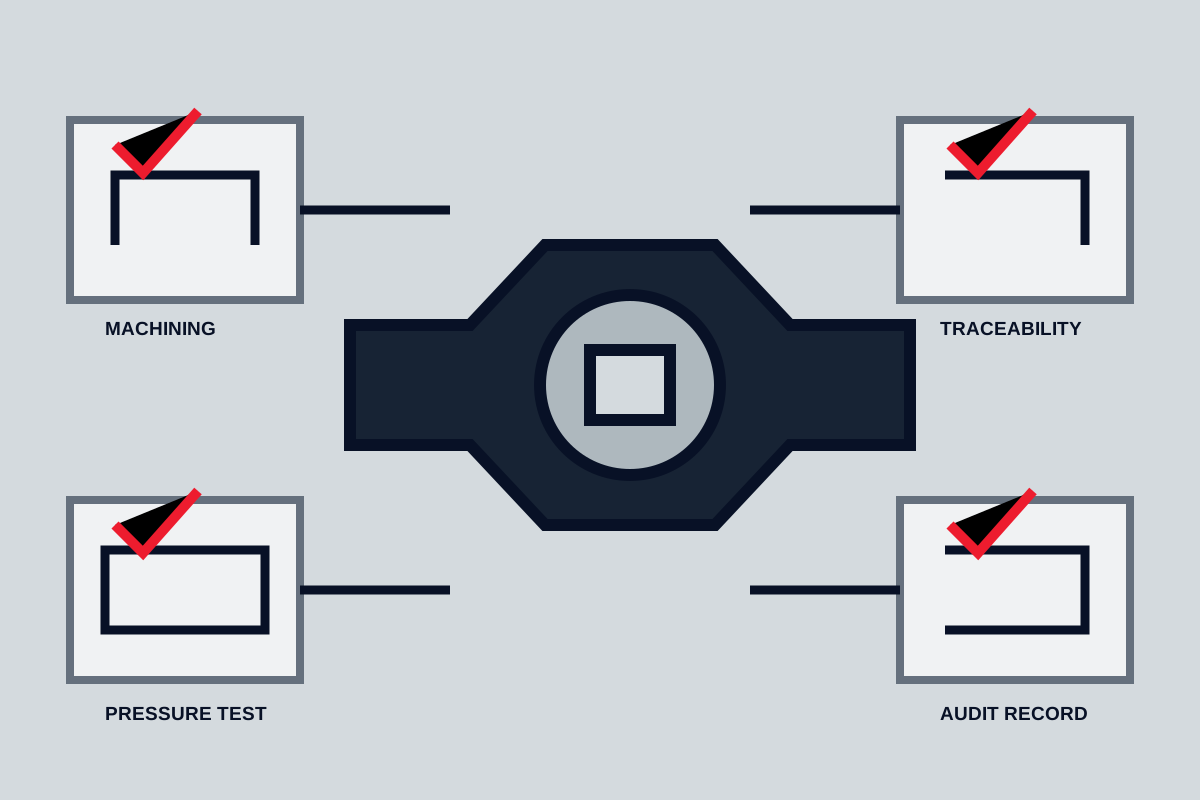
A reliable valve manufacturer must control more than final assembly. Body integrity, material identity, machining, seat performance, stem sealing, actuation, testing, and traceability depend on linked processes and records. Finding a supplier in China therefore means matching one defined valve scope to demonstrated capability—not choosing the factory with the broadest catalogue or strongest claims.
Define the valve scope first
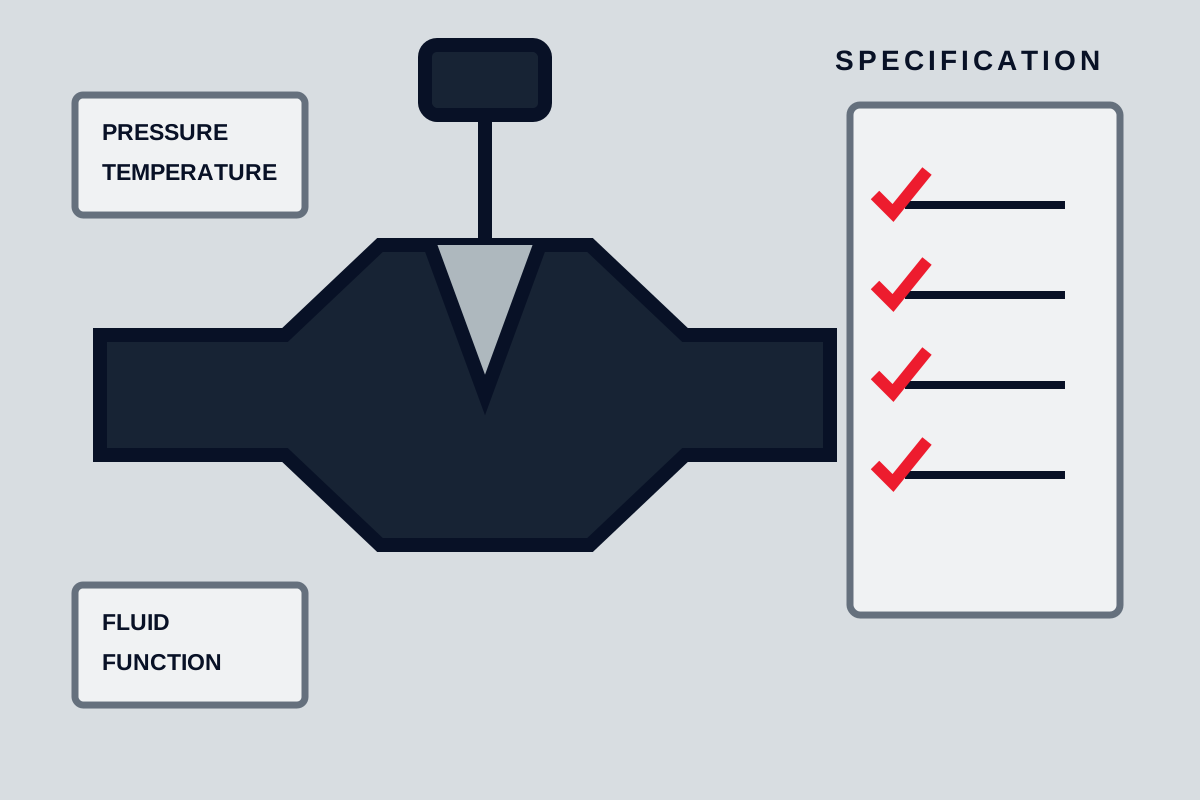
Prepare a controlled data sheet before searching. State valve type, function, size range, connection, design pressure and temperature, fluid, solids, corrosion, shutoff direction, leakage expectation, materials, operation, actuator, documentation, and test requirements. The industrial valve selection guide provides the main inputs.
Separate standard catalogue products from engineered requirements. A manufacturer strong in resilient-seated utility butterfly valves may not control metal-seated severe-service ball valves. A factory producing cast gate valves may not have the clean assembly, welding, machining, or test systems required for another family.
Ask suppliers to identify exactly which products and processes are made at the quoted facility. This prevents a large catalogue from being mistaken for broad in-house capability.
Manufacturer, assembler, or trading company
Confirm the legal seller and the physical factory. A manufacturer operates relevant production and quality processes. An assembler may buy bodies, trim, actuators, and seats while controlling final assembly and testing. A trading company coordinates one or more factories. Each model can serve an order, but responsibility and visibility differ.
Request the registered company name, address, business scope, quotation entity, invoice entity, contract entity, and bank beneficiary. Ask who owns drawings, selects sub-suppliers, approves material, releases production, handles nonconformance, and provides warranty support.
Do not reject a supplier only because castings or actuators are outsourced; many legitimate valve makers use specialised supply chains. Evaluate how those sources are qualified, controlled, identified, and traced.
Shortlist using relevant evidence
Initial evidence should relate to the actual valve scope:
- completed data sheet and explicit deviation list;
- product drawings that match the offered design;
- anonymised material, machining, assembly, and test records from similar valves;
- equipment list showing relevant size and pressure capability;
- examples of nonconformance and corrective-action records;
- traceability from incoming material to a finished valve;
- calibration records for test and measurement equipment;
- organisational responsibility for engineering, quality, and production.
Certificates can support qualification only when issuer, scope, site, product, and validity are verified. A logo on a brochure is not evidence that the offered valve is covered.
Audit production capability
Trace a real or representative order through the factory. Start with contract review and drawing revision, then follow incoming material, identification, storage, machining, special processes, cleaning, assembly, testing, painting, marking, packing, and release.
At machining, review machine capacity, fixtures, programs, first-piece inspection, tool control, and measurement. Critical seat, stem, body, and flange geometry should be tied to controlled drawings and inspection records. A row of machines does not prove that tolerances are understood or maintained.
At assembly, check component identity, cleanliness, work instructions, seal and packing handling, lubricant control, fastener method, actuator setting, and serial-number traceability. Mixed components and handwritten substitutions without approval are warning signs.
Foundry and forging control
Many valve factories buy castings or forgings. Ask how foundries are approved, how patterns and drawings are controlled, and how material batches are identified. Review incoming visual and dimensional inspection, material-document verification, repair control, and traceability through machining.
Casting repair may be acceptable only within the governing specification and approved procedure. The supplier should record location, method, personnel qualification where required, examination, and final acceptance. Hidden grinding or welding after failed pressure testing is unacceptable.
If the valve maker owns a foundry, audit it as a separate process. Furnace, chemistry, heat treatment, moulding, cleaning, repair, and testing need controls beyond the assembly shop.
Material traceability
Define which pressure-containing and wetted parts require traceability. A useful trail connects purchase requirements, supplier or foundry batch, material evidence, incoming identification, machining traveller, assembly record, valve serial number, and final documentation.
Material certificates should match markings and component identity. Positive material identification or independent testing may be justified for selected risk-critical parts, but sampling and acceptance must be defined. It should not become a decorative test disconnected from traceability.
Seats, seals, packing, coatings, fasteners, and actuators also require controlled identification. A correct body alloy does not compensate for an incompatible seat or unknown trim.
Pressure and seat testing
Inspect the test bench and its operating range, restraints, safety guarding, fluid handling, gauges or transducers, calibration, and data recording. Ask how the factory prevents incorrect valve orientation, trapped air, unsafe access, and cross-contamination.
The purchase specification should define pressure-boundary and seat-test conditions, direction, duration, medium, and acceptance using the applicable verified standard or project requirement. Avoid inserting test numbers from memory. Different valve types and standards can use different criteria.
Witness a test on the same or representative construction. Confirm serial number, valve position, instruments, procedure revision, and raw result. A preprinted certificate without traceable observations is weak evidence.
Design and engineering control
Determine whether the supplier owns and controls the design or reproduces a standard product. Review drawing approval, revision history, bill of materials, pressure-temperature basis, wall and closure design, seat loading, stem or shaft sizing, actuator torque or thrust basis, and change control.
For automated valves, confirm responsibility for valve, mounting kit, coupling, actuator, accessories, tubing, wiring, settings, and functional testing. Interface failures often occur when these scopes are split without one accountable integrator.
Ask the supplier to identify assumptions and deviations. Engineering staff should be able to explain why the offered seat, trim, actuator, and body fit the service rather than repeating a catalogue description.
Quality documentation
Build the required manufacturing record before production. Depending on risk it may include:
| Record | Qualification question |
|---|---|
| Approved drawing and bill of materials | Does production use the same revision as the order? |
| Material traceability | Can critical parts be linked to the valve serial number? |
| Dimensional report | Are identified characteristics measured and accepted? |
| Special-process records | Are procedures, personnel, and results controlled where required? |
| Pressure and seat tests | Are raw results tied to instruments and serial number? |
| Coating report | Are preparation, conditions, thickness, and repair recorded as specified? |
| Nonconformance record | Are deviations reviewed before shipment? |
| Final data book | Does it contain the agreed evidence without unexplained substitutions? |
Document quantity is not the objective. Each record should support a purchase requirement and trace to the delivered valve.
Pilot order and inspection plan
Use a sample or pilot order when product novelty, supplier experience, or consequence justifies it. Inspect the sample against approved drawings and functional requirements. Preserve its serial number and record any corrections before volume production.
Agree an inspection and test plan with review, witness, and hold points before order. Focus hold points on irreversible events such as material identity before machining, critical repairs, assembly closure, and final testing. Define notification and release authority.
An independent inspector needs the purchase order, approved drawings, procedures, and acceptance criteria. A generic final inspection cannot recover missing process control.
Commercial and delivery performance
Evaluate communication accuracy, response to technical questions, document timeliness, planning, and willingness to disclose deviations. These behaviours often predict order execution better than a polished presentation.
Link payment to agreed milestones. Define change control, delay reporting, warranty response, spare availability, packing, shipping documents, and nonconformance remedy. Avoid commercial terms that force release before required evidence is available.
Red flags
- the catalogue spans unrelated valve technologies but the factory shows only assembly;
- legal name, factory address, quotation, invoice, contract, and bank beneficiary conflict;
- drawings lack revision control or appear copied from another product;
- material remains described only as stainless or alloy without traceable detail;
- supplier will not identify casting, forging, actuator, or seat sources;
- test certificates are prepared before testing or lack serial numbers and instruments;
- failed pressure tests lead to unrecorded repair and immediate retest;
- price or schedule is conditional on skipping inspection or document approval;
- requested deviations are answered only with fully compliant.
Final qualification decision
Score the supplier against the exact order: identity, relevant product experience, engineering, supply-chain control, machining, assembly, testing, traceability, documentation, change control, capacity, and commercial execution. Record open risks and required controls rather than reducing the decision to pass or fail.
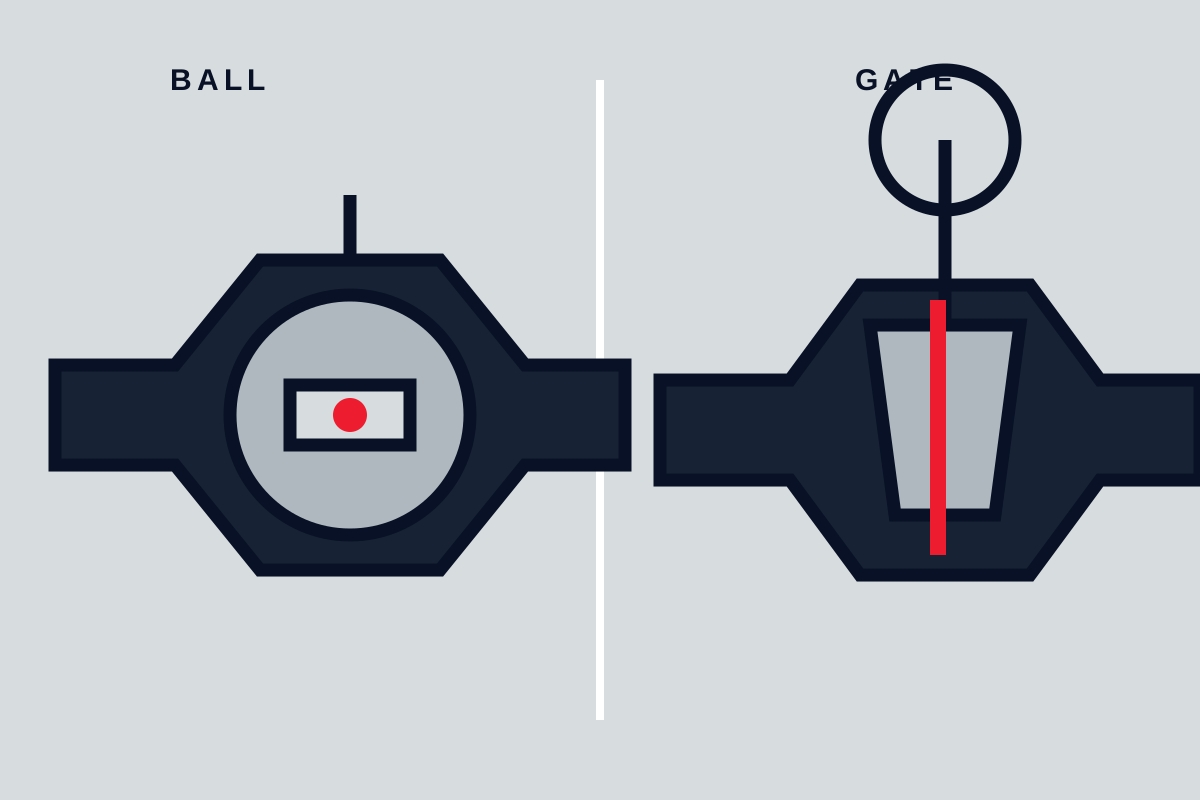
Use ball versus gate valve or butterfly versus ball valve guidance to confirm that the factory’s strongest product family actually matches the service. Reliability comes from demonstrated control of the offered valve, not from location or company size.
Match capability to the order
Define valve type, size, pressure class, materials, end connections, testing standard and service. Ask which product families the factory makes routinely and which it buys or subcontracts. Relevant repeat production is more useful than an extremely broad catalogue.
Audit critical controls
Review drawing control, casting and forging suppliers, positive material identification where required, heat treatment, machining, welding, assembly and test benches. Calibration labels alone are insufficient; check records and operator practice against a recent job.
Qualify with evidence
Use sample or pilot orders when risk justifies them. Agree document review and inspection points before production. Nameplate data, certificates and test reports must trace back to the same purchase order and valve identification.