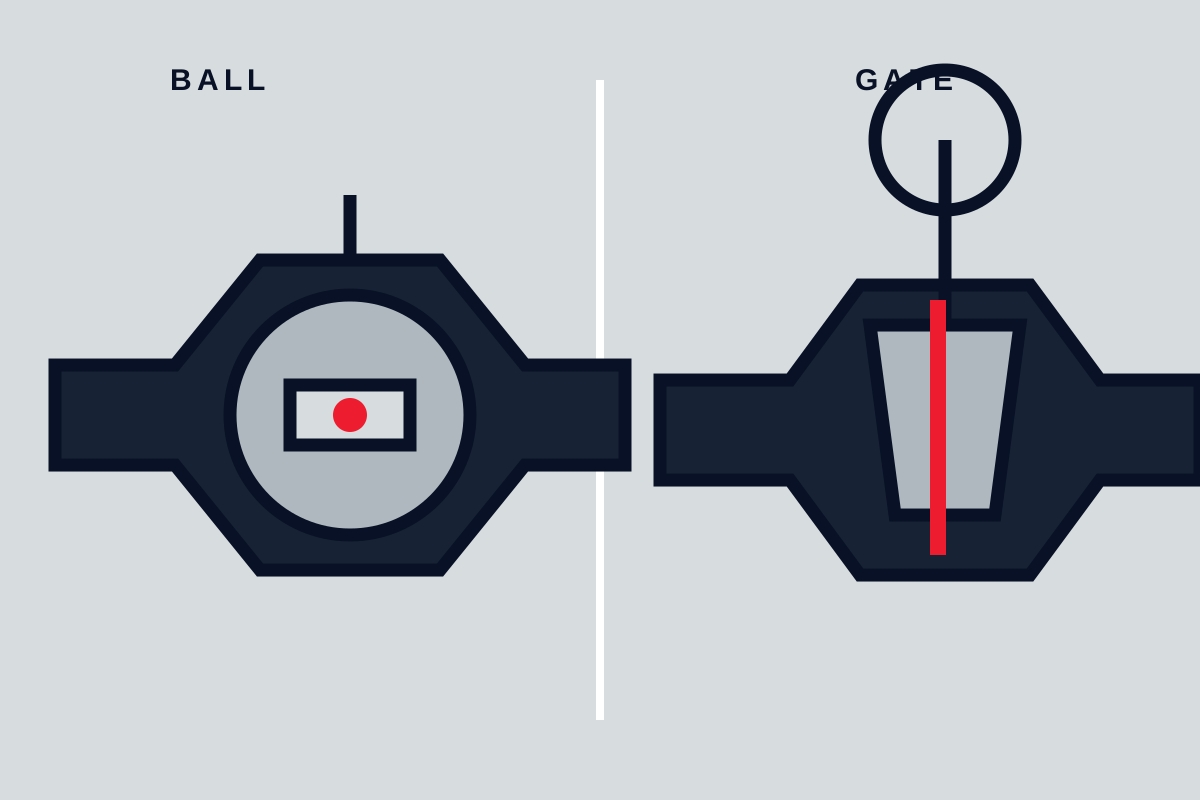


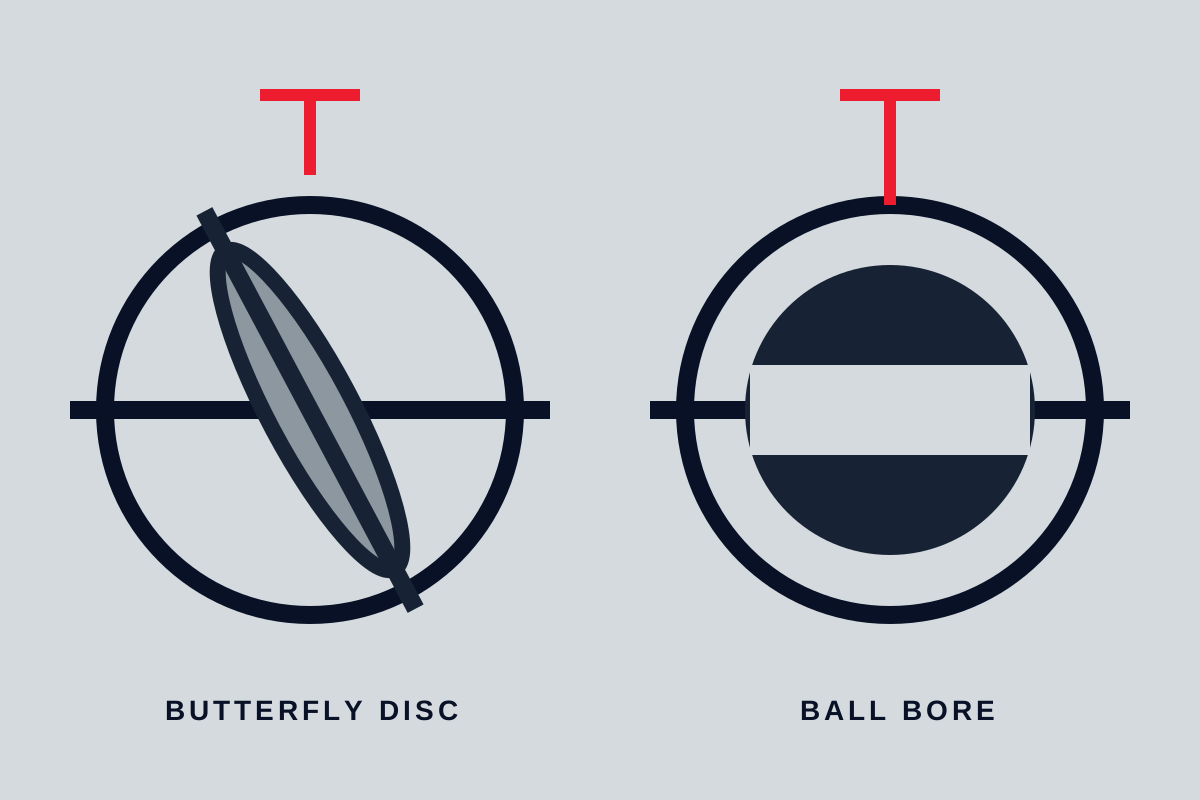
Choose a butterfly valve when low weight, short face-to-face length, and economical large-diameter isolation are priorities. Choose a ball valve when an unobstructed bore, very low open-valve restriction, or tight shutoff in a compatible service matters more than weight and initial size. Both are quarter-turn valves, but the disc of a butterfly valve stays in the flow while a full-port ball can move its closure almost completely out of the flow path.
Core differences
| Decision factor | Butterfly valve | Ball valve |
|---|---|---|
| Closure | Disc rotates around a shaft | Bored sphere rotates between seats |
| Open flow path | Disc and shaft remain in the bore | Full-port design can be nearly unobstructed |
| Installed size | Short and relatively light | Usually longer and heavier, especially at large size |
| Shutoff | Depends on resilient, high-performance, or offset seat design | Soft-seated designs can provide tight shutoff; metal seats extend service range |
| Torque behaviour | Flow-induced torque changes with position | Breakaway and seat torque are important, especially under differential pressure |
| Typical diameter economics | Often attractive as diameter increases | Often attractive at small and medium size or where full bore is required |
| Pigging | Disc normally prevents passage | Full-port bore may permit pigging if all internal dimensions are suitable |
These are tendencies, not acceptance criteria. Wafer, lugged, double-flanged, concentric, double-offset, and triple-offset butterfly valves differ substantially. Floating and trunnion-mounted ball valves also have different seat loading and cavity behaviour.
Operating mechanisms
A butterfly valve rotates a disc approximately a quarter turn from closed across the pipe to open along the flow. The shaft may pass through the disc or use an offset arrangement. In resilient-seated concentric designs, the disc interacts directly with an elastomeric liner or seat. Offset designs move the disc away from the seat during opening to reduce rubbing and extend the pressure-temperature envelope.
A ball valve rotates a sphere with a bore. When open, the bore aligns with the pipe. Seats seal around the ball when closed. Floating-ball designs use pressure to push the ball toward a downstream seat; trunnion designs support the ball and use seat mechanisms to establish sealing.
Both mechanisms suit lever, gear, pneumatic, electric, or hydraulic operation. Similar actuator appearance does not mean similar torque. Obtain the valve maker’s torque data for the service and differential pressure.
Pressure drop and flow disturbance
The butterfly disc and shaft remain in the flowing stream. They create a local restriction and downstream disturbance even when fully open. Whether that matters depends on velocity, available pressure, energy cost, noise, and the sensitivity of downstream instruments or equipment.
A full-port ball valve offers a straighter path, but verify the actual bore and transitions. Reduced-port ball valves intentionally narrow the path. They may be acceptable where pressure loss is modest, but can increase velocity and be unsuitable for pigging or some solids.
Do not compare only nominal valve size. Use supplier flow data for the exact valve configuration and opening. For modulating duty, evaluate control behaviour, velocity, cavitation or flashing risk, noise, and actuator response. Standard isolation versions should not automatically be used as control valves.
Shutoff and seat selection
Resilient-seated butterfly valves are widely used in compatible water and utility services. The seat material limits temperature, chemical exposure, wear, and allowable velocity. Deposits on the seat or disc can prevent closure. High-performance and offset designs use different seating mechanics and may suit more demanding service, but the exact construction must be reviewed.
Soft-seated ball valves can provide tight shutoff when the fluid is clean and the polymer seat remains compatible with temperature and chemistry. Abrasive particles can score seats; deposits can pack the cavity. Metal-seated designs tolerate different conditions but require clear leakage expectations and higher torque may result.
For both families, specify shutoff direction, differential pressure, temperature, test condition, and acceptable leakage. Do not rely on an unqualified phrase such as zero leakage.
Torque, actuation, and cycling
Butterfly-valve torque includes seat friction, bearing friction, and hydraulic torque on the disc. Hydraulic torque changes with disc position and flow direction. The actuator must control the valve through the full stroke without instability near partially open positions.
Ball-valve torque is often highest when breaking the ball away from the seats, but seat design, pressure, temperature, frequency, and deposits can change the curve. Fast quarter-turn movement can create pressure surge. Set operating speed according to the piping system and process consequence.
Define fail-open, fail-closed, or fail-in-place behaviour; available utility pressure; manual override; position feedback; and cycling rate. An actuator selected from nominal valve size alone is not a reliable specification.
Installation and piping constraints
Butterfly valves are compact between flanges, but the disc may extend beyond the body when open. Check mating pipe bore, liners, gaskets, and nearby check valves or fittings so nothing obstructs the disc. Wafer bodies rely on through-bolting and line geometry; lugged or flanged bodies provide different removal and end-of-line capabilities that must be confirmed.
Ball valves need more face-to-face space and can be heavy at large diameters. Support the line and actuator independently where required. A body cavity can trap liquid between seats. Thermal expansion or volatile-liquid behaviour may require a defined pressure-relief arrangement.
Both valves need correct flange alignment, bolt tightening, shaft orientation, actuator access, and removal clearance. Welding or heat treatment near seats must follow supplier instructions.
Maintenance and service life
Butterfly-valve inspection focuses on seat condition, disc edge, shaft, bearings, seals, liner damage, and actuator alignment. Some resilient liners are replaceable; other valves require factory repair or complete replacement. Verify the maintenance method before choosing a valve for a difficult location.
Ball-valve maintenance may involve seats, stem packing, body seals, bearings, cavity cleaning, and ball surface condition. Multi-piece bodies can be serviceable but create additional pressure-boundary joints. Confirm safe depressurisation and drainage before disassembly.
Service life cannot be specified from valve family alone. Cycling, differential pressure, velocity, particles, corrosion, temperature, actuator sizing, installation strain, and maintenance quality all matter.
When to choose each valve
Choose a butterfly valve when:
- diameter makes valve weight and installed space important;
- a moderate open-valve restriction is acceptable;
- the disc can remain in the flow without interfering with product or cleaning;
- a suitable seat design exists for temperature, chemistry, solids, and shutoff duty;
- line removal and flange arrangement match the body style.
Choose a ball valve when:
- full bore, pigging, or minimal flow obstruction is required;
- tight isolation is needed in a seat-compatible service;
- compact quarter-turn automation is valuable at the selected size;
- cavity pressure, deposits, and trapped liquid can be managed;
- the higher weight and face-to-face length are acceptable.
Neither standard valve is suitable for continuous throttling merely because it can stop at intermediate positions. Use characterised trim or a dedicated control-valve design when predictable modulation is required. For large isolation duties where slow operation is acceptable, also compare ball and gate valves.
Final decision checklist
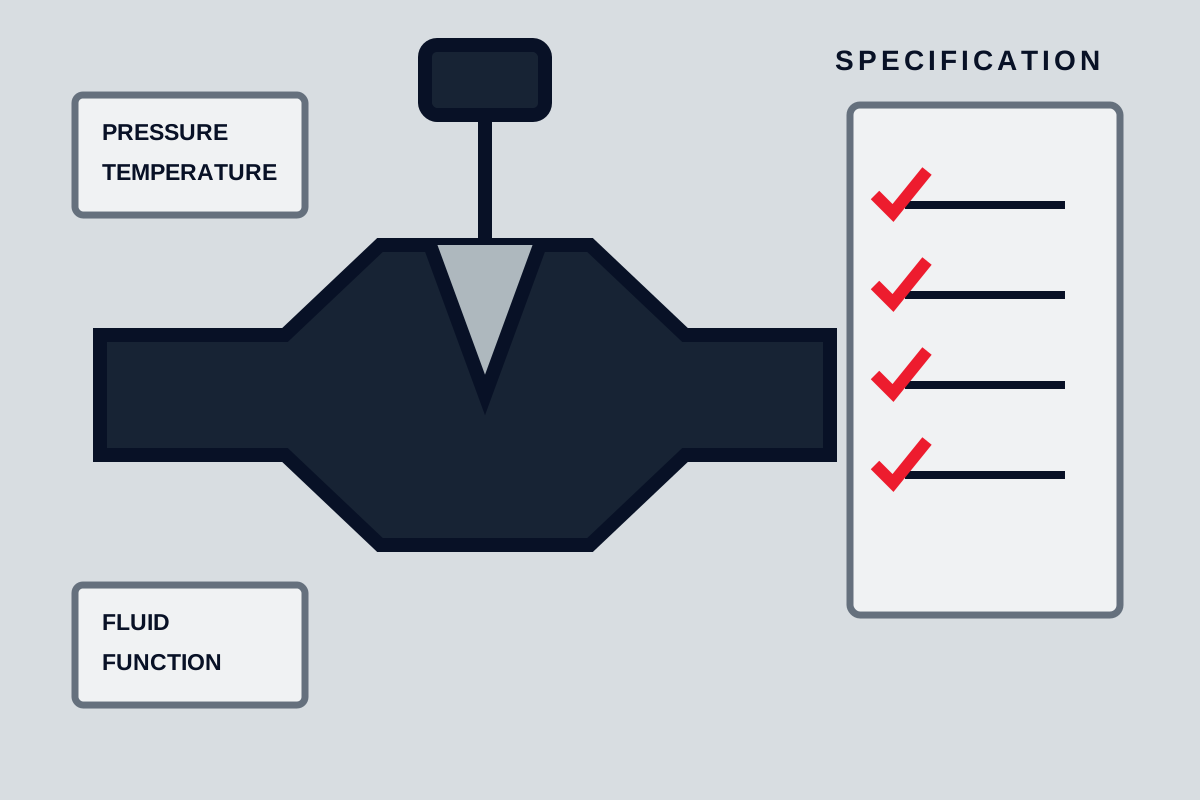
Before selecting, compare the exact offered valves for:
- function, frequency, closing time, and failure position;
- fluid, solids, viscosity, chemistry, temperature, and cleaning conditions;
- pressure class, maximum differential, flow direction, and leakage requirement;
- actual bore, pressure loss, velocity, pigging, and downstream disturbance;
- seat, disc or ball, stem, body, seal, and coating materials;
- torque curve, actuator sizing basis, controls, feedback, and manual operation;
- flange compatibility, disc clearance, cavity relief, support, and removal space;
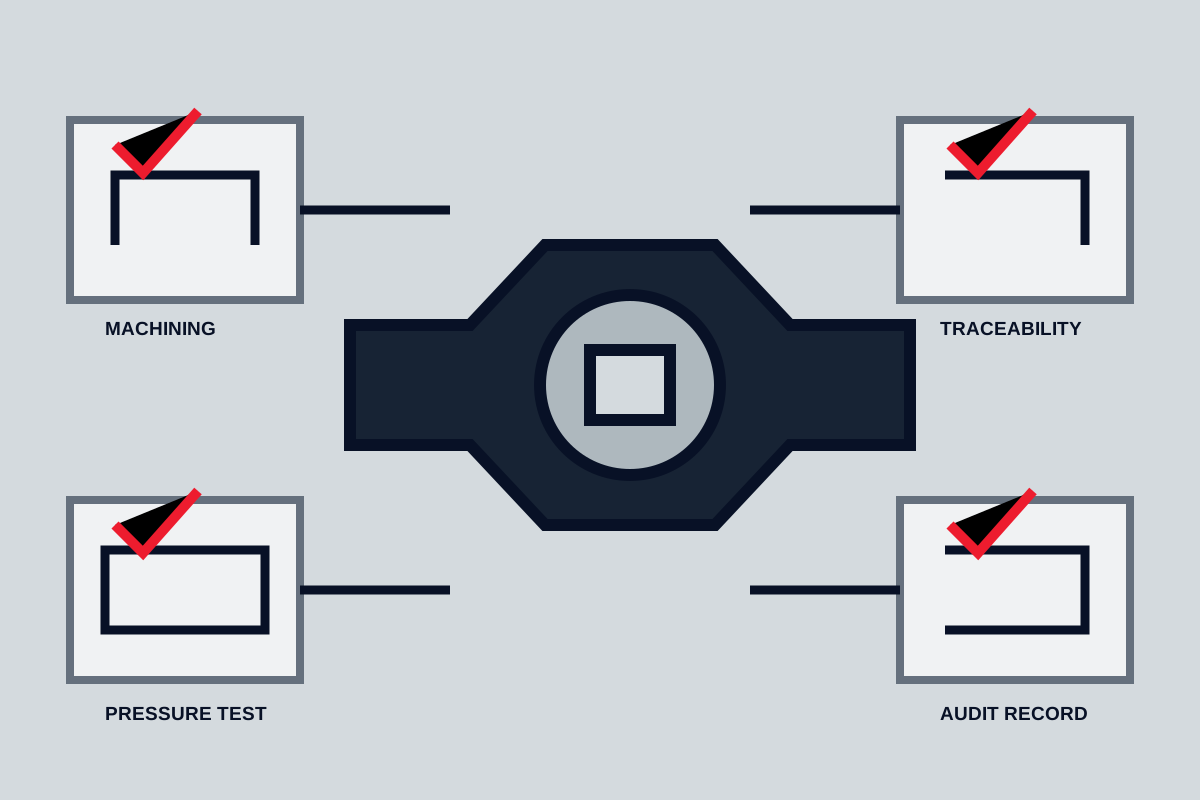
- pressure test, seat test, material evidence, inspection, preservation, and spares.
The industrial valve selection guide places these comparisons in the wider process of building a specification. The best choice is the valve whose actual construction fits the service, not the quarter-turn family with the strongest generic reputation.
Shutoff and service
Resilient-seated butterfly valves suit many utility duties; high-performance and triple-offset designs extend pressure and temperature capability. Ball valves offer strong shutoff but can trap fluid in the body cavity. Dirty or crystallising fluids need careful seat and cavity review.
Automation
Both accept compact rotary actuators. Compare breakaway torque, differential pressure, flow-induced torque and required operating time. The installed cost should include mating flanges, supports, actuator sizing and maintenance access.