

Choose a ball valve when fast quarter-turn operation, compact actuation, and tight shutoff are the main priorities. Choose a gate valve when a large line needs a full-bore isolation valve, slow operation is acceptable, and vertical stem travel can be accommodated. Neither standard design should be selected as a routine throttling valve. Service conditions, seat construction, materials, pressure differential, automation, and maintenance access determine whether that family-level guidance holds.
Core differences
| Decision factor | Ball valve | Gate valve |
|---|---|---|
| Closure movement | Ball rotates through a quarter turn | Gate moves linearly across the flow path |
| Operating speed | Fast | Slower, usually multiple turns or linear actuator travel |
| Open flow path | Full-port versions can provide a nearly unobstructed bore | Gate normally clears the bore when fully open |
| Shutoff | Soft seats can provide very tight isolation; metal seats depend on design and service | Good isolation when seats are clean and correctly loaded |
| Throttling | Standard designs can damage seats at partial opening | Partial opening can cause vibration, erosion, and gate damage |
| Space | Compact above the pipe; actuator extends to the side or above | Rising-stem designs need vertical clearance |
| Cavity behaviour | Body cavity may trap liquid and pressure | Bonnet and seat spaces can retain process material but usually not a sealed ball cavity |
| Typical use | Frequent isolation, automation, compact skids | Larger pipelines, infrequent isolation, buried or utility service where suitable |
The table is a starting point. Trunnion-mounted and floating ball valves behave differently, as do wedge, parallel-slide, knife, and slab gate valves. The actual seat and body design must be checked.
How a ball valve isolates flow
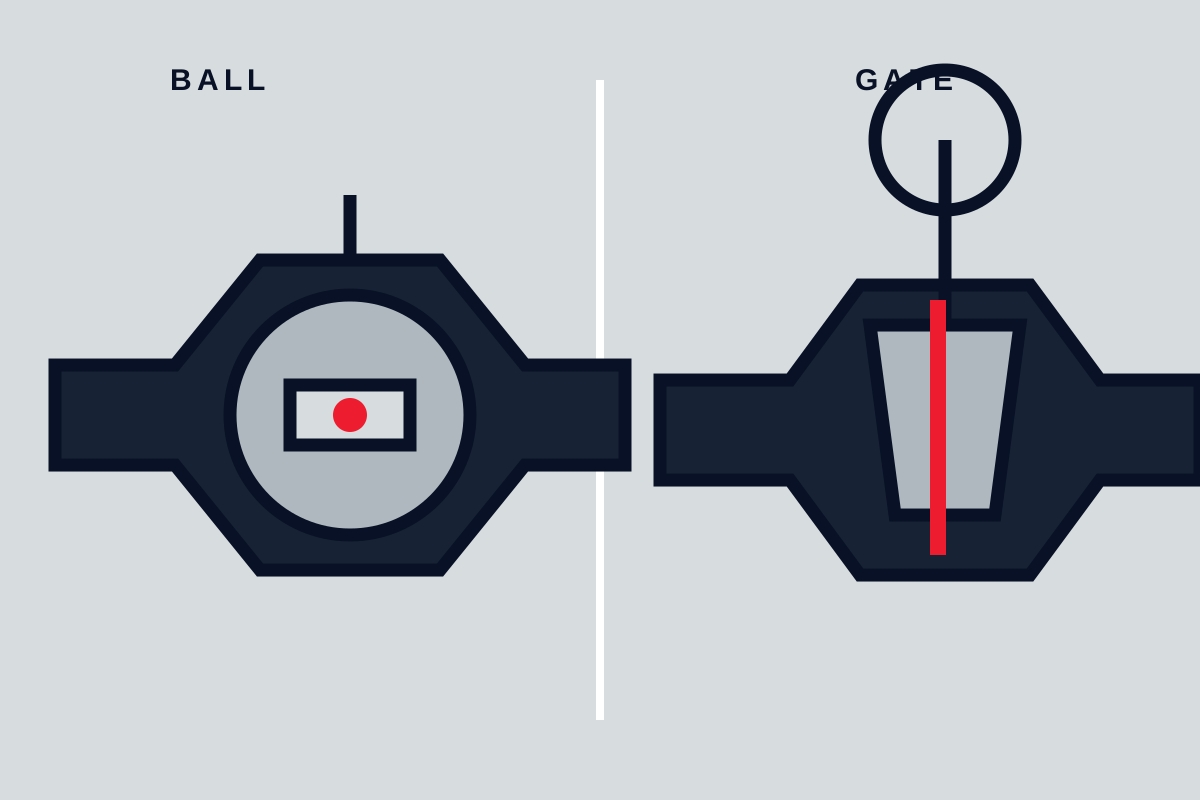
A ball valve contains a sphere with a bore through it. When the bore aligns with the pipe, fluid passes through. Rotating the ball turns solid surface across the flow. Seats around the ball create the seal and support or load it according to the design.
In a floating-ball valve, differential pressure pushes the ball toward the downstream seat. This can support tight shutoff but increases operating torque as size and pressure differential rise. Trunnion-mounted designs support the ball with bearings and use seat mechanisms to establish sealing, making them common where a large floating ball would be difficult to operate.
A full-port ball valve has a bore close to the pipe’s internal diameter. Reduced-port versions are smaller and lighter but create more velocity and pressure loss. Full port may be required for pigging, solids passage, or minimum restriction, but the term should be verified against the actual bore drawing rather than assumed from marketing language.
How a gate valve isolates flow
A gate valve moves a wedge or parallel closure element between seats. In the open position, the gate is lifted out of the main flow path. The mechanism requires stem travel and a bonnet capable of containing pressure while allowing the stem to move or rotate.
Rising-stem valves show position through visible stem movement and require overhead clearance. Non-rising arrangements conserve vertical space but place more of the stem mechanism within the valve. Wedge flexibility, seat angle, body distortion, temperature, and line forces can affect sealing and operating effort.
Gate valves are often chosen where full open flow and infrequent isolation matter more than rapid operation. They should normally be driven fully open or fully closed. Leaving the gate in the flow exposes it to unstable hydraulic forces and concentrates velocity around the seating surfaces.
Shutoff and seat behaviour
Soft-seated ball valves can achieve tight shutoff in clean service, but temperature, chemical compatibility, abrasion, solids, and pressure can damage or deform the seat. A soft seat that performs well in water may be unsuitable for hot, abrasive, or solvent service. Metal-seated ball valves extend the operating envelope but introduce requirements for surface finish, coating, lapping, leakage expectation, and actuator torque.
Gate-valve sealing depends on contact between gate and seats. Particles, deposits, corrosion, thermal distortion, or damaged guides can prevent full travel or sealing. Some designs rely on line pressure to energise the seal; others use wedge force. Specify the required leakage performance under the relevant test direction and differential rather than using the phrase bubble tight without definition.
For both types, bidirectional capability must be confirmed. Body and seat geometry may create a preferred pressure direction even when the valve appears symmetrical.
Pressure drop and flow quality
When fully open, a full-port ball valve and a suitable gate valve can both offer low restriction. The decisive question is the actual internal geometry. Reduced bores, seat retainers, body cavities, guides, and transition shapes affect pressure loss and solids behaviour.
High velocity can erode trims and amplify noise. In slurry or dirty service, cavities may collect solids and interfere with operation. A gate passing through settled material can jam; a ball cavity can pack with product. Knife gate valves, flush-bottom valves, or purpose-designed slurry valves may be more appropriate than standard versions.
Why neither is a default control valve
A partly open ball exposes a small seat region to a high-velocity jet. The jet can cut soft seats, erode metal surfaces, create noise, and produce unstable torque. Characterised control balls exist, but they are engineered as control valves with suitable trim and actuator sizing.
A partly open gate places the closure in the flow, where it can vibrate and concentrate erosion along the edge and seats. Flow response is also poorly suited to predictable modulation. If the process needs regular control, use a valve designed and sized for that purpose.
Temporary throttling during commissioning may still damage an isolation valve if differential pressure and duration are high. Include commissioning scenarios in the valve review.
Operation and automation
Ball valves require a quarter turn, which suits compact pneumatic, electric, or hydraulic actuators. Actuator sizing must include breakaway torque, running torque, end-of-travel torque, pressure differential, seat friction, temperature, frequency, and required operating time. A fast valve can create pressure transients; speed should be chosen for the system, not merely for actuator capability.
Gate valves need multi-turn rotary or linear movement. Actuation is slower and the stem thrust can be substantial. Size for seating and unseating conditions without applying excessive force that damages the gate, seats, or stem. Limit and torque settings should follow the valve design and service.
Define fail position, stored-energy needs, local manual operation, position indication, feedback, environmental enclosure, and access. A valve that cannot be safely operated during loss of utility is not fully specified.
Maintenance and installation
Ball-valve maintenance may require replacing seats, seals, stem packing, bearings, or the complete cartridge. Confirm whether the body can be removed from the line, whether a split body can be serviced safely, and how trapped cavity pressure is relieved. Thermal expansion of blocked-in liquid requires explicit review.
Gate-valve maintenance may involve packing adjustment, stem and nut wear, bonnet removal, guide condition, gate repair, and seat work. Provide overhead clearance for rising stems and for removal of internal parts. Horizontal-stem installation can change support and wear behaviour in large valves.
Both valves are sensitive to pipe strain, misalignment, flange bolting, cleanliness, and welding heat where applicable. Support the pipe independently; do not use the valve body to pull misaligned pipe into position.
When to choose each valve
Choose a ball valve when you need frequent or rapid isolation, compact automation, tight shutoff in a compatible service, and a short operating stroke. It is also attractive on skids where space is limited and clear position indication is helpful.
Choose a gate valve when the line is large, the valve will remain fully open or fully closed for long periods, full bore matters, and the installation can accommodate its size and travel. It can be a practical utility or pipeline isolation choice when the exact gate design suits the fluid.
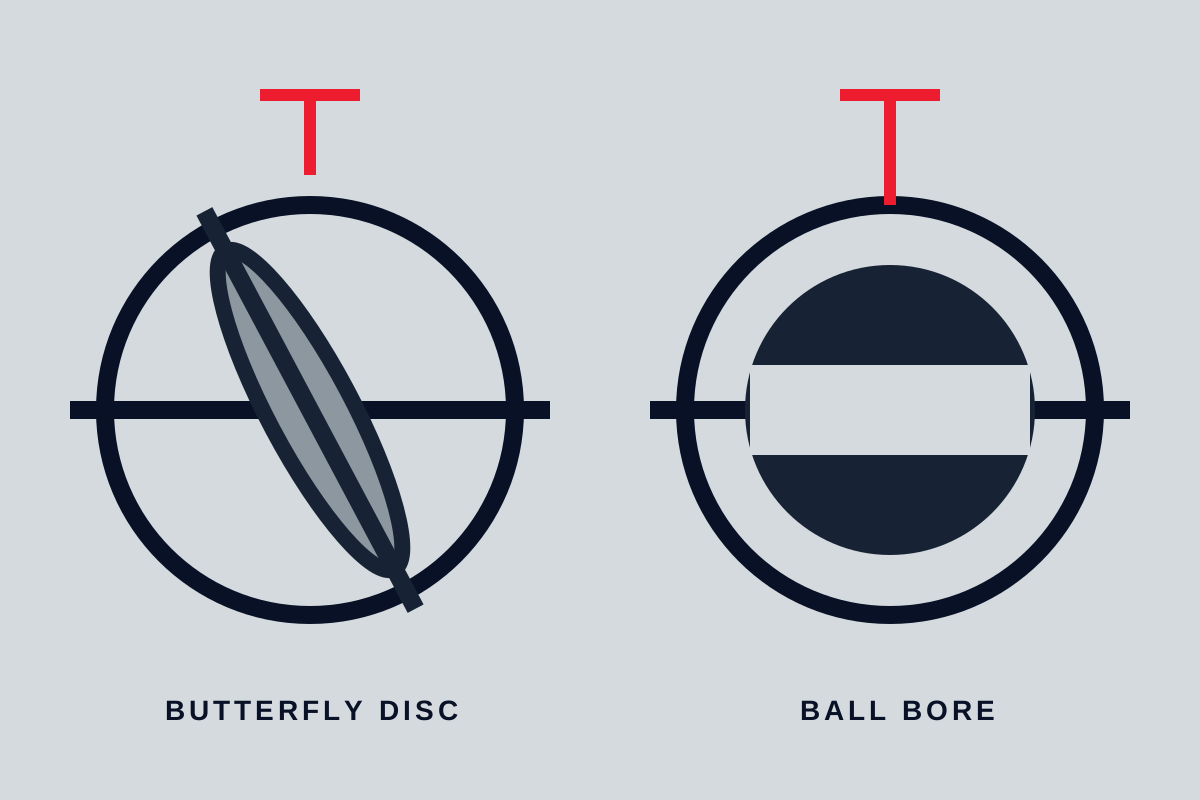
Avoid a standard ball valve where abrasive solids will destroy seats or pack the cavity. Avoid a standard gate valve where frequent cycling, quick isolation, or precise throttling is required. For another quarter-turn option, compare butterfly and ball valves.
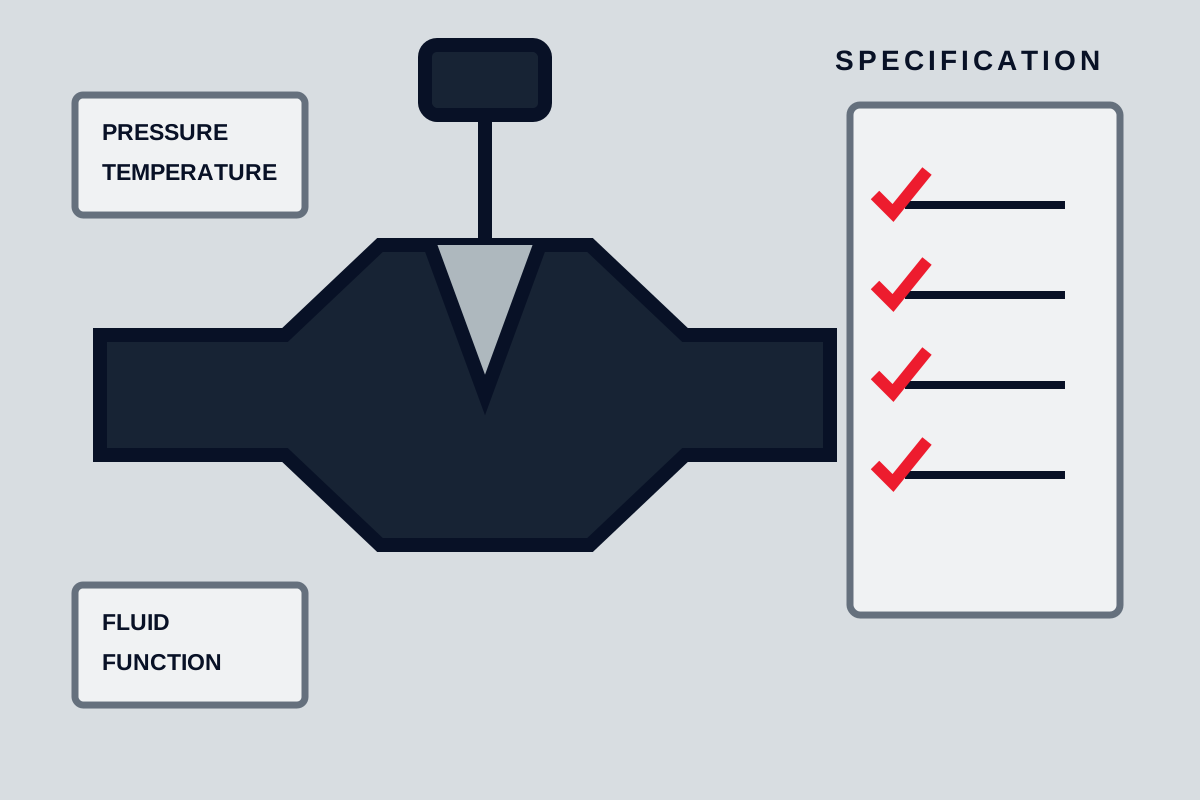
Final specification checklist
Before ordering either type, define:
- valve function: isolation only, emergency action, pigging, drain, or another duty;
- size, end connection, pressure and temperature envelope, and design differential;
- fluid composition, solids, viscosity, corrosion, erosion, and cleaning conditions;
- required port or bore, flow direction, shutoff direction, and leakage expectation;
- body, closure, stem, seat, seal, packing, and coating materials;
- manual or powered operation, torque or thrust basis, speed, fail action, and feedback;
- cavity pressure relief or bonnet venting where applicable;
- installation orientation, available space, pipe support, removal access, and maintenance method;
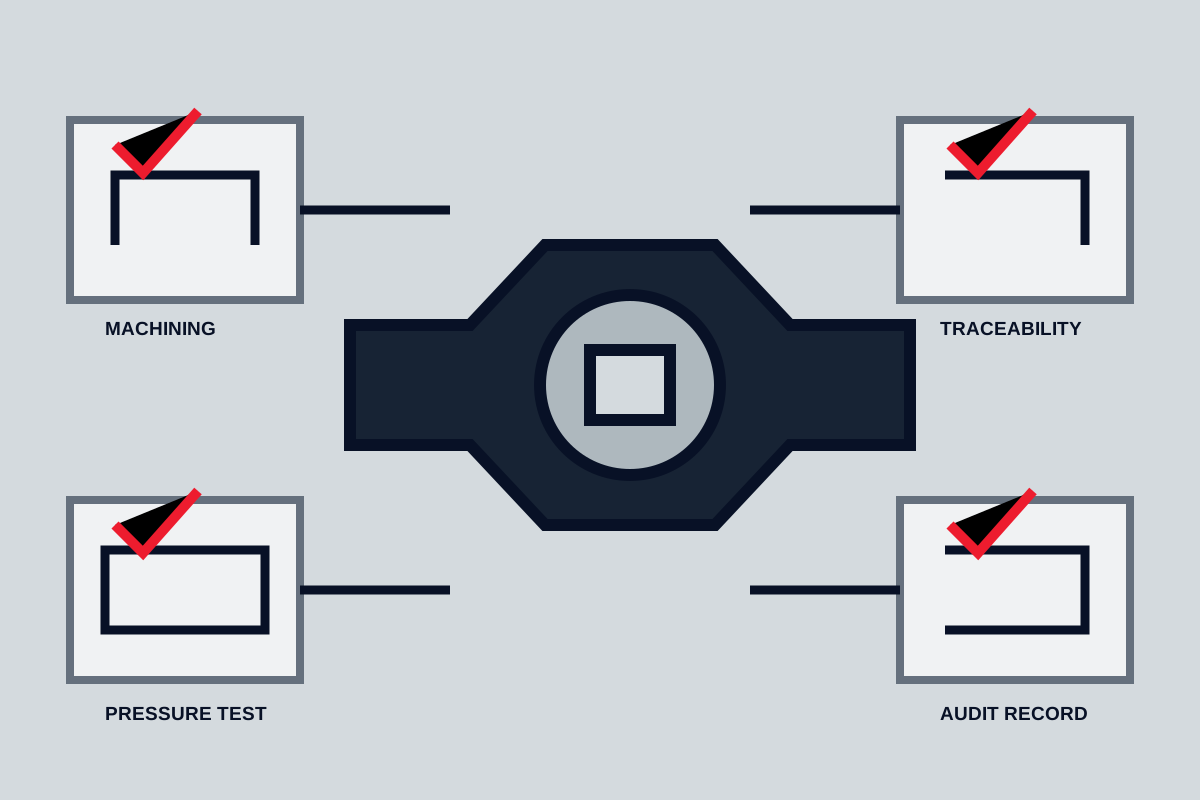
- required drawings, material records, pressure and seat tests, inspection, preservation, and spares.
The better valve is not the one with the shorter generic list of disadvantages. It is the one whose sealing mechanism, flow path, operation, and maintenance remain suitable across the actual service envelope. The broader industrial valve selection guide can turn these choices into an RFQ.
Isolation performance
Soft-seated ball valves can provide tight shutoff with fast operation. Gate valves are common in larger pipelines where a full bore and gradual opening are useful. Seat design, pressure class, temperature and fluid cleanliness matter more than the family name alone.
Operation and control
Neither standard design is intended for prolonged throttling. A partly open gate can vibrate and erode, while high velocity across a partly open ball can damage seats. Use a valve designed for control when modulation is a normal duty.
Selection details
Compare face-to-face length, stem clearance, actuator torque, fire-safe requirements, cavity pressure relief and access for maintenance. Specify body, trim, seat and packing materials against the actual fluid and temperature range.