

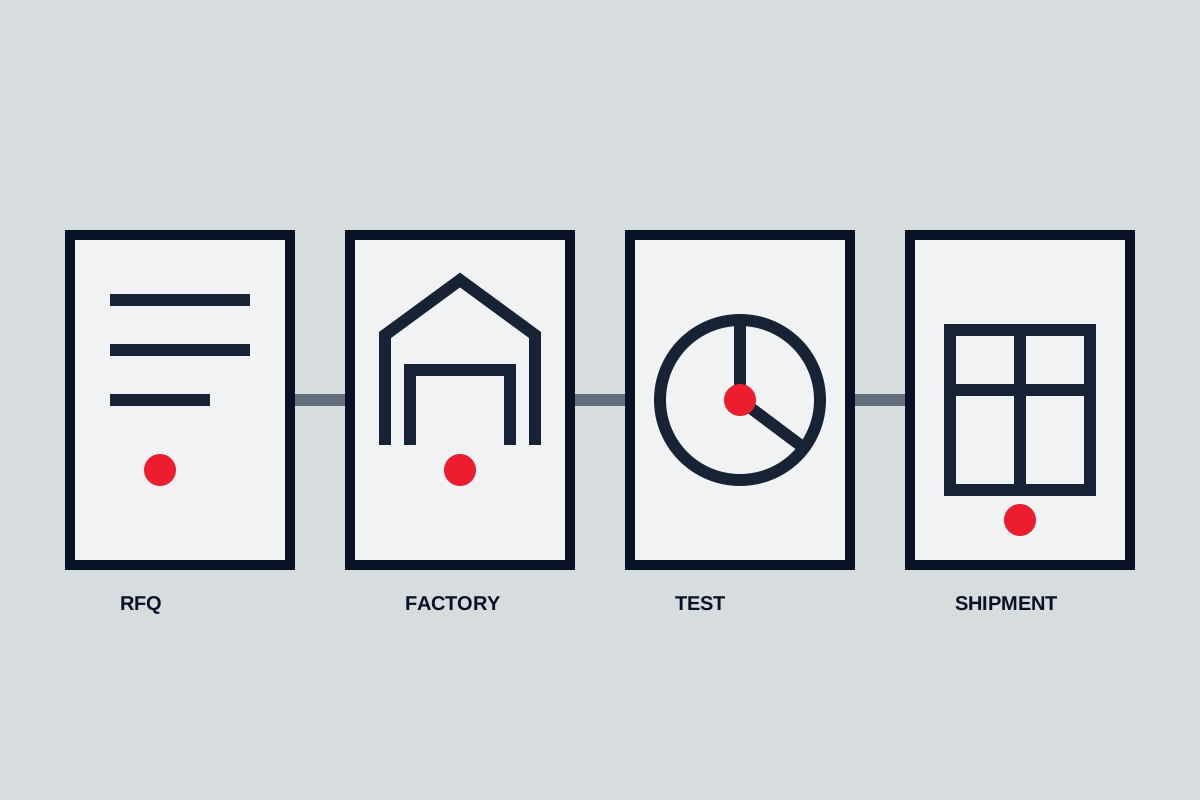
Sourcing an industrial pump from China should begin with a complete duty specification and an evidence plan, not a marketplace search or catalogue photo. The objective is to identify a supplier that can manufacture the required pump, demonstrate performance and material conformity, control outsourced processes, and deliver documentation that remains traceable to the shipped unit.
Prepare the pump specification before contacting suppliers
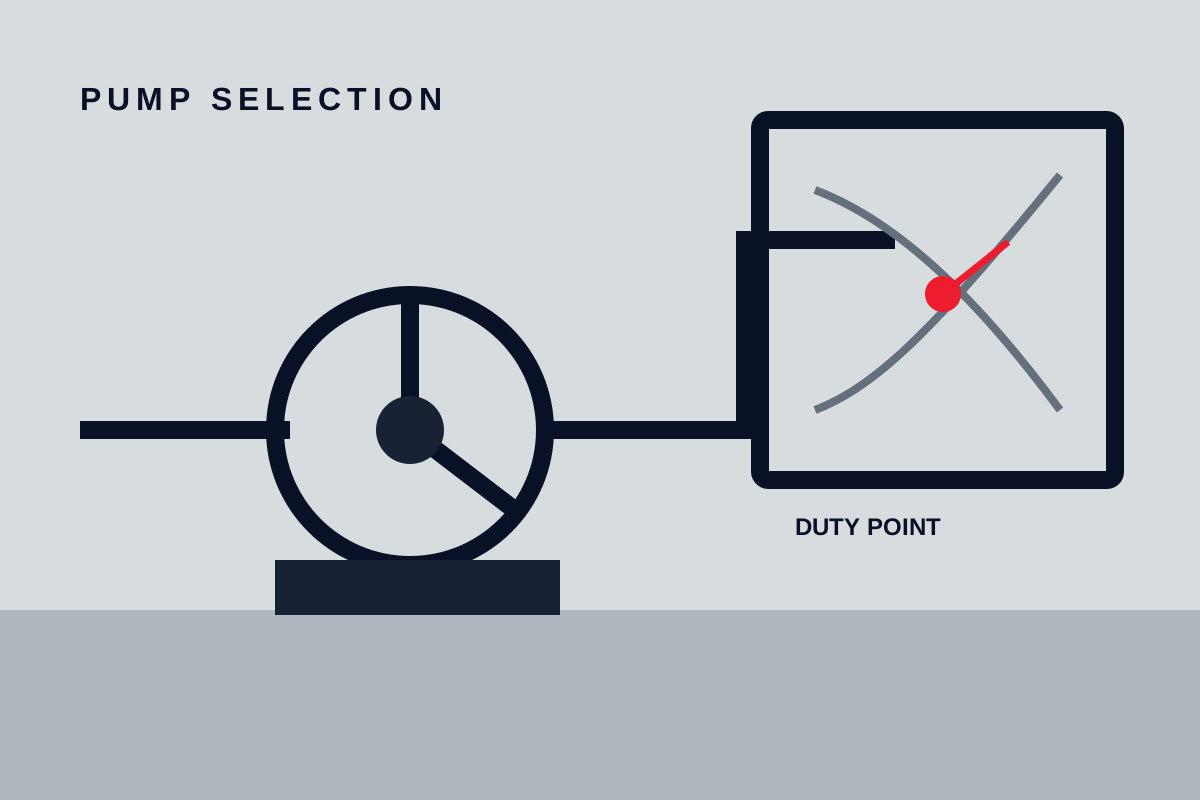
Use the same technical inputs required for industrial pump selection: minimum, normal, and maximum flow; suction and discharge conditions; liquid properties; operating pattern; materials; seal arrangement; driver; controls; and installation. State units and distinguish normal from design or upset conditions.
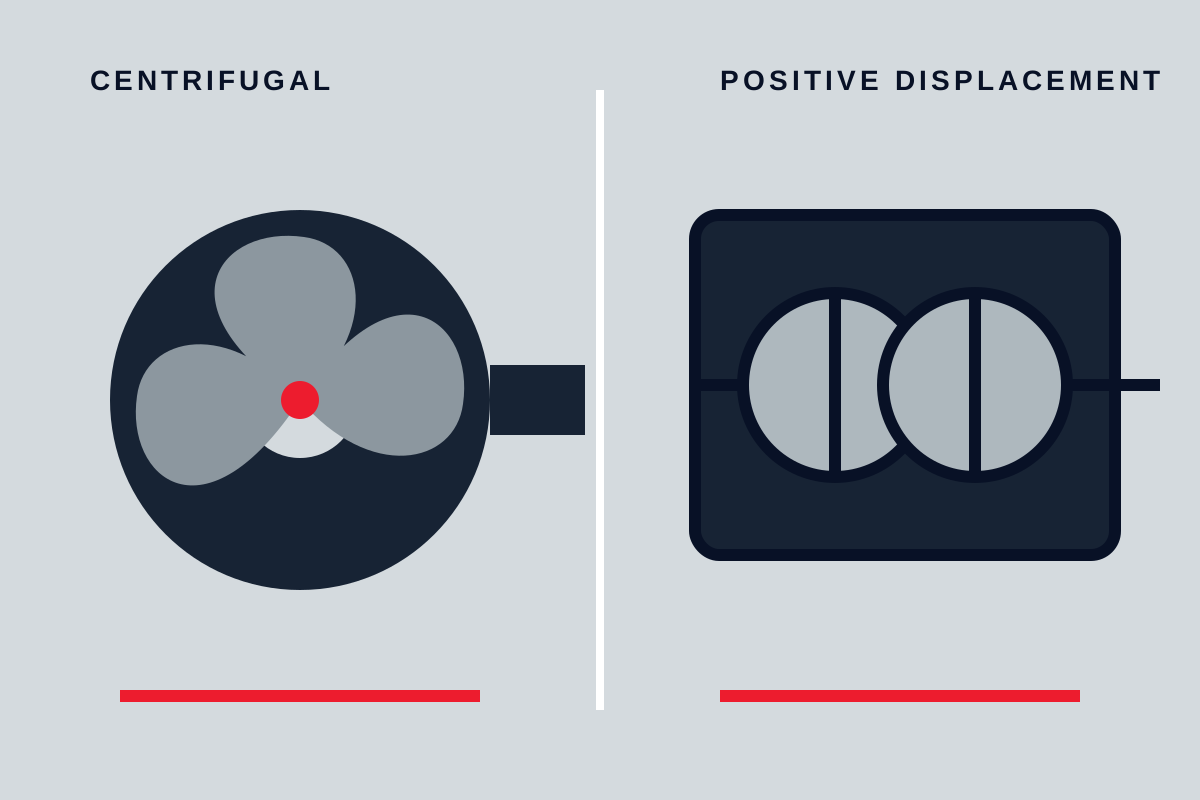
For centrifugal pumps, request marked performance curves for the offered configuration. For positive-displacement pumps, define displacement, speed range, viscosity, relief philosophy, and inlet conditions. Review the differences between centrifugal and positive-displacement pumps before allowing a supplier to substitute one principle for another.
Include connection details, rotation, nozzle orientation, baseplate, coupling, guard, motor supply, coating, preservation, packing, spares, and documentation. If an applicable project or industry standard governs design or testing, provide the exact requirement rather than asking the supplier to guess.
Build an RFQ that produces comparable offers
Send every shortlisted supplier the same controlled RFQ package. At minimum it should contain:
- pump data sheet and duty cases;
- liquid composition and temperature range;
- general arrangement constraints and connection details;
- material and sealing requirements;
- motor, instrumentation, and control scope;
- required drawings, calculations, certificates, manuals, and spare-parts list;
- inspection and test plan expectations;
- delivery, preservation, packing, and marking requirements;
- commercial terms, quotation validity, warranty scope, and deviation format.
Require suppliers to complete the data sheet and submit a line-by-line deviation list. A statement such as compliant is not enough when no offered model, material list, curve, or test scope is identified.
Compare quotations only after normalising scope. One offer may exclude motor, baseplate, coupling guard, seal-support piping, performance test, or export packing included in another.
Verify supplier identity
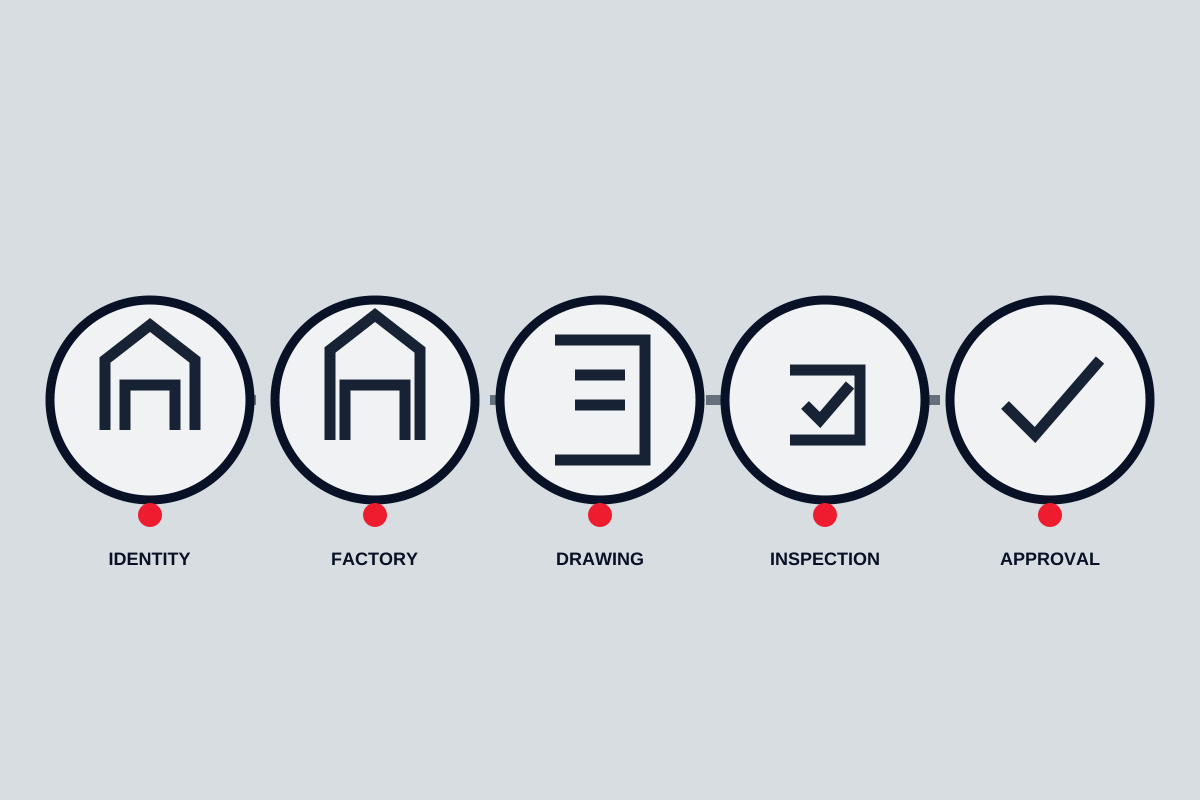
Confirm the legal company name, registered address, business scope, quotation entity, contract entity, invoice entity, and bank beneficiary. Determine whether the seller is the manufacturer, a related export company, an assembler, or an independent trader. Any model can be workable when it is transparent and responsibilities are defined.
Ask which factory performs casting or forging procurement, machining, welding, assembly, balancing, painting, and testing. A pump company may legitimately outsource castings or motors; the important question is how it approves suppliers, identifies material, controls drawings, and verifies the finished product.
Cross-check website claims with a video walkthrough, live document review, third-party audit, or visit proportionate to order risk. Reused factory photographs, inconsistent company names, reluctance to show test equipment, and bank details unrelated to the contracting entity are red flags requiring resolution.
Assess pump manufacturing capability
Match capability to the exact pump family and size. Review machining envelope, measurement equipment, rotor balancing, assembly fixtures, pressure-test equipment, performance-test loop, electrical supply for testing, and lifting capacity. Ask for anonymised records from similar completed units, not just photographs.
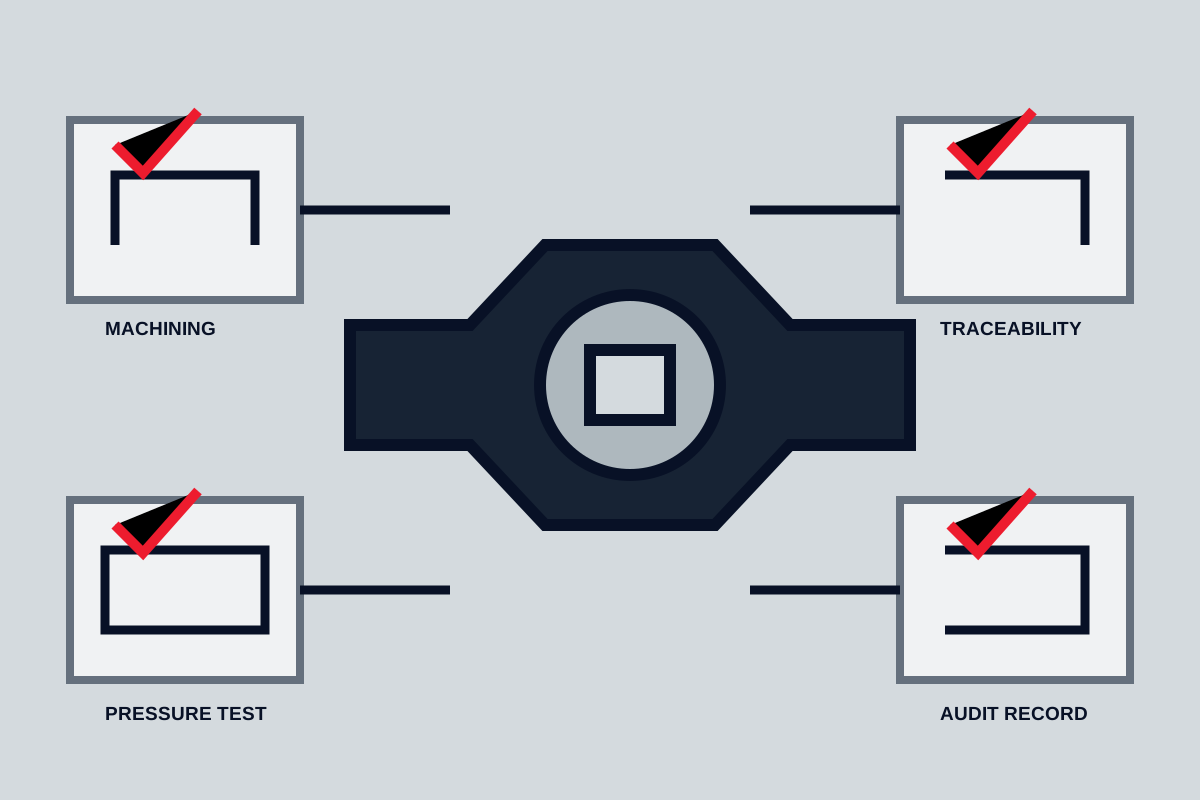
For critical parts, identify the manufacturing route and outsourced processes. Review drawing revision control, material identification, traceability, nonconformance handling, measuring-equipment calibration, welding control where relevant, and final release authority.
Test-loop appearance alone does not establish capability. Ask how flow, pressure, speed, power, and temperature are measured; which instruments are used; when they were calibrated; how data are recorded; and how acceptance is determined. The final test procedure should match the ordered pump and agreed criteria.
Review technical documents before order
The supplier should submit enough information to show what is being offered:
| Document | What to verify |
|---|---|
| Completed data sheet | Every duty and offered feature is identified |
| Performance curve | Model, speed, impeller or rotor, liquid basis, duty points |
| General arrangement | Dimensions, mass, connections, removal space, rotation |
| Sectional drawing | Internal construction and replaceable parts |
| Material list | Each pressure-containing and wetted component |
| Motor data | Supply, power, speed, enclosure, mounting, accessories |
| Inspection and test plan | Operations, records, witness points, acceptance basis |
| Deviation list | Every difference from RFQ is explicit |
Do not release manufacturing on unresolved drawings. Define which documents require approval and which are for information. Approval should confirm conformity to the purchase specification; it should not transfer design responsibility silently to the buyer.
Use samples and pilot orders appropriately
A sample can verify workmanship, dimensions, materials, interface, and basic function, but it may not represent production control or long-term reliability. For standard small pumps, a sample order can reveal communication and documentation quality before volume purchase. For engineered pumps, a pilot unit or first-article hold point may be more meaningful.
Identify the sample uniquely and record any changes before production. A supplier should not replace materials, motor, seal, casting source, or test method without approved change control.
Define inspection and hold points
Build the inspection plan from failure consequence. Possible stages include incoming material review, casting repair review, dimensional inspection, rotor checks, pressure testing, assembly inspection, performance testing, coating, nameplate, packing, and final document review.
Use hold points sparingly for events that cannot be verified later. A witness point allows work to proceed under agreed notification rules; a document review may be enough for lower-risk items. State who attends, notice period, record format, acceptance criteria, and what happens after a failure.
Third-party inspection is most useful with a detailed purchase order, approved drawings, and test procedure. An inspector cannot reconstruct missing requirements at the factory.
Control material traceability
Define which components require traceability and what evidence is acceptable. Material certificates should link to heat, batch, casting, or component identification and then to the finished pump serial number where required. Check that markings remain through machining and assembly.
Positive material identification or laboratory testing may be appropriate for selected risk-critical parts, but it should have a defined method, sampling plan, acceptance basis, and response to failure. Do not request tests as decorative certificates.
For elastomers, coatings, seal faces, and purchased components, manufacturer part identification and batch records may be more relevant than a generic metal certificate.
Performance and pressure testing
Agree test fluid, temperature, speed, instrumentation, data points, correction method, tolerance basis, and acceptance before testing. The supplier should show the pump configuration and identify any temporary test equipment that differs from the order.
Performance testing should cover the duty-relevant curve rather than one convenient point. Check flow, differential performance, power, speed, and observed vibration or leakage as specified. For suction-critical duties, ensure the NPSH requirement and test expectations are clearly separated from normal performance testing.
Pressure-boundary tests verify integrity under the agreed procedure; they do not prove hydraulic performance. Record test identity, instruments, duration, result, and any repair or retest. Unapproved repair after a failed test is a major control issue.
Packing and shipment
Packing should protect machined surfaces, openings, seals, bearings, motor, instruments, and coating for the transport and storage route. Define flange covers, desiccant or vapour protection where needed, internal preservation, lifting points, centre of gravity, crate construction, markings, and document enclosure.
Photograph preservation and packing before closure. Confirm loose parts, commissioning spares, special tools, and documents against a packing list. State storage and rotation requirements for equipment that may remain idle before installation.
Shipping terms allocate cost and responsibility but do not replace a logistics plan. Confirm pickup address, export documentation, dimensions, mass, dangerous-goods status if any, insurance responsibility, and damage-report process.
Commercial controls and change management
Link payment milestones to meaningful deliverables such as approved documents, material readiness, passed tests, and release—not only calendar dates. Define warranty start, remedy, spare availability, response to nonconformance, intellectual-property expectations, and governing contract terms with appropriate commercial advice.
Require written approval for changes to design, materials, sub-suppliers, motor, seal, manufacturing route, test method, and schedule. Verbal messaging should not replace controlled revision records.
Red flags
- quotation lacks an identified pump model or completed data sheet;
- performance curve is generic, unmarked, or inconsistent with offered speed;
- company, factory, contract, invoice, and bank identities do not reconcile;
- supplier refuses a deviation list or changes scope between messages;
- material descriptions remain vague after clarification;
- test capability cannot be demonstrated with records and instruments;
- drawings appear copied from another brand or do not match dimensions;
- price or delivery requires bypassing inspection and document approval;
- failures are retested or repaired without a recorded nonconformance.
Final sourcing checklist
Before placing the order, confirm that the technical offer, commercial offer, approved deviations, document schedule, inspection plan, test procedure, packing requirement, and payment milestones all refer to the same scope. Use the broader supplier verification process when legal identity or factory capability remains uncertain.
Successful sourcing is demonstrated by traceable conformity, not by country, price, or supplier claims. A complete RFQ and evidence-based release process make quality visible before the pump reaches the site.
Send a complete enquiry
Provide flow, total head, liquid properties, temperature, suction conditions, operating range, materials, seal arrangement, motor supply and applicable standards. Request a completed data sheet and performance curve for the offered model, not only a price list.
Verify manufacturing capability
Confirm whether the supplier designs, casts, machines, assembles and tests the pump or outsources those stages. Review model records, calibration status, material traceability and examples of test reports. A factory visit or qualified third-party audit should follow a defined checklist.
Control inspection and testing
Agree the inspection and test plan before the order. Hold points may cover material certificates, dimensional checks, hydrostatic test, performance test, vibration, paint and packing. Define acceptance tolerances, witness arrangements and the documents required for release.