

Selecting corrosion-resistant fasteners is not a matter of choosing “stainless” or specifying the thickest available coating. The correct choice depends on the actual electrolyte, temperature, load, joint geometry, connected materials and installation method. A fastener system that performs well in sheltered outdoor service may be unsuitable for chloride deposits, chemical splash, immersion, high temperature or a wet dissimilar-metal joint.
Define the corrosive duty before naming a material
Start with the service conditions rather than a preferred bolt grade or finish. “Outdoor,” “marine,” “chemical plant” and “washdown area” are useful labels, but they do not define the corrosion mechanism well enough for a material decision.
Collect the conditions that can change the selection:
- Chemical identity, concentration and expected contaminants
- pH, where relevant to the process fluid or cleaning solution
- Normal operating temperature and credible upset temperature
- Exposure mode: dry indoor, condensation, intermittent wetting, splash, immersion or trapped liquid
- Wet-dry cycling, cleaning frequency and deposit accumulation
- Chloride exposure from seawater, de-icing salts, process chemicals or cleaning agents
- Whether the joint is sheltered, drained, insulated or exposed to weather
- Required fastener diameter, thread form, strength class and target clamp load
- Materials of the bolted components, nuts, washers, inserts and nearby conductive parts
- Access for inspection, retightening or replacement
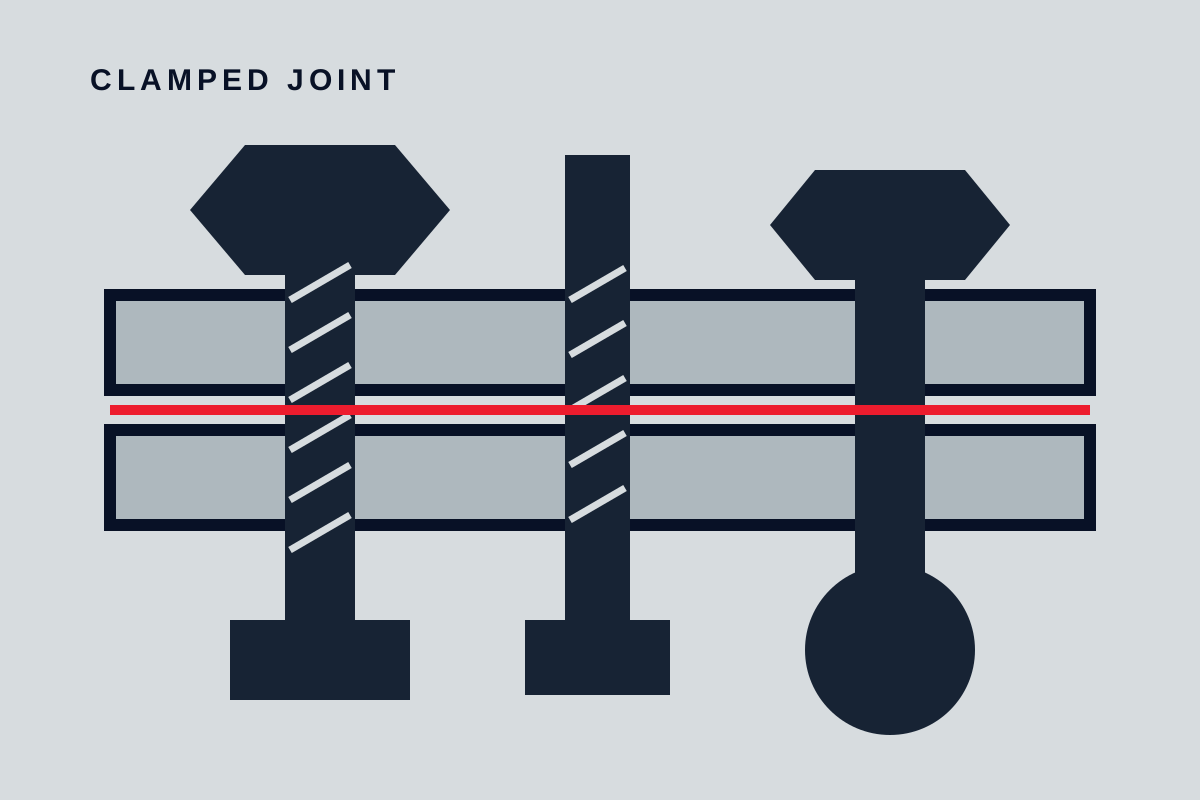
Moisture retained beneath washers, in blind holes, between flanges or in thread roots can be more significant than general atmospheric exposure. These locations can create a crevice: a restricted space where liquid, oxygen concentration and dissolved contaminants differ from the exposed surface. A material that appears satisfactory on an open panel may behave differently inside a wet, poorly drained joint.
Temperature also changes the question. It can affect corrosion rate, chemical compatibility, coating stability, lubricant behavior and the mechanical properties of the fastener. For elevated-temperature service, do not assume that a room-temperature strength designation or corrosion claim remains applicable. Confirm the exact product form, material condition and temperature range with the manufacturer or a qualified engineer.
A quotation request should therefore state the duty rather than merely asking for “corrosion-resistant bolts.” A meaningful request identifies the fastener type, size, strength requirement, materials being joined, exposure conditions and any required coating or documentation.
Choose the base material around strength, temperature and chemical exposure
The base material provides the fastener’s underlying mechanical capability and its residual resistance if a coating is scratched, worn or absent from a local area. A protective finish can be important, but it cannot reliably compensate for a substrate that is unsuitable for the chemical, temperature or required preload.
Carbon steel and alloy steel fasteners
Carbon and alloy steels can provide a broad range of strength levels and are widely available in standard fastener forms. In corrosive service, however, bare steel generally requires deliberate protection and maintenance planning. The appropriate protection depends on the exposure, damage risk and whether the joint can be inspected.
Higher-strength steel fasteners require additional caution where plating, pickling, cleaning or other processes may introduce hydrogen. The risk is not defined by the word “high strength” alone; it depends on material condition, strength level, manufacturing route, coating process, baking or relief treatment where applicable, and sustained service stress. Where hydrogen-assisted cracking is a concern, obtain process-specific information from the fastener supplier and involve a qualified engineer.
Stainless steel fasteners
Stainless steel is often selected because its corrosion resistance comes primarily from the alloy itself rather than from a sacrificial surface layer. That does not make every stainless grade suitable for every wet or chemical environment. Chlorides, elevated temperature, low-oxygen crevices, chemical concentration and residual tensile stress can materially change behavior.
A stainless fastener also needs to meet the mechanical requirements of the joint. Confirm the specified property class or grade, the actual fastener diameter, thread condition and required proof load or tensile capability. Do not transfer strength data from a bar, sheet or unrelated bolt configuration to the supplied fastener.
Galling is another practical consideration. Stainless threaded parts can seize during assembly, particularly under high contact pressure or poor lubrication. The mitigation may involve a compatible lubricant, a changed material pairing, controlled tightening, or a manufacturer-approved surface treatment. Any change must be assessed against the required preload and contamination restrictions.
Other corrosion-resistant alloys and application-specific materials
Some duties require alloy families beyond common carbon steel or stainless steel fasteners. Examples can include aggressive chemical immersion, elevated-temperature oxidation, sour or hydrogen-containing environments, or combinations of corrosion and cyclic loading. These selections should be based on evidence for the actual chemical and temperature range, not on a general statement that an alloy is “chemical resistant.”
For these applications, request material designation, heat or lot traceability where required, mechanical-property documentation and the supplier’s stated service limitations. Engineering review is appropriate when stress-corrosion cracking, low-temperature toughness, cyclic fatigue, chemical immersion or elevated-temperature strength could govern the design.
Specify coatings by protection mechanism and expected damage
A coating specification should describe a complete system: substrate, coating type, thickness range, application process, post-treatment, coverage requirements and inspection criteria. “Zinc plated” or “black coated” alone is normally too vague for a critical purchase order.
Coatings generally protect by one or both of two mechanisms:
- Barrier protection: The finish separates the base metal from moisture, oxygen and contaminants. Its effectiveness depends on continuity, adhesion, thickness, edge coverage and resistance to damage.
- Sacrificial protection: A more active coating can preferentially corrode and help protect exposed steel locally. This mechanism has limits that depend on the environment, coating mass, damage geometry and electrolyte conditions.
Neither approach is universally superior. A coating selected for abrasion resistance may not be the preferred option for a joint that needs sacrificial protection after minor handling damage. Conversely, a thick protective system can create thread-fit problems or alter bearing-face friction.
Evaluate coating coverage and dimensional effects
Fastener threads, bearing faces and recessed drive features are difficult locations for consistent coverage. Coating buildup can affect thread engagement, prevailing torque, nut fit and the relationship between applied torque and clamp load. Ask the supplier whether the quoted system is intended for the specified diameter, pitch and tolerance class.
Also define where coating is required. A drawing or purchase specification should state whether coverage applies to:
- External threads
- Internal threads of nuts or tapped components
- Bearing faces under the head and nut
- Washer surfaces
- Cut ends, drilled holes or field-modified areas
- Recesses and drive features
If salt-spray or cyclic-corrosion testing is required, treat it as a comparative or acceptance test under stated laboratory conditions, not as a direct field-life prediction. The record should identify the exact test method, test duration, failure endpoint, specimen configuration and coating system. A result for a flat coupon or different fastener size does not automatically establish performance for the supplied bolt assembly.
Plan for handling and field damage
Tool contact, bulk packaging, transport, installation and later maintenance can damage a coating. Consider whether the joint can tolerate local coating loss and whether any proposed repair method is approved for the system. Do not assume a field-applied touch-up material restores the original process coating or has the same thread, adhesion and temperature performance.
Obtain the supplier’s technical information for the exact coating system, including substrate limitations, nominal thickness or mass where relevant, curing requirements, stated operating limits and repair policy. These records support identification of the supplied finish; they do not by themselves prove suitability for an unspecified plant environment.
Check galvanic couples, crevices and water traps in the joint
Galvanic corrosion requires electrically connected dissimilar metals and a conductive electrolyte. If the assembly remains dry, the risk may be low. If water, salt solution or conductive process liquid bridges the materials, the more anodic member of the pair may corrode more rapidly.
Compatibility cannot be determined from material names alone. The electrolyte, temperature, surface condition, coating state and exposed area ratio all matter. A small anodic fastener connected to a large cathodic structure can be a more concerning configuration than the reverse, but a galvanic-series chart should be treated as a screening tool, not a final design approval.
Review the joint in this order:
- Identify every electrically connected material: bolt, nut, washer, insert, structural members, coatings and conductive gaskets.
- Identify where liquid can bridge the metals and how long it remains present.
- Check whether small gaps under heads, washers, lap joints or threads retain liquid and deposits.
- Review relative exposed surface areas and whether a damaged coating exposes a different metal.
- Decide whether drainage, sealing, material matching or approved electrical isolation is necessary.
Isolation washers, sleeves and sealants can reduce electrical continuity or moisture entry, but they also affect bearing stress, joint stiffness, torque response and temperature capability. Use only components that are approved for the load and environment. A soft insulating washer that creeps under clamp load may solve one corrosion concern while creating a preload-loss problem.
Joint geometry is often a lower-cost control than changing to a more expensive alloy. Drainage paths, access for cleaning, avoidance of permanently wet horizontal ledges and removal of deposit traps can reduce the severity of the local environment. These measures should be considered alongside material selection, not after corrosion appears.
Match material and coating choices to installation and maintenance
The protection system must survive assembly. Installation can damage coatings, change thread friction, create galling, strip plated layers or produce an unintended preload.
Torque is especially sensitive to the fastener condition. A torque value developed for one combination of coating, lubricant, thread geometry and bearing surface can produce a different clamp load when any of those variables changes. Do not apply a generic torque table to a coated or lubricated fastener unless the value is confirmed for the quoted configuration and target preload.
The installation procedure should identify:
- Fastener size, material and exact coating or finish
- Nut, washer and mating-surface condition
- Approved lubricant, if any, and where it is applied
- Tightening method and target preload or torque-tension requirement
- Tool type, calibration requirement and tightening sequence
- Restrictions on reuse, especially for prevailing-torque or locking features
- Inspection criteria for damaged coatings, seized threads or incomplete engagement
For maintenance, isolate relevant energy sources before inspecting or replacing fasteners. Depending on the equipment, this can include electrical isolation, pressure release, mechanical restraint, process isolation and verification of stored-energy hazards. Follow site procedures and equipment manufacturer instructions rather than treating fastener replacement as a purely mechanical task.
Where access is limited or failure consequences are high, plan replacement intervals and spare-part identification before commissioning. The replacement fastener should preserve the specified material, strength class, dimensions, coating system and approved installation condition. Substitution based only on visual similarity can change both corrosion behavior and joint strength.
Put material, coating and verification requirements on the purchase specification
A purchase order should convert the environmental review into identifiable, inspectable requirements. This protects against receiving a visually similar item with a different base material, strength level, coating coverage or thread fit.
Specify at least the following:
- Fastener type, head style, dimensions, thread form and tolerance requirements
- Base material designation and required fastener property class or strength grade
- Required mechanical properties for the supplied size and configuration
- Coating system, substrate preparation, finish location and required coverage
- Any thickness, mass, adhesion, appearance or purchaser-required test requirement
- Whether threads, bearing surfaces and internal nut threads are included or excluded from the finish requirement
- Approved lubricant, locking feature or assembly condition where torque-tension performance matters
- Permitted substitutions and the approval process for any material or coating change
- Lot identification, packaging and storage requirements
- Required certificates, reports and traceability level
A certificate of conformance, mill test report or coating-process certificate can support identity, traceability and stated test results. It does not independently demonstrate that the fastener is suitable for your actual corrosive duty. Review documents against the purchase specification and the service assessment.
Incoming inspection can include marking review, dimensional checks, thread engagement, visible coating defects, packaging condition and lot traceability. If the contract requires testing, define the sampling plan, acceptance criteria, method and responsible party before ordering. For critical or uncertain applications, require supplier clarification on coating coverage, test specimen configuration, storage limits and repair restrictions.
Frequently asked questions
Is stainless steel always the best choice for industrial fasteners in corrosive service?
No. Stainless steel can be a sound choice for many environments, but suitability depends on the exact grade, fastener condition, chloride exposure, temperature, chemical concentration, crevice conditions, required strength and the materials joined. It may also require installation controls to prevent thread galling. Select the grade and configuration against the actual duty rather than using stainless steel as a universal corrosion solution.
Can a zinc-coated steel bolt be used with stainless steel or aluminum parts?
It may be possible, but the joint must be reviewed for galvanic interaction, coating condition, electrolyte exposure and area ratio. The answer changes if the joint is dry and sheltered versus frequently wet with conductive salt or process liquid. Evaluate the complete assembly, including washers, inserts and local water traps, before approving the combination.
Does a salt-spray test prove that a coated fastener will last in the field?
No. A salt-spray result describes performance in a specified laboratory test under a stated endpoint. It can be useful for comparing controlled specimens or confirming a contractual requirement, but it is not a direct prediction of field life. Confirm the test method, duration, specimen configuration, coating system and failure criterion, then compare those conditions with the actual service environment.
What documents should a buyer request for corrosion-resistant fasteners?
Request documents that match the purchase specification: certificate of conformance, material or mechanical-property records where required, coating-process or test records, lot traceability and supplier confirmation of the quoted configuration. For coated products, clarify coverage on threads and bearing faces, thickness or mass requirement where applicable, test method and repair policy. Use these records to verify supplied identity and stated results, not as a substitute for service-specific material selection.
The practical selection rule is to specify the fastener as a system: base material, strength level, coating or finish, joint materials, installation condition and environmental duty. If the joint is exposed to aggressive chemicals, elevated temperature, persistent chloride wetting, sustained high stress or uncertain galvanic conditions, obtain a service-specific review from the fastener manufacturer or a qualified corrosion and mechanical design engineer before release.