

Industrial fasteners create joints that can be assembled, inspected, and serviced. Bolts, screws, studs, nuts, washers, pins, and locking devices are not selected by diameter and length alone. Joint load, required clamp force, material strength, thread engagement, fatigue, temperature, corrosion, installation method, and maintenance determine the specification.
Start with the joint, not the fastener catalogue
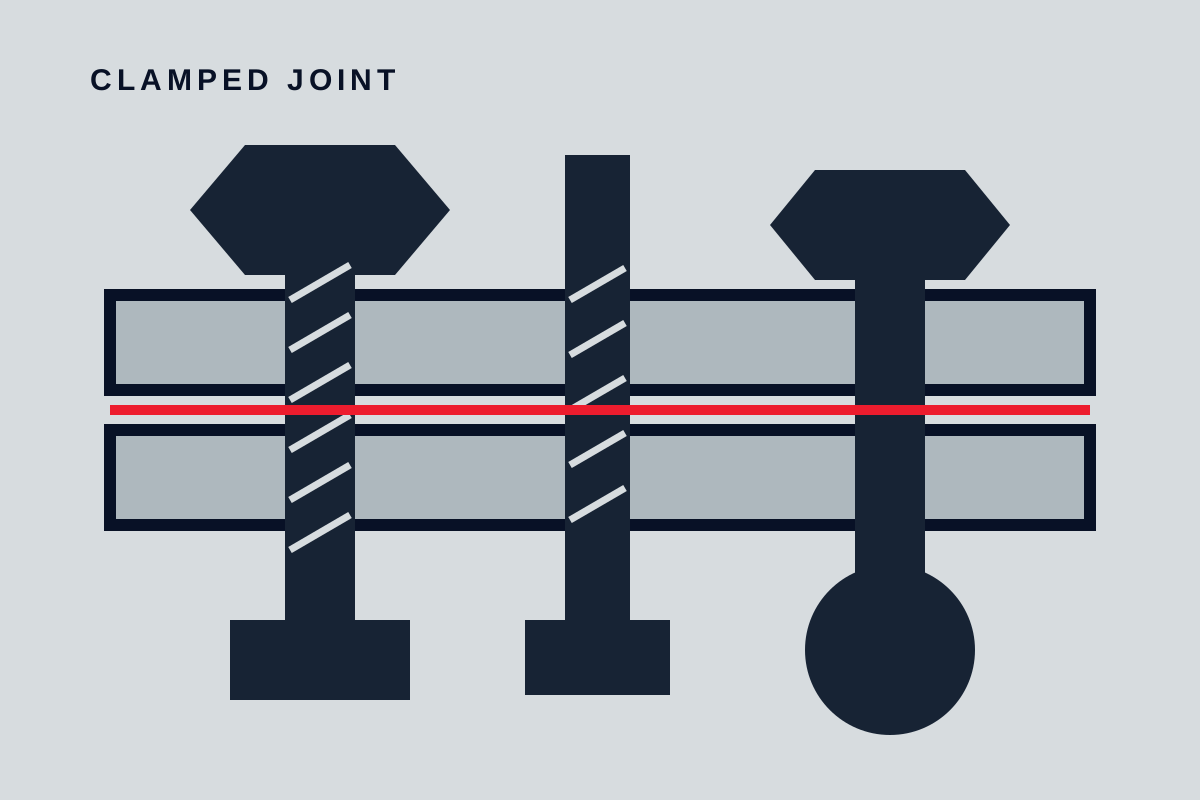
A bolted joint normally works by clamping parts together. Tightening stretches the fastener and compresses the joint. External load first changes that balance; a well-designed joint keeps mating surfaces in contact and limits the fluctuating stress seen by the fastener.
Define shear, tension, bending, vibration, impact, pressure, thermal cycling, and whether the joint must seal or maintain alignment. Identify which parts are reusable and how often the joint will be opened. A fastener suitable for a static cover may be unsuitable for a connecting structure or pressure-containing closure.
Bolts and machine screws
A bolt typically passes through clearance holes and works with a nut. A machine screw engages a tapped hole, threaded insert, or nut and may use a variety of head and drive forms. In practice, terminology varies, so drawings should state thread, dimensions, material or property class, finish, and applicable dimensional requirements rather than rely on the name.
Partially threaded bolts can place an unthreaded shank through the shear plane, reducing stress concentration and bearing damage. Fully threaded fasteners provide flexible grip length but may expose threads to shear or fretting. Choose grip and thread length so the nut or tapped engagement is complete without the shank interfering with tightening.
Head style affects tool access, bearing pressure, clearance, and installation control. Socket heads fit compact equipment but require clean, undamaged drives. Flanged heads spread load but do not replace joint design.
Studs and threaded rods
A stud has threads at both ends or along its length and normally remains installed in one component while a nut clamps the assembly. Studs protect expensive tapped housings from repeated wear, help align heavy covers, and can simplify assembly where a bolt head is inaccessible.
The fixed end must have adequate engagement and a controlled installation method. Bottoming a stud in a blind hole can damage the thread or create false torque. The nut end needs sufficient protrusion for full engagement without unnecessary exposed thread.
Threaded rod is convenient for supports and adjustment but should not automatically replace a purpose-rated bolt or stud in fatigue, alignment, or critical structural duty. Verify material, thread manufacture, straightness, and traceability.
Nuts and thread engagement
Standard nuts, prevailing-torque nuts, jam nuts, castellated nuts, flange nuts, and specialised hydraulic or tensioning nuts solve different installation and locking problems. Nut strength should be compatible with the bolt so failure mode and proof capacity are understood.
Thread engagement must transfer load without stripping the internal or external thread. Required length depends on material strength, thread geometry, insert design, and load. Soft housings may need deeper engagement or a threaded insert. Damaged, dirty, plated, or lubricated threads change tightening behaviour.
Never substitute a nut or reuse a prevailing-torque feature without checking the maintenance rule for that joint.
Washers and bearing surfaces
Plain washers distribute bearing pressure, bridge oversized holes, or protect a surface. Hardened washers may be necessary under high-strength fasteners to prevent embedment. Spherical washer sets can accommodate a defined angular mismatch under suitable loading.
Spring washers are often treated as universal anti-loosening devices, but loss of preload, joint slip, vibration, and settlement require mechanism-specific control. A washer cannot compensate for inadequate clamp length, soft joint surfaces, poor tightening, or severe transverse movement.
Check washer hardness, diameter, thickness, flatness, coating, and fit beneath the head and nut. A washer that contacts a fillet or hangs over an edge creates eccentric load.
Pins, rivets, and retaining elements
Dowel pins locate parts accurately and can carry shear when holes and fits are designed for it. Clevis pins support pivoting joints and normally require a separate retainer. Spring pins and roll pins provide compliant retention in suitable holes but have load and fatigue limits.
Rivets create permanent or semi-permanent joints through deformation. Blind rivets provide one-sided access but differ in retained mandrel, sealing, grip range, and structural capability. Retaining rings hold components axially in grooves; groove geometry and installation direction matter.
These elements should not be grouped with threaded fasteners when the joint needs preload. Their load paths and inspection methods are different.
Thread forms and fit
Use one specified thread system consistently. Nominal diameter alone does not define pitch, form, tolerance, or hand. Fine threads can provide greater tensile area and adjustment for a given diameter but are more vulnerable to damage and cross-threading. Coarse threads are often more robust in assembly and soft materials.
Thread fit affects assembly, coating allowance, preload, and galling. Plating or paint on threads can prevent correct engagement. For high-temperature or corrosion-resistant combinations, galling risk may require material pairing, surface treatment, lubricant, and controlled installation speed.
Material, strength, and coating
Specify mechanical properties through the applicable project standard or verified material requirement. Do not infer strength from colour or head markings without checking the governing system. Higher strength is not always better: it can reduce ductility, increase sensitivity to hydrogen damage in some conditions, or overload soft joint materials.
Corrosion protection may use metallic coating, conversion coating, paint, or corrosion-resistant base material. The coating changes friction and tightening response. Galvanic compatibility with the joined parts and service environment must be checked. Temperature can degrade coatings, lubricants, polymers, and fastener strength.
Material certificates only help when they trace to the supplied lot and required property. Define identification, lot control, and inspection according to consequence.
Preload and tightening
Torque is an indirect method of creating preload; much of the applied torque is consumed by friction under the head and in the threads. Lubricant, coating, surface finish, reuse, tool speed, and joint geometry change the torque-preload relationship. Do not copy a generic torque table into a critical procedure without confirming assumptions.
Other methods include turn-of-nut, direct tension indicators, ultrasonic measurement, hydraulic tensioning, and controlled yield approaches. Selection depends on joint criticality, access, size, accuracy, and verification needs.
Use a tightening sequence that brings flanges or covers together evenly. Calibrated tools do not correct wrong friction assumptions, damaged threads, or joint settlement. Define retightening only when the joint design and gasket or material permit it.
Preventing loosening
First maintain clamp force and prevent joint slip through correct preload, stiff joint design, adequate grip length, and stable bearing surfaces. Then choose locking according to the remaining mechanism.
Prevailing-torque nuts add rotational resistance. Adhesives can lock and seal compatible clean threads but create temperature, cure, and disassembly constraints. Tab washers, lock wire, castellated nuts, and positive retainers physically block rotation when installed correctly. Wedge-locking systems address transverse movement through paired geometry.
No locking method repairs a joint that separates under external load or settles because of soft coatings and rough interfaces.
Specification checklist
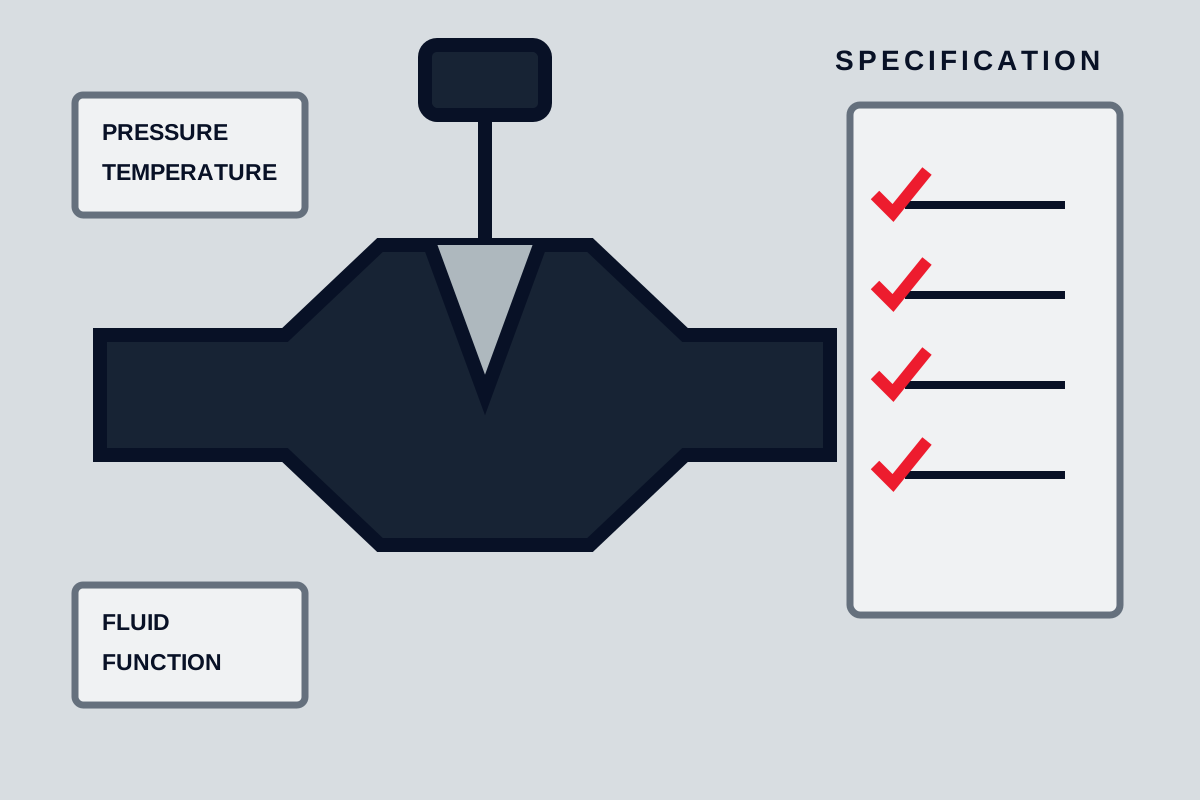
- joint function, external loads, fatigue, vibration, temperature, corrosion, and opening frequency;
- fastener type, diameter, pitch, length, grip, thread engagement, head, drive, and fit;
- material or property requirements, coating, lubricant, and galvanic compatibility;
- nut, washer, insert, pin, retainer, and bearing-surface details;
- preload target or tightening method, sequence, tool, verification, and reuse policy;
- identification, traceability, inspection, packaging, storage, and approved substitutions.
The best fastener is the one that creates and maintains the required joint condition. If the specification starts and ends with bolt size, it has not yet described how the joint is expected to work.
Bolts, screws and studs
A bolt commonly works with a nut, while a screw engages a tapped hole or forms its own mating thread. Studs can protect expensive tapped housings and simplify repeated assembly. Fully and partially threaded shanks distribute load differently through the joint.
Nuts, washers and locking
Washers can spread bearing pressure or protect a surface, but they do not automatically prevent loosening. Prevailing-torque nuts, mechanical locking devices, adhesives and correctly maintained preload address different failure mechanisms.
Specify the joint
State the governing dimensional and mechanical standard, strength class, finish, thread tolerance and traceability. Review corrosion, temperature, fatigue and galvanic compatibility. Tightening method should deliver controlled preload without damaging threads or joined parts.