

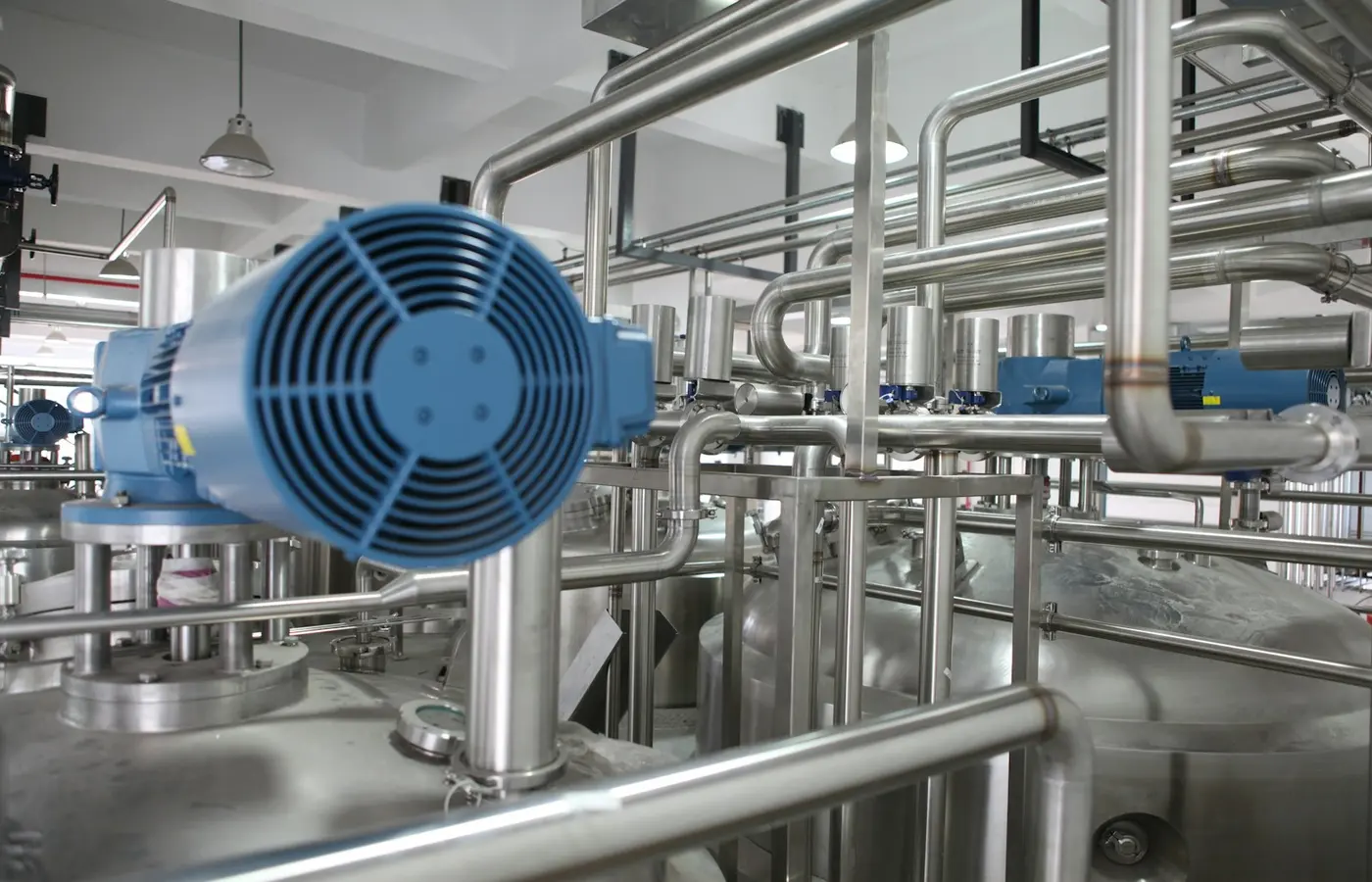
Industrial motor enclosure selection is not a choice between “open” and “sealed” alone. Select the motor by documenting how dust, water, cleaning agents, heat, and restricted airflow reach its installed location, then confirm that the exact motor configuration is rated for those conditions. An enclosure label or a catalog photograph is not sufficient evidence by itself.
Define the actual exposure before selecting an enclosure
Start with the source, direction, frequency, and duration of exposure. A motor beside a dry powder conveyor has a different duty from one mounted beneath a food-processing line, even if both are described as operating in a “dusty” area.
Record the conditions at the motor location rather than using a general description of the building. Useful inputs include site photographs, equipment layout drawings, cleaning procedures, drain locations, and the motor’s position relative to product discharge points, spray nozzles, doors, and outdoor weather.
Distinguish among these exposures:
- Airborne non-conductive dust: Fine material can accumulate on cooling fins, fan covers, and terminal boxes. It may reduce heat rejection even if it does not enter the motor.
- Conductive or hygroscopic dust: Metal fines, carbonaceous dust, or material that absorbs moisture can create a more serious electrical and corrosion risk. Its suitability may require a project-specific engineering review.
- Occasional drips or splash: The direction of water matters. Water falling vertically, splashing from below, or arriving from several directions are different exposure cases.
- Directed hose spray: Document nozzle type, pressure, flow where known, water temperature, spray distance, angle, duration, and cleaning frequency. A hose-down procedure cannot be reduced safely to the phrase “wet area.”
- High-pressure or high-temperature washdown: This can challenge gaskets, cable entries, shaft seals, drain fittings, coatings, and fasteners in addition to the main housing.
- Condensation and outdoor weather: Daily temperature changes may cause condensation even where there is no direct spray. Outdoor duty also introduces solar heating, rain direction, wind-driven dust, and possible standing water.
Ask whether cleaning takes place while the motor is energized, stopped but electrically connected, or fully isolated. The facility’s electrical-safety procedure, manufacturer instructions, and applicable site requirements govern that decision; an enclosure designation does not make cleaning around energized equipment inherently safe.
Manufacturer and repair-provider guidance commonly positions open motors in clean, dry locations and totally enclosed fan-cooled motors in many dusty or moist industrial areas. That is useful general context, not a universal suitability statement. For example, Universal Rewind’s enclosure overview describes environmental conditions and cooling requirements as selection factors. The delivered motor’s own documentation must govern the final choice.
Use IP protection as a stated classification, not a complete specification
An IP code is an ingress-protection classification. In general terms, its first digit addresses access to hazardous parts and protection against solid-object ingress; its second digit addresses specified water exposure. It is valuable because it converts part of the environmental requirement into a defined test classification.
However, an IP code is not a complete motor application specification. It does not, by itself, establish all of the following:
- Compatibility with a cleaning chemical, sanitizer, solvent, or alkaline detergent.
- Resistance of paint, stainless steel, fasteners, gaskets, seals, or cable glands to the cleaning cycle.
- Thermal capability at the installed ambient temperature, altitude, load, and speed.
- Suitability for a particular mounting orientation or terminal-box orientation.
- Suitability for immersion, hazardous locations, outdoor operation, or inverter operation.
- Continued protection after a cable gland, blanking plug, drain, breather, or conduit fitting is installed incorrectly.
Do not specify an IP rating by assuming that a higher number is always enough. Match the documented water test condition to the credible site exposure. For washdown, compare the facility procedure with the exact manufacturer documentation for the candidate motor. Include nozzle geometry, water pressure, water temperature, distance from the motor, angle of application, cleaning duration, and chemical concentration. If any of these differ from the published rating conditions or manufacturer limitations, request written confirmation for the application.
Also avoid treating IP terminology and North American enclosure terminology as direct equivalents. Terms such as open drip-proof, totally enclosed fan-cooled, and totally enclosed non-ventilated describe enclosure and cooling arrangements. An IP code describes a stated level of ingress protection. They overlap in practical selection but are not interchangeable labels.
For dusty duty, check whether dust can settle on the fan cover and frame. A motor may prevent a specified degree of ingress while still losing cooling capacity because its exterior heat-transfer surfaces are coated with product dust. This is an installation and maintenance issue as much as an enclosure issue.
Compare open, TEFC, and non-ventilated cooling arrangements
Enclosure selection changes the path by which the motor rejects heat. More separation from the environment can reduce contaminant entry, but it can also make the external cooling path more important.
Open motors need a clean, dry installation
Open designs allow ventilation air to move through the motor. This can support heat removal, but the internal components are more exposed to dust and moisture. Use an open motor only when the exact manufacturer documentation and the actual installation support that choice. A nearby source of dust, occasional washdown, process splash, or wind-driven rain can invalidate a selection that appeared acceptable on a general layout drawing.
If an open motor is proposed inside a guard, cabinet, or machine enclosure, verify the air temperature and airflow at the motor rather than assuming the surrounding room condition applies.
TEFC motors reject heat through the outer frame
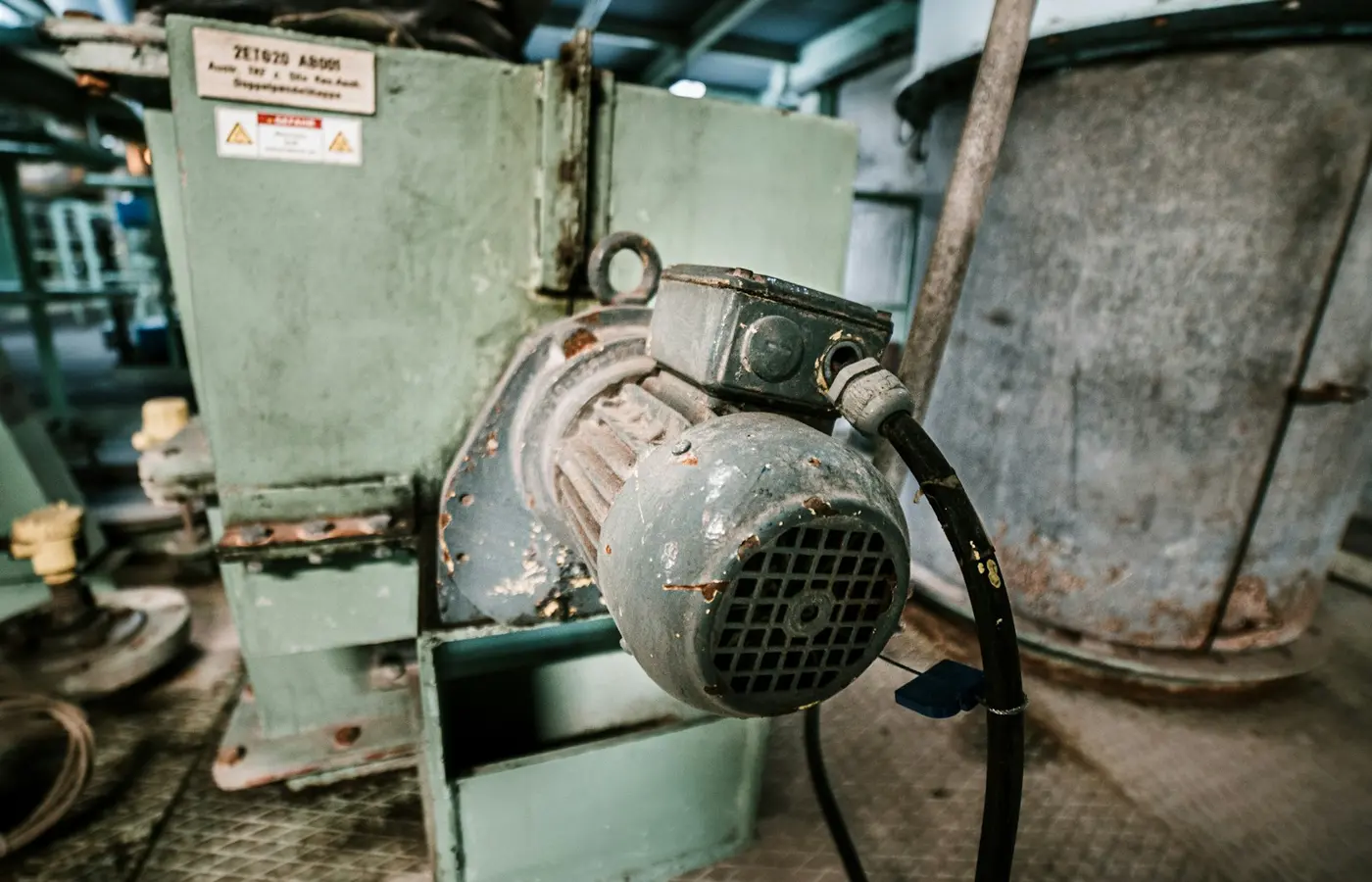
A totally enclosed fan-cooled (TEFC) motor generally uses an external fan to move air across the outside frame and cooling fins. The motor is enclosed from the normal cooling-air stream, but it still depends on airflow around its exterior.
This makes TEFC designs common candidates for industrial areas with airborne dust or moisture. Yet TEFC does not automatically mean washdown-suitable. The fan cover can collect debris, the exterior fan requires clearance, and the seal, terminal box, cable entries, drain arrangement, and coating may determine whether the complete assembly is suitable.
Confirm the required clearance around the fan cover and cooling fins from the exact installation manual. Avoid installing the motor where guards, walls, packaging, accumulated product, or another machine blocks the cooling-air path.
TENV motors require a close thermal check
Totally enclosed non-ventilated (TENV) motors do not use an external fan for normal cooling. They rely more heavily on natural convection and radiation from the frame. This can be useful where a fan is undesirable, but the thermal margin must be checked against the actual load, ambient temperature, mounting arrangement, and surrounding airflow.
Do not substitute a TENV motor for a fan-cooled motor simply to eliminate an external fan. Obtain the exact rated output, duty rating, allowed ambient conditions, mounting restrictions, and manufacturer guidance for the installed duty. A motor that remains within its published limits at one speed and ambient condition may not do so in a hot, enclosed, or low-airflow location.
Check thermal duty before increasing enclosure protection
The motor nameplate is normally based on stated operating conditions. Before selecting a more enclosed design, collect the conditions that can reduce cooling margin:
- Ambient temperature measured or credibly documented near the motor, not only at the building thermostat.
- Altitude, where the manufacturer identifies a limit or derating requirement.
- Required shaft output, torque profile, duty cycle, starts per hour, and periods at standstill.
- Driven-equipment load, including any high breakaway torque or intermittent overload.
- Installation within a cabinet, pit, ceiling void, guard, or restricted-airflow zone.
- Local radiant heat from ovens, process piping, direct sun, or adjacent equipment.
- Variable-frequency drive speed range and time spent at low speed.
Variable-speed operation deserves separate attention. On a conventional TEFC motor, the shaft-mounted external fan normally turns more slowly when shaft speed falls. Consequently, cooling available from that fan can decrease at low speed while the driven machine may still demand substantial torque. The acceptable speed range depends on the motor, load type, ambient condition, drive settings, and any independent cooling arrangement.
Do not assume that a motor is suitable for inverter duty because it will be supplied from a variable-frequency drive. Check the exact motor documentation for inverter-duty statements, permitted speed range, insulation and bearing provisions where relevant, and any requirements for output filters or separately powered cooling. Where the planned duty differs from published ratings, request a written thermal and speed assessment from the motor manufacturer.
Specify materials and sealing for the cleaning chemistry
Water resistance and chemical resistance are separate questions. Stainless steel may be appropriate in some washdown applications, but it does not establish compatibility for every chemical, temperature, concentration, or contact duration. The weakest compatible component can govern service life.
Review the complete exposed system:
- Frame, end shields, fan cover, and terminal-box housing.
- Painted or coated surfaces and any repair-paint requirements.
- Fasteners, washers, shaft hardware, and mounting feet or flange.
- Terminal-box gasket, shaft seal, drain fitting, breather, and blanking plugs.
- Cable jacket, cable gland, conduit seal, and unused entry plugs.
- Cooling fins and crevices that may retain soil or cleaning chemical.
Obtain the cleaning-process specification and safety data sheets. Record the chemical identity, concentration, application temperature, contact time, rinse method, and cleaning frequency. Then compare those inputs with motor manufacturer material data and written compatibility statements from the relevant seal, coating, gland, or motor manufacturer.
Site corrosion history can be useful, but treat it as local evidence. A failure record from a similar line may reveal a recurring weakness in fasteners or cable entries; it does not prove that every motor with the same general enclosure label will fail or succeed.
Verify the delivered motor and installed configuration
Procurement documents should identify more than a generic enclosure description. Include the required enclosure and IP designation, cooling method, mounting arrangement, voltage, frequency, duty, ambient limits, materials, cable-entry arrangement, and any washdown or corrosion requirements.
Before commissioning, inspect the delivered motor against the approved submittal and manufacturer documents. Verify at minimum:
- The complete nameplate data: model, voltage, frequency, current, rated output, speed, duty, insulation information where shown, and ambient or altitude limits where stated.
- The enclosure, IP designation, cooling method, and mounting designation for the exact delivered motor.
- Terminal-box orientation, cable entry type, cable-gland suitability, and sealing of unused openings.
- Correctly installed plugs, drains, breathers, and shaft seals according to the manufacturer instructions and required orientation.
- Fan cover and cooling-fin clearance, with no obstruction from guards, pipework, walls, product buildup, or stored materials.
- Motor mounting, shaft orientation, coupling alignment, guarding, and drainage around the base.
- The availability of the exact installation, operation, and maintenance manual for the delivered model.
Do not open terminal boxes or perform electrical inspection until the facility’s isolation procedure has been followed. Apply lockout/tagout where required, verify absence of voltage using the approved method, and maintain guarding and safe access requirements. Installation work should remain within the responsibilities of qualified personnel and the manufacturer’s instructions.
Set an acceptance rule tied to the documented duty
Accept an industrial motor for dusty or wet service only when the documented enclosure, IP classification, cooling arrangement, thermal ratings, materials, seals, cable entries, mounting orientation, and installation clearances match the defined exposure and operating duty.
The selection needs further manufacturer and qualified engineering review when the installation involves hazardous areas, immersion risk, unusual or concentrated chemicals, high-temperature washdown, restricted external cooling, significant low-speed VFD operation, or operating conditions outside published ambient, load, or mounting limits.
A practical final rule is simple: do not approve a motor because it is described as TEFC, washdown, stainless, or high-IP in a catalog. Approve it when the exact motor configuration and installed details are documented to suit the actual dust, water, chemistry, cooling, and duty conditions.