

Pump material selection for corrosive or abrasive service starts with the actual duty, not with a broad request for “stainless steel,” “rubber lined,” or “chemical resistant.” The casing, impeller, shaft sleeve, seal faces, elastomers, bushings, and auxiliary wetted parts may each face different chemical, mechanical, and thermal conditions. A material that is acceptable for one component or operating range can still fail elsewhere in the pump.
Define the fluid and duty before comparing materials
A material compatibility chart is only as useful as the process data supplied to it. Before selecting a pump or asking a supplier for a recommendation, prepare a duty specification that identifies the liquid as it will actually reach the pump.
At minimum, collect:
- Chemical constituents and concentration ranges, not only a trade name or general fluid category.
- Expected contaminants, batch variation, cleaning chemicals, and possible cross-contamination.
- Normal, startup, shutdown, upset, and maximum fluid temperatures.
- Suction and discharge pressure, required flow range, pump speed, and operating hours.
- Viscosity, density, vapor pressure, entrained gas, and whether the liquid can crystallize, polymerize, or settle.
- Solids concentration, particle-size distribution, particle shape, particle hardness, and tendency to settle.
- Expected dry-running, intermittent operation, dead-heading, low-flow operation, or frequent starts and stops.
“Acid,” “solvent,” “wastewater,” and “slurry” are not sufficiently precise fluid descriptions. For example, concentration and temperature can materially change the suitability of an alloy, polymer, or elastomer. A nominally clean process liquid can also contain abrasive catalyst fines, chlorides, oxidizing contaminants, or suspended crystals that change the failure mechanism.
The safety data sheet can be a useful starting document, but it may not describe all process contaminants or operating conditions. Use the process datasheet, laboratory analysis, batch records, and prior failure history where available. If the liquid composition is variable or not fully known, identify that uncertainty in the pump inquiry rather than presenting a single assumed composition as fixed.
For a centrifugal pump, also establish the intended operating point and operating envelope. Material selection cannot be isolated from hydraulics: internal recirculation, cavitation, high local velocity, and operation far from the preferred range can accelerate damage even when the material is chemically compatible.
Screen corrosion risks by chemistry, temperature, and geometry
Chemical compatibility data is an initial screening tool, not a complete service-life prediction. Use current data from the proposed pump manufacturer or the material producer for the exact chemical, concentration, and temperature range. Ask whether the published recommendation addresses continuous exposure, intermittent exposure, or only short-term contact.
The first review should distinguish between several possible corrosion mechanisms:
- General corrosion: relatively uniform material loss across an exposed surface.
- Pitting corrosion: localized holes or cavities, often important where fluid chemistry and passive alloys create susceptible conditions.
- Crevice corrosion: localized attack in restricted gaps such as gasket interfaces, threaded connections, sleeves, wear-ring fits, or deposits.
- Galvanic corrosion: accelerated attack that can occur when dissimilar conductive materials are electrically connected in a suitable electrolyte.
- Stress-corrosion cracking: cracking that may require a particular combination of material condition, tensile stress, environment, and temperature.
- Erosion-corrosion: chemical attack accelerated by liquid velocity, turbulence, solids impact, or collapsing vapor bubbles.
A generic statement that a material is “corrosion resistant” does not resolve these risks. Stainless steel is a family of alloys with different compositions and limits; it is not a single material specification. The same caution applies to broad labels such as duplex stainless steel, high-alloy metal, rubber, PTFE, ceramic, or engineered plastic.
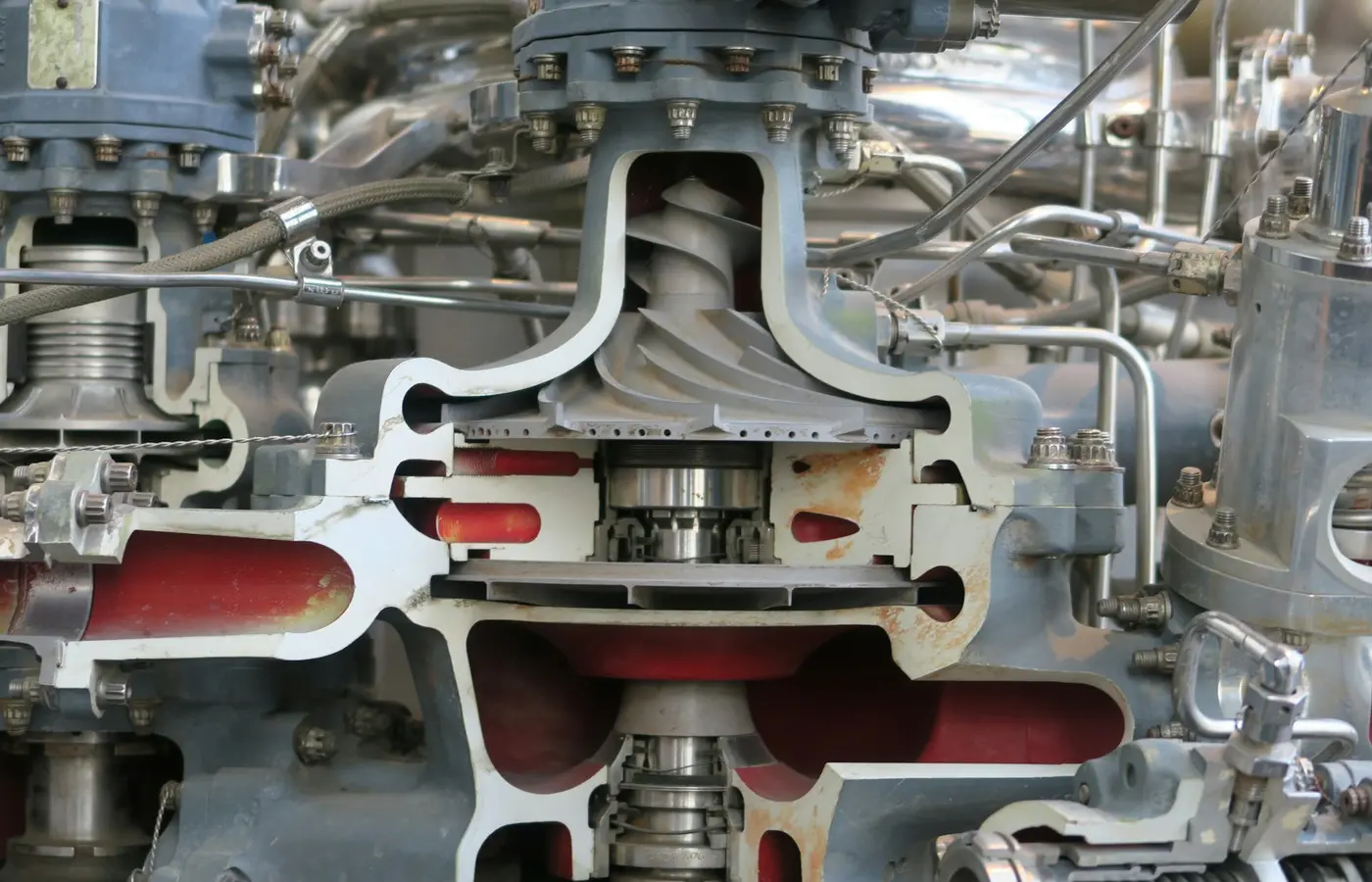
Component geometry matters because the local environment inside a pump is not uniform. A casing may experience bulk fluid flow, while a wear ring, sleeve, threaded joint, seal chamber, or gasketed crevice can experience stagnant liquid, concentration changes, deposits, or elevated local temperature. Obtain the manufacturer’s sectional drawing and wetted-parts list, then review areas where fluid can be trapped or where dissimilar materials meet.
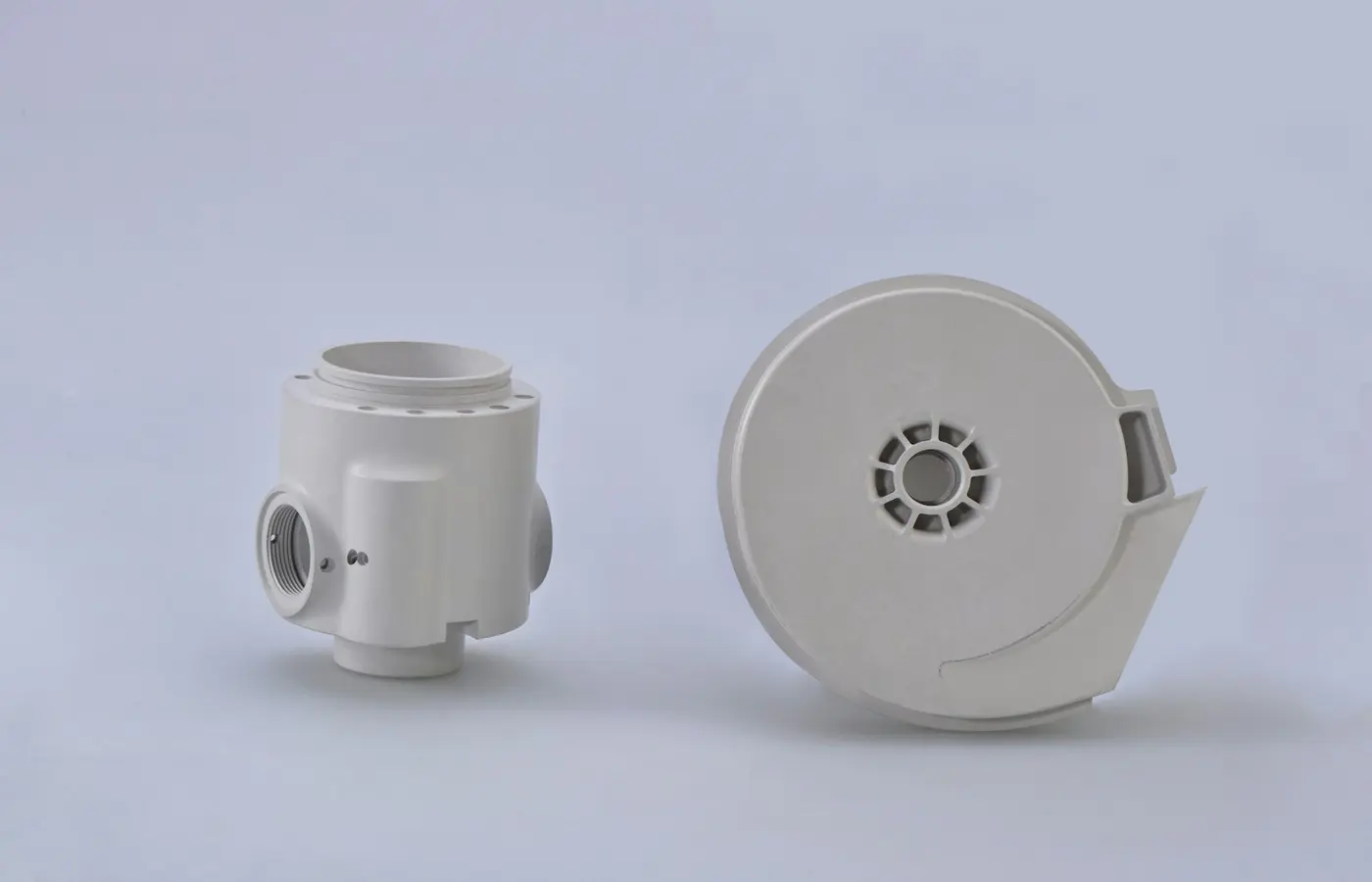
Do not assume that a casing and impeller require identical materials. Different materials may be appropriate where the components have different functions, manufacturing constraints, or wear exposure. However, the pair must be reviewed as a system. Consider galvanic effects, differential thermal expansion, wear clearances, mechanical strength, and the compatibility of all adjacent parts.
Published supplier compatibility recommendations should be treated as supplier claims unless supported by independent evidence applicable to the exact duty. Request the assumptions, temperature limits, excluded contaminants, and any stated restrictions in writing. If the supplier offers only a general material label without an itemized wetted-parts list, the recommendation is incomplete.
Match abrasion resistance to solids and hydraulic conditions
Abrasion resistance and corrosion resistance are different material properties. A material selected for chemical resistance may wear quickly in a solids-laden liquid, while a hard wear-resistant material may be unsuitable for the fluid chemistry, pressure, thermal cycle, or impact loading.
For abrasive service, characterize the solids rather than relying only on total solids percentage. The relevant questions include:
- What is the particle-size distribution, including the coarse-particle fraction?
- Are particles angular, rounded, fibrous, friable, or hard mineral particles?
- What are their density and hardness relative to the candidate material system?
- Are solids chemically reactive, corrosive, or capable of depositing in crevices?
- Will the solids settle during shutdown or at low velocity?
- Does the process experience concentration spikes, such as during tank cleaning or batch transfers?
Wear is strongly influenced by where particles strike, slide, or recirculate within the pump. Impeller passages, inlet regions, volute surfaces, liners, throat areas, wear rings, seal chambers, and bushings may see different mechanisms. Smooth grooves can indicate sliding abrasion, while localized impact loss can indicate particle strike, turbulence, or recirculation. Inspection evidence should be used to identify the likely mechanism before assigning every failure to “abrasion.”
Hydraulic duty also affects wear. Operation at very low flow, excessive flow, unstable conditions, or outside manufacturer guidance can raise internal recirculation and local velocity. Cavitation can remove material and may resemble other forms of surface damage. A harder material is not automatically a solution if the underlying problem is inadequate suction conditions, unsuitable operating point, or a solids concentration outside the pump’s intended range.
For corrosive slurry, evaluate erosion-corrosion as a combined mechanism. The moving liquid and solids can repeatedly remove protective surface films or expose fresh material, while chemical attack changes the surface condition and wear behavior. This interaction is service-specific and should not be predicted from a standalone chemical-resistance table.
Ask the pump supplier whether its recommendation is based on documented experience, a stated test method, or a published limit for a comparable material and configuration. Comparable means similar fluid chemistry, temperature, solids characteristics, pump hydraulic design, and operating range—not merely the same industry name.
Verify every wetted component, not only the casing and impeller
A pump quotation can identify a corrosion-resistant casing while leaving the actual weak point in a seal elastomer, shaft sleeve, bushing, fastener, or flush connection. Review the complete wetted assembly against the duty.
A practical component review includes the following.
| Component or interface | What to verify |
|---|---|
| Casing and cover | Material grade, pressure-temperature rating, liner construction, joints, and crevice-prone areas. |
| Impeller | Exact alloy, polymer, elastomer, or ceramic; solids passage; wear exposure; and balance or strength limits. |
| Shaft and shaft sleeve | Exposure to process liquid, sleeve material, crevice geometry, and compatibility with adjacent components. |
| Wear rings, throat bushings, and liners | Material, replaceability, clearance requirements, abrasive wear behavior, and thermal expansion effects. |
| Mechanical seal faces | Face materials, lubrication requirements, dry-running limits, solids tolerance, and seal-chamber conditions. |
| Secondary seals | O-rings, gaskets, diaphragms, bellows, and other elastomers or polymers at applicable temperature and pressure. |
| Bearings and bushings in wetted designs | Material, lubrication regime, solids tolerance, and start-stop exposure. |
| Fasteners and inserts | Exact material and exposure route, including whether liquid can reach threads or embedded metallic parts. |
| Flush, quench, barrier, or buffer system | Wetted tubing, fittings, seal hardware, fluid compatibility, pressure relationships, and contamination risks. |
Request part numbers and material grades, not generic descriptions. “Stainless steel shaft,” “rubber seal,” and “PTFE gasket” do not identify the grade, compound, construction, temperature limit, or intended use. For lined pumps, confirm whether the liner covers all expected wetted surfaces and how joints, nozzles, fasteners, and sealing areas are arranged.
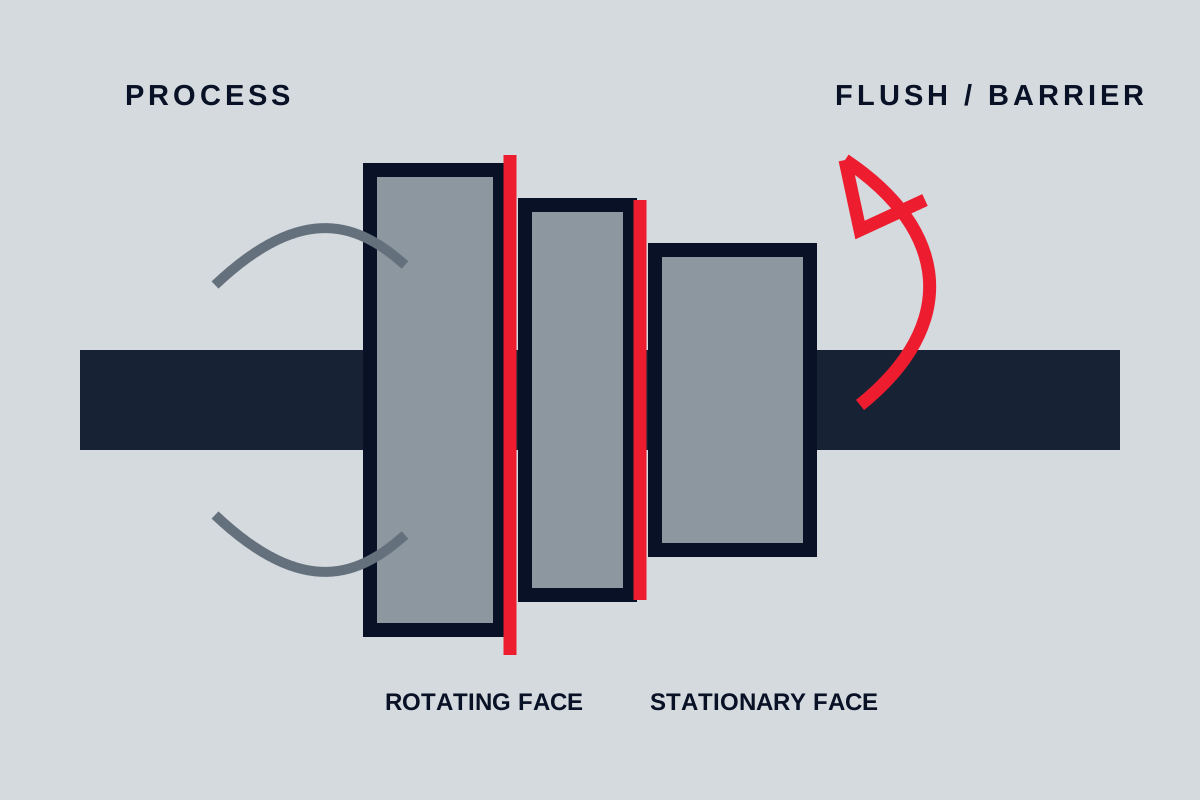
Mechanical seals need separate attention because they combine hard faces, secondary sealing elements, springs or metal hardware, and a narrow lubricating interface. A seal arrangement may be acceptable for the bulk fluid while unsuitable for solids, vaporizing liquid, crystallization, inadequate lubrication, or the selected barrier or flush fluid. Obtain seal documentation for the proposed configuration rather than assuming the pump body material determines seal suitability.
Compare chemical compatibility with mechanical operating limits
A material can be chemically compatible and still be unsuitable for the pump duty. The selected material system must also meet pressure, temperature, mechanical loading, and maintenance requirements for the exact pump model.
Review manufacturer limits for the quoted configuration, including casing pressure rating, fluid temperature range, liner restrictions, allowable thermal cycling, shaft stiffness requirements, seal arrangement, and drive configuration. If a nonmetallic casing, liner, elastomer, or ceramic part is proposed, ask about its mechanical limits under pressure, vacuum, temperature change, and pipe loading.
Thermal expansion deserves attention where different materials are assembled together. Clearances and clamping forces may change as temperature changes. A polymer-lined or elastomer-lined design may offer chemical advantages but can have operating limits that differ from a metallic design. These are design-specific limits that should come from the manufacturer’s documentation.
Check the proposed operating point against the pump curve, required NPSH information, minimum-flow guidance, and the expected process flow range. Cavitation, suction recirculation, discharge recirculation, and inadequate minimum flow can damage components regardless of nominal material resistance. Do not present a material change as a corrective action until the hydraulic cause of damage has been assessed.
Dry running is another separate risk. Some pump types and configurations can tolerate limited dry-running events under defined conditions; others depend on process liquid for lubrication or cooling. The supplier must state whether dry-running is permitted for the proposed seals, bushings, liners, and containment arrangement. Where dry running is possible, consider process controls, low-flow protection, level interlocks, or a different pump configuration as part of the application review.
Request a documented supplier recommendation
The purchase process should turn material selection into a traceable engineering decision. Send the duty specification to suppliers and require the response to identify what has actually been selected.
A useful supplier submission should state:
- Pump model, hydraulic configuration, speed, and proposed operating point.
- Casing, cover, impeller, shaft or sleeve, wear-part, liner, and fastener materials.
- Mechanical-seal face materials, secondary seals, metal components, and auxiliary seal-system materials.
- Maximum and minimum operating temperatures and pressures for the quoted configuration.
- Fluid composition, concentration, solids data, and other duty assumptions used for the recommendation.
- Restrictions concerning dry running, solids size, viscosity, temperature cycling, suction conditions, or operation outside the stated flow range.
- Exclusions, uncertainties, and conditions requiring further review.
Where contractual requirements justify it, specify material certificates, traceability, positive material identification, inspection hold points, spare-parts material identification, and an inspection and test plan. These documents verify that the delivered equipment matches the ordered specification; they do not independently prove that the specification itself is suitable for an uncertain fluid.
Escalate the application to a qualified pump specialist, corrosion engineer, or materials engineer when the liquid is mixed or poorly characterized, when contaminants are likely, when the service combines high temperature and aggressive chemistry, or when solids are both abrasive and corrosive. Review is also warranted after unexplained repeat failures, in toxic or hazardous duties, and whenever the proposed duty falls outside published compatibility information.
Frequently asked questions
Can stainless steel be assumed suitable for corrosive pump service?
No. “Stainless steel” does not identify a single alloy or establish suitability for a chemical duty. Compatibility depends on alloy grade, fluid composition, concentration, temperature, contaminants, component geometry, stress condition, and operating cycle. Obtain a recommendation for the exact wetted components and stated duty.
Do the casing and impeller need to be made from the same material?
Not necessarily. They may use different materials because their manufacturing method, pressure duty, wear exposure, and required mechanical properties differ. The materials must still be assessed together with sleeves, wear parts, fasteners, seals, and other wetted interfaces.
What fluid information should be provided to a pump supplier for material selection?
Provide chemical composition, concentration range, contaminants, normal and upset temperatures, pressure, flow range, viscosity, density, vapor behavior, solids loading, particle properties, operating schedule, and known abnormal events such as dry running or cleaning cycles. State uncertainty where composition or solids characteristics are not confirmed.
How should pump materials be selected when a liquid is both corrosive and abrasive?
Treat the service as a combined erosion-corrosion problem. Screen materials for chemical compatibility, then assess particle properties, solids concentration, hydraulic velocity, internal recirculation risk, and wear locations. Require the supplier to identify the proposed material system and the assumptions behind its recommendation; generic corrosion charts alone are not enough.
Select the material system only after the fluid, operating envelope, and every wetted component have been identified. If the duty includes unknown chemistry, elevated-temperature corrosives, severe solids, or prior unexplained failures, the appropriate acceptance criterion is not a broad material name: it is a written, configuration-specific recommendation with documented assumptions and limits.
Further reading
- Centrifugal Pump Material Selection Guide: Corrosion & Abrasion
- CHEMICAL PROCESS PUMPS: MATERIALS FOR CORROSIVE
- Pump Casing Material vs Impeller Material: Compatibility Checks
- Corrosion Resistant Centrifugal Pump: Materials, Selection & Safety Guide
- Industrial Diaphragm Pump: A Complete Selection & Material Guide
- Why Chemical Pumps Fail: Material Incompatibility, Mag-Drive Decoupling and Spec Errors Explained — Liberty Chemical & Equipment Supply Inc.