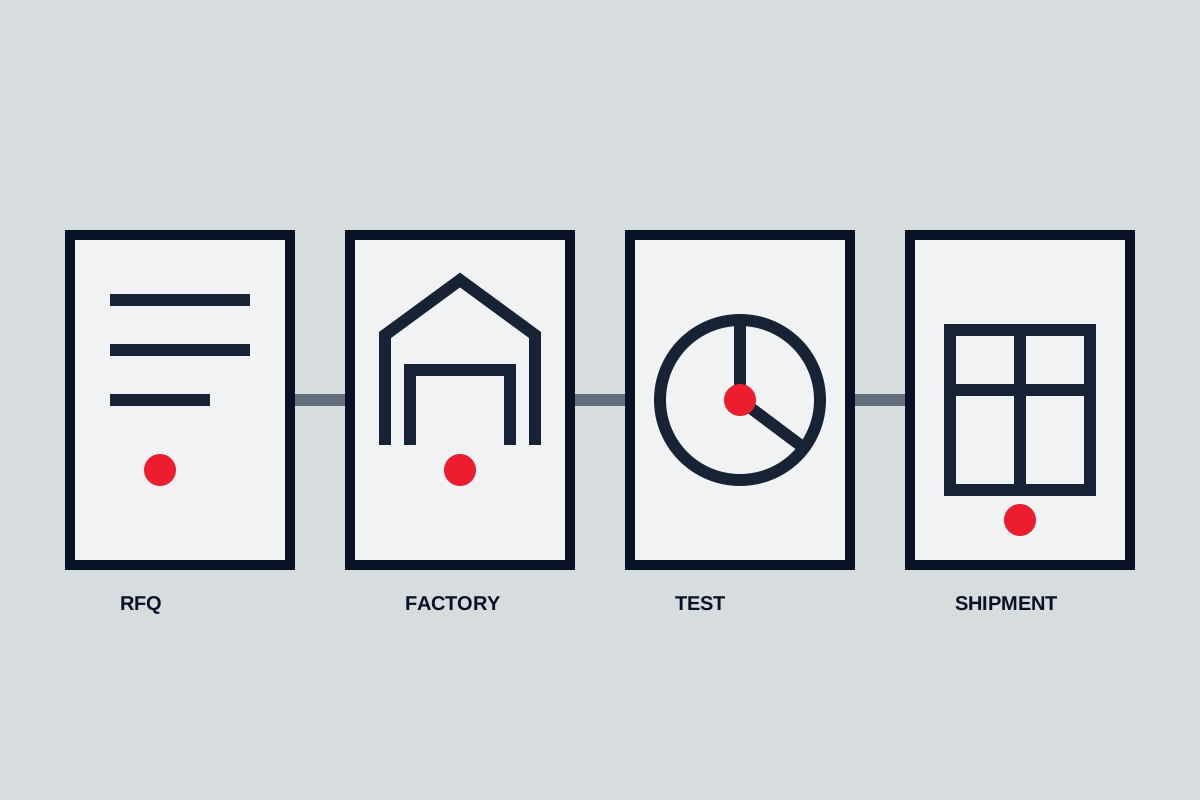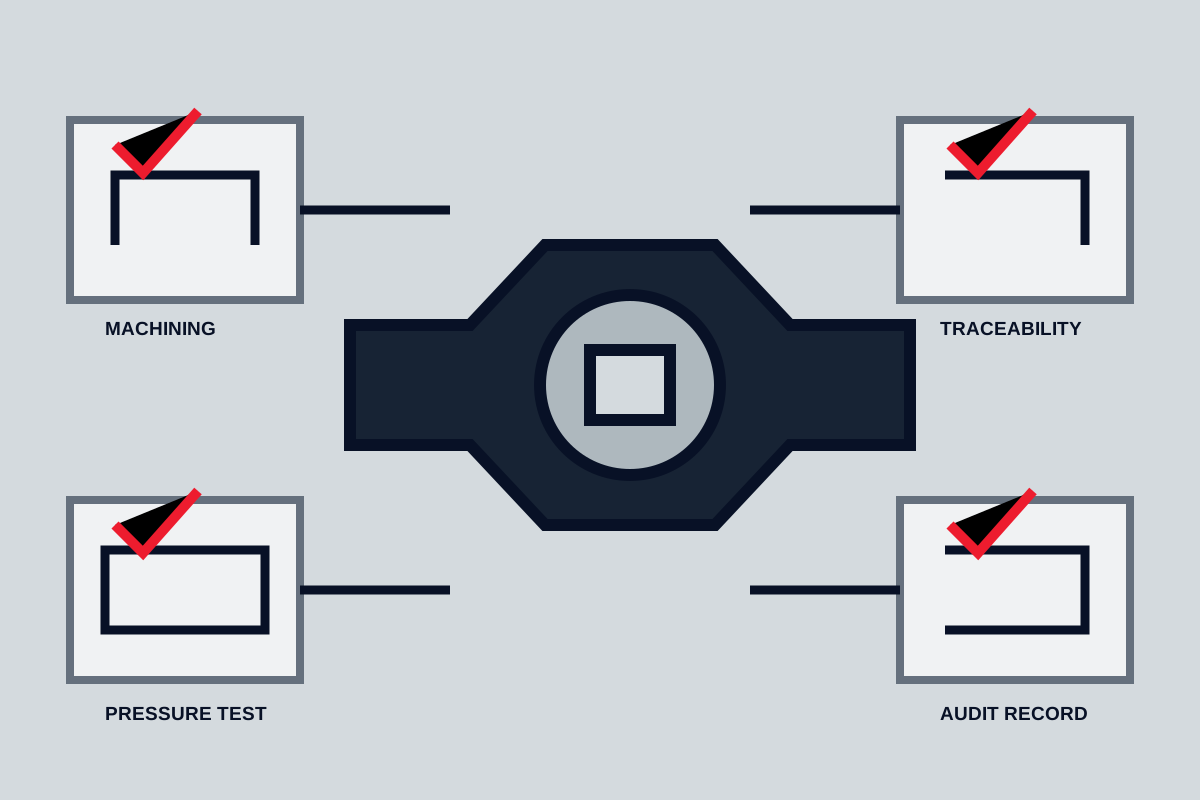


A control valve should be sourced against the process duty and approved technical requirements, not against nominal size, pressure class, catalog photographs, or country of origin. For a China industrial control valve sourcing project, the practical sequence is: define the duty; issue a controlled specification; verify what the supplier actually does; approve the configuration before production; and release only against tag-linked inspection and test records.
Define the control-valve duty before issuing an RFQ
Start by confirming that the requirement is genuinely for a modulating control valve. An actuated isolation valve may open and close a process line, but it is not necessarily suitable for stable throttling control. The valve body, trim geometry, seat design, actuator sizing, positioner, shutoff requirement, and test evidence can differ substantially between on-off and modulating service.
The RFQ should state the process data needed to size and configure the valve. If values are incomplete, identify them as open purchaser decisions rather than allowing bidders to make unrecorded assumptions.
At minimum, collect:
- Fluid name, composition, phase, contaminants, solids content, and corrosive or erosive constituents.
- Normal, minimum, and maximum flow rate, with units and the measurement basis stated.
- Inlet pressure, outlet pressure, and expected differential pressure for normal and maximum-duty cases.
- Normal, minimum, and maximum process temperature.
- Vapor pressure where flashing or cavitation may be possible.
- Required valve action: modulating, on-off, or both.
- Required flow characteristic, such as equal-percentage, linear, or quick-opening, where the control philosophy establishes one.
- Required shutoff performance and the applicable acceptance method.
- Valve body size, pressure class or pressure-temperature rating basis, end connections, and face-to-face requirement.
- Body, trim, seat, packing, gasket, and bolting materials where the service or project specification requires them.
- Actuator type, available instrument air or electrical supply, fail position, travel time, and accessories.
- Positioner signal and communication requirements, such as pneumatic signal, 4–20 mA, or a defined digital protocol.
- Site conditions, including ambient temperature, outdoor exposure, corrosive atmosphere, hazardous-area classification, and ingress-protection needs.
Supplier-oriented sourcing guides commonly advise buyers to define valve type, medium, pressure, temperature, material, connection, actuation, quantity, and documentation requirements before comparing quotations. That is a useful workflow point, not independent proof that a particular supplier can meet a given duty. XHVAL’s procurement guidance makes a similar distinction between defining the service and evaluating the supplier response.
For severe service, do not reduce the specification to a line size and pressure class. Cavitating liquid service, flashing, high-pressure gas letdown, slurry, oxygen, cryogenic, toxic, high-temperature, and hazardous-area applications may need specialized trim, materials, packing, qualification records, or project authority review. The final configuration should be determined by a qualified valve or process engineer using the applicable project requirements.
Turn the duty into a comparable technical specification
A technically comparable bid package gives every bidder the same duty data, data-sheet format, document list, and commercial assumptions. Without this control, two suppliers may quote different trim materials, actuator capacities, leakage assumptions, accessories, or test scope while appearing to offer the same valve.
Use an approved valve data sheet as the primary procurement document. The purchase order should state whether supplier substitutions, design changes, or material alternatives require written approval. A generic catalog model number is not enough because a control valve package can vary materially by body construction, trim, soft goods, actuator, positioner, and accessories.
Request each bidder to submit the following against the purchaser’s data sheet:
- Completed valve and actuator data sheet.
- Valve sizing calculation, including stated process conditions and assumptions.
- General arrangement drawing with dimensions, weights, connections, actuator orientation, and accessory locations.
- Bill of materials identifying body, bonnet, trim, seat, stem, packing, gaskets, and actuator components.
- Actuator sizing calculation and stated supply pressure or electrical supply assumptions.
- Positioner and accessory data, including signal type, fail action, enclosure, and hazardous-area documentation where required.
- Proposed test procedures, inspection points, and final test records.
- A complete deviation list, including any missing requirement, alternative material, changed standard, or excluded document.
Do not assume that a named standard is automatically applicable because it appears on a quotation. Its edition, scope, valve type, pressure class, materials, testing provisions, and contractual status must be confirmed for the actual package. The same caution applies to references to ISO, CE, ATEX, SIL, API, or other certificates. A certificate may be relevant, but it does not by itself confirm that the delivered valve configuration, accessory set, or intended service is covered.
The useful comparison question is not simply, “Does the supplier make control valves?” It is: “Does the submitted configuration meet this data sheet, and has every deviation been disclosed?”
Check the supplier’s legal identity, role, and manufacturing scope
A seller may be a valve manufacturer, an assembler, an authorized distributor, a trading company, or a combination of these roles. None of these roles automatically determines whether the valves will conform. The risk is a mismatch between the quoted scope and the seller’s actual control over design, materials, assembly, testing, documentation, and corrective action.
First, verify the contracting entity. Request current registration details and confirm that the legal entity name, registered address, quotation issuer, purchase-order counterparty, and payment beneficiary are consistent. If a different company will manufacture, assemble, export, or receive payment, record that relationship and decide whether it is contractually acceptable.
Next, map claimed capabilities to the actual control-valve package. Ask the supplier to identify whether it performs or controls:
- Body manufacture or procurement of castings and forgings.
- Trim machining and material control.
- Valve assembly and pressure testing.
- Actuator manufacture, integration, or third-party procurement.
- Positioner setup and functional calibration.
- Welding, repair, coating, nondestructive examination, or special cleaning where applicable.
- Final marking, preservation, export packing, and manufacturing record compilation.
If key work is subcontracted, request disclosure of the subcontracted scope and the supplier’s acceptance controls. For example, a company may assemble a valve package but source actuators, positioners, castings, and coatings elsewhere. That can be workable if interfaces, records, inspection responsibility, and warranty obligations are clear.
A dated remote walkthrough, photographs of relevant equipment, or an independent audit can support screening. The evidence should identify the site, date, equipment or operation observed, and product family. It should not be treated as proof that a future order will receive the same materials, operators, test conditions, or controls.
Several supplier and sourcing guides recommend checking whether a business is a manufacturer or trading company and reviewing claimed testing capability. For example, DELCO Valve’s sourcing guidance presents this as a buyer screening step. Use it as a prompt for verification, not as evidence about an individual supplier.
Review documents and traceability before production
Set a document-review hold point before production, assembly, or procurement of long-lead components. This prevents the common problem of discovering after testing that the delivered package differs from the approved configuration.
The purchaser should issue a document register or inspection and test plan that identifies required submissions, review status, timing, and retention requirements. Typical records may include approved data sheets, drawings, bills of materials, sizing calculations, actuator calculations, material test certificates where contractually required, welding or repair records where applicable, pressure-test procedures, calibration records, and final inspection reports.
Traceability requirements must be specific. If pressure-retaining or wetted-part traceability is required, specify which components need heat numbers, batch numbers, or other identifiers; how those identifiers must appear in the records; and how they link to the valve tag or serial number. A material certificate for a general material grade is not necessarily evidence for the material installed in a particular delivered valve.
Review these questions before release to manufacture:
- Does the submitted body and trim material list match the approved data sheet?
- Are seals, packing, seat materials, and bolting suitable for the defined temperature and chemical environment?
- Does the actuator calculation use the stated supply conditions and required fail action?
- Are positioner, solenoid, limit switch, and air-set specifications aligned with the control and site requirements?
- Does each certificate or report identify the actual valve, component, heat, batch, or serial number as required by the order?
- Are all deviations accepted in writing by the authorized purchaser representative?
A supplier statement that a valve is “equivalent” should be converted into a line-by-line comparison. Identify exactly what is equivalent, what differs, and whether the difference affects process control, shutoff, environmental integrity, maintenance, certification scope, or lifecycle support.
Set an inspection and test plan around failure risks
Inspection is most useful when it is planned around credible failure modes and tied to measurable acceptance criteria. A generic request for “100% inspection” is incomplete if it does not state what is inspected, at which stage, by whom, with what instruments, and against which limits.
The inspection and test plan should identify responsibilities, purchaser witness points, hold points, test methods, sample rules where sampling is permitted, records, and release authority. It should also define what happens when a nonconformance is found: repair, retest, concession request, replacement, or rejection.
For an actuated control valve, the plan may include the following checks where applicable to the order:
Material, dimensional, and assembly checks
Verify tag number, body marking, nominal size, pressure rating, end connection, face-to-face dimension, flow direction, actuator orientation, and accessory configuration against the approved drawing. Inspect visible coating condition, machined surfaces, flange faces, thread protection, and end protection.
Confirm that installed trim, packing, seals, and actuator components correspond to the approved bill of materials. Where traceability is required, confirm the link between relevant material records and the specific valve tag or serial number.
Pressure and leakage testing
Use the agreed purchaser procedure or applicable test standard for the exact valve type and service. The plan must state the test medium, pressure, stabilization period, duration, allowable leakage, safety controls, and record format. Do not adopt a pressure value or leakage class merely because it appears in a supplier catalog or a different valve standard.
Test gauges and measuring instruments used for acceptance should have current calibration evidence appropriate to the project requirement. The final report should identify the valve tag or serial number, test conditions, observed result, date, and responsible inspector.
Functional and control checks
Confirm full travel, travel direction, fail-open, fail-close, or fail-in-place behavior as specified. Check that air supply, electrical supply, positioner configuration, feedback signal, limit switches, solenoids, and manual overrides match the approved package.
A functional stroke check confirms a defined test condition; it does not establish installed control-loop performance. Final tuning and process response must be verified during commissioning under site procedures.
Preservation and packing
Verify that process connections are protected, internals are preserved as specified, loose accessories are identified, and packing prevents foreseeable transit damage. Include a packing list and tag or serial-number list in the final document package.
General sourcing material often recommends factory audit, sample confirmation, in-process quality control, and pre-shipment inspection. Keen Sourcing’s valve procurement overview describes that sequence as a workflow. The actual inspection criteria, however, must come from the purchase order, approved data sheet, and applicable project procedure—not from a general guide.
Compare quotations by compliance, evidence, and commercial scope
Use a bid tabulation matrix instead of comparing unit prices in isolation. Each line should show whether the offer complies, deviates, is unclear, or is excluded.
Compare at least these items:
| Comparison area | What to confirm |
|---|---|
| Technical configuration | Body style, trim, seat, packing, materials, actuator, positioner, accessories, and fail action |
| Evidence | Sizing calculations, actuator calculations, drawings, material records, test procedures, and certificates required by the order |
| Documentation | Required deliverables, language, format, submission timing, and tag or serial-number linkage |
| Inspection | Witness access, hold points, testing scope, calibration evidence, nonconformance process, and final release authority |
| Commercial scope | Unit price, tooling, spares, packing, inspection cost, document cost, freight terms, taxes, and payment milestones |
| Delivery | Defined start point for lead time, manufacturing duration, approval dependencies, and shipping assumptions |
| Warranty and support | Scope, exclusions, response process, spare-parts availability, and responsibility for integrated accessories |
Written lead time should state whether it begins at purchase order receipt, technical approval, deposit receipt, complete document approval, or another milestone. Similarly, Incoterms should be stated in the quotation rather than inferred from a freight estimate.
The lowest unit price or shortest stated lead time does not by itself establish lower project risk. Raymon Valve’s sourcing guide makes this same scope-and-evidence argument. In practice, the buyer should decide whether a lower price reflects an acceptable commercial choice or an unresolved difference in trim, testing, documentation, inspection access, or delivery responsibility.
Release only against defined acceptance criteria
Release should be based on an agreed acceptance package: compliant delivered valves, final inspection results, complete agreed records, and formally approved dispositions for any deviations. A passed shipment inspection cannot correct an unapproved design change or missing traceability record.
Before shipment, confirm that the final release includes the packing list, valve tag or serial-number list, signed inspection release, test reports, approved deviations or concessions, and agreed manufacturing record package. If a record is missing, determine whether it is a contractual hold point or whether a formal concession is acceptable before shipment.
At receiving inspection, check quantity, identity, transport damage, connection protection, flange or threaded-end condition, actuator and accessory configuration, tags and markings, preservation, and document completeness. Do not energize, stroke, disassemble, or pressure-test the valve in the field without approved site procedures, isolation, depressurization, lockout/tagout, hazardous-area controls, and manufacturer limits.
For critical duties, acceptance should include review by the responsible process engineer, valve engineer, or project authority. This is particularly important for cavitating, flashing, erosive, toxic, high-pressure, high-temperature, cryogenic, oxygen, and hazardous-area service.
The bounded sourcing rule is straightforward: accept a control valve only when the approved configuration, required inspection results, and tag-linked records meet the purchase requirements, or when every deviation has been formally accepted by the party responsible for the process risk.